

The idea that emotions can become lodged in the body has become increasingly widespread. Emotions are very much experienced as physical sensations, of course, just as much as mental phenomena. Grief may feel heavy in the chest, anger can tighten the jaw and shoulders, anxiety can disturb the stomach or change our breathing, while prolonged stress can affect sleep, appetite, and energy.
We can often feel a discernible sense of something sinking, rising, scattering, or retracting. So it is not difficult to see why we reach for physical language when talking about emotional experience. Few would argue that emotions are physical experiences as much as mental ones.
From there, though, people sometimes make a further leap. They may talk about emotions becoming stored in muscles or fascia, trauma being held in the hips, or feelings that have never been properly expressed remaining within the body until something releases them. Some of this language may describe a person’s individual experience very well.
But the more literal interpretation raises some interesting questions. What would it mean for an emotion to be stored in a tissue? Where would it be stored, and what exactly would have to happen for it to be released?

Emotion is already physical
We often talk about mental and physical health as though they belong to separate systems which occasionally influence one another. An emotion then starts to look like something psychological which somehow crosses over into the body and produces physical effects.
But physiology does not divide quite so neatly in reality. An emotional state can involve the brain and autonomic nervous system, hormonal signalling, breathing, circulation, muscle tone, attention, memory, interoception, and behaviour. Psychological stress can also interact with immune and inflammatory processes – an area explored within the field of psychoneuroimmunology. In this way, emotion does not have to travel from the mind into the body: the body was involved all along.
This gives us one way of thinking about the lasting physical effects of difficult experiences. After trauma, for example, someone may become more alert to possible threats, react strongly to particular sensations or situations, sleep poorly, breathe differently, or develop habitual muscular tension. Experience has changed the way the person responds. We can understand that as thoroughly embodied without needing to imagine the original experience physically deposited somewhere in the tissues.

Where is an emotion?
There is an assumption tucked away inside the idea of storing emotions: that an emotion must be located. Yet if emotion involves perception, memory, attention, autonomic activity, hormonal signalling, interoception, and our readiness to act, then asking where it is stored may be a little like asking where consciousness is stored. The question presupposes a discrete thing which must occupy a particular place.
Anger, for example, might involve a clenched jaw, raised shoulders, altered breathing, a quicker heartbeat, and an urge to speak or act. These bodily changes form part of the emotional experience, but that does not necessarily place the anger itself in the jaw or shoulders. It may make more sense to think of the emotion as something occurring across the person as a whole, without requiring a single physical harbour.
This gives us an interesting way into the familiar idea that people can “store trauma in the hips”. Someone might experience a powerful emotional response during movement, stretching, acupuncture, or bodywork, perhaps unexpectedly crying and afterwards feeling considerably lighter. There is no reason to doubt the experience simply because its mechanism remains uncertain. The harder question is whether the emotion had previously been contained within the tissues of the hip and has now physically left them. It’s also possible that movement may instead have changed sensation, attention, breathing, muscular activity, and emotional state together.

Do emotions need to be released?
Emotions can certainly remain with us for a long time. Grief may continue for months or years, old resentments can return repeatedly, and traumatic experiences can continue to influence how someone responds long after the event itself. Prolonged psychological distress can also produce measurable physiological effects.
It is less clear whether persistence means that an emotion is being held somewhere specific until we consciously release it. Sometimes talking, crying, or physical expression brings enormous relief. At other times feelings gradually change as circumstances change, our attention moves elsewhere, and memories acquire different associations. We may consciously work through an experience, or simply realise one day that something which once occupied a great deal of emotional space no longer does.
Research into emotional suppression suggests that the ways in which we habitually regulate emotion can influence psychological and physiological responses. The picture that emerges, however, looks considerably more complicated than a hydraulic model in which feelings build up inside us until we find a way to discharge them. An emotion can persist, change, or fade without behaving like an invasive substance that has to leave the body.
What happens when we feel a release?
People can nevertheless have striking experiences of release through exercise, dance, breathing practices, singing, rhythmic movement, or bodywork. Sometimes these experiences involve crying, shaking, or a sudden sense of relief; sometimes the change is quieter and amounts to little more than feeling calmer, more at peace, or somehow more “whole” or “connected” afterwards. The word release can capture the experience rather well.
The body offers plenty of possible routes through which such changes might occur. Movement alters sensory input and arousal, breathing interacts with autonomic activity, and directing attention towards bodily sensations can change how we perceive them. Music, rhythm, physical exertion, and collective movement influence how we feel in other ways. A long night of dancing and a quiet movement or breathing practice may look very different, but both can leave someone in a very different physiological and emotional state from the one in which they began.
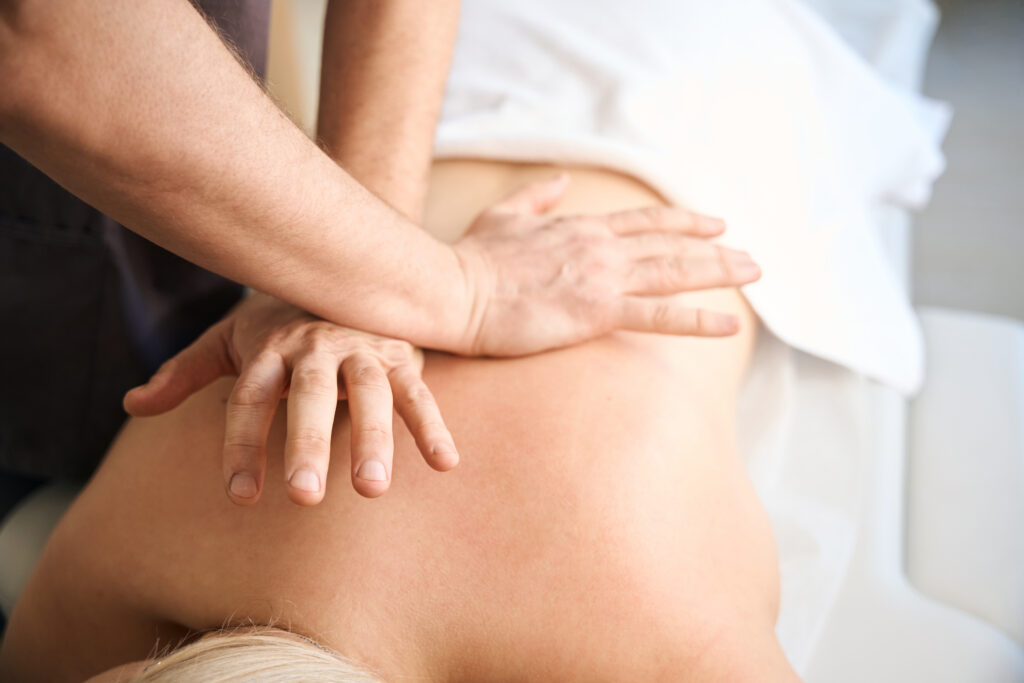
Bodywork can be powerful, too. A person may become unexpectedly emotional while receiving massage or myofascial work, and the experience may feel deeply significant. Perhaps release is sometimes best understood as a description of that transition rather than a claim about its exact mechanism. Something has changed, but that does not necessarily tell us that an emotion or memory had been physically encoded in the tissue being touched.

Stress and disease
Chronic psychological distress can affect autonomic and endocrine regulation, sleep, and behaviour, and can interact with immune and inflammatory processes. Researchers have also found associations between severe psychological stress and some inflammatory and autoimmune diseases, although the strength and nature of those relationships vary.
These studies look for patterns across groups of people. If a particular illness occurs somewhat more frequently among people exposed to severe or prolonged stress, stress may form one part of the circumstances in which that disease develops. We cannot work backwards from that finding, however, and conclude that a particular person’s illness arose directly or exclusively because of their grief, anger, trauma, or emotional suppression. Depending on the disease, genetic susceptibility, infection, environmental exposures, immune regulation, behaviour, ageing, and many other influences may contribute.
Ideas about stored emotions can become uncomfortable when they give us more certainty than this. Attributing someone’s illness to grief they never processed or anger they failed to release may sound holistic, but it can also leave them wondering whether they would have remained well had they handled their emotional life differently. This can bring further needless, complicating layers of guilt or self-admonishment, leading someone further away from healing rather then closer to it.

Emotions, qi, and Chinese medicine
Chinese medicine has approached emotions as embodied phenomena for a very long time. Classical and later traditions describe relationships between emotional states and physiological function, often through the language of qi, while acupuncture and qigong also speak of constraint, stagnation, opening, and the restoration of free movement. Certain organs are traditionally associated with particular emotions, and these manifest differently in healthy function and disharmony. You can read more on this subject here.
Exactly how literally we should understand this language is not easy to settle. Different traditions and practitioners do not necessarily mean precisely the same thing by qi, and practices such as qigong and neidan can produce tangible experiences which practitioners may understand in terms of opening points or gates and circulating qi through channels. Contemporary physiology may illuminate aspects of these experiences, but translating qi directly into circulation, nerve activity, connective tissue, or some other familiar physiological process risks reducing one system of thought to another.
Traditional and modern language
Practitioners working within a traditional framework may understand these experiences through the movement of qi, while contemporary physiology would lead us to explore sensory processing, autonomic activity, breathing, attention, circulation, or muscle tone. These approaches need not function as interchangeable explanations, and there is room to leave some questions open rather than deciding prematurely what traditional descriptions must ultimately refer to.
The more specific claim that an unresolved emotion has created a blockage at a particular place in the body asks rather more of the idea. Chinese medicine certainly describes emotional states as affecting the movement of qi, but pain or restriction along a channel does not necessarily reveal a hidden emotional cause. Emotional state may sometimes appear closely related to physical symptoms; elsewhere an injury or mechanical explanation may tell us most of what we need to know, while many problems probably involve several influences at once.
Qigong also gives the word release a broader meaning. The quality of song, for example, involves allowing unnecessary tension to soften without simply becoming limp, alongside changes in movement, breathing and attention. Traditional practice may also speak of opening and circulation. Someone can experience these processes quite profoundly without our needing to decide whether a particular emotion was physically lodged somewhere in the body and subsequently removed. This article further explores the idea of opening points in qigong practice.

What does the body keep?
The familiar phrase that “the body keeps the score” need not imply that the tissues function as a storehouse of unexpressed emotion. Experience can change the nervous system; repeated stress can shape patterns of attention and arousal; fear can become associated with particular sensations or environments; and breathing, movement, and muscular responses can become habitual. Sleep and other physiological rhythms may change too, sometimes long after the circumstances that disturbed them have passed.
Experience also continues to change. People learn and adapt, physiological states fluctuate, memories acquire new associations, and emotions that once seemed overwhelming can gradually lose their intensity. What we live through inevitably contributes to who we become, but that is not quite the same as saying that every difficult experience remains somewhere inside us as an unresolved physical burden.
A view of mind and body as deeply integrated leaves plenty of room for the experiences people report through acupuncture, qigong, bodywork, movement, and other embodied practices. It also leaves some uncertainty about how best to explain them. Emotional experience is already biological, while bodily states continuously influence mood, thought, attention and perception in return. Asking how those processes change over time, and how movement, touch, attention, relationships, and our wider circumstances can influence them, may ultimately tell us more than trying to find the place in the body where an emotion has been stored.
Thanks for reading!
Find a qualified and regulated acupuncturist in your part of the UK by visiting the British Acupuncture Council's website.

Further reading
Read more on the blog:
- When the needle goes in... - find out how the body responds to acupuncture
- Which kind of anxious are you? - thoughts on anxiety in Chinese medicine
- Acupuncture research - the state of the evidence
- The emotional life of the organs: what Chinese medicine says about how we think and feel
- Is acupuncture energy healing? - a look at whether acupuncture is a kind of "energy work"
- Does Chinese medicine get to the root cause of illness?
- Health without hacks - simple wellbeing advice
- Fit for what? - thinking about strength training for everyday life
- A nourishing morning - looking at healthy morning routines from both a modern scientific and Chinese yangsheng perspective
- Foot health, somatic awareness, massage, and the nervous system - standing on your own two feet
- Common traditional patterns of disharmony: Liver Qi Stagnation and Spleen Qi Deficiency
- What is Qi? - an exploration of vital energy
- Why the channel system of Chinese medicine still matters today
- Chronic pain - acupuncture as a first line intervention
- Explore the causes of chronic bloating and when acupuncture or massage may help
- Acupuncture's interface: the nervous system as an explanation for the therapy's disparate effects
- Is cold water bad for you? - what Chinese medicine really says about iced drinks
- Sailing the Dao - modern misuses of Daoist wisdom
- Six Divisions & TCM Pathology - a comprehensive guide to Chinese medicine
- How many needles? - contrasting styles of acupuncture
- Between freedom & form - tensions between tradition and modern individualism
- Navigating the middle ground - tensions between spiritual healing and modern biomedicine
- How diagnosis works in Chinese medicine
- The scientific mechanisms of acupuncture
- Is acupuncture really "alternative"? - how Chinese medicine stands apart from other alternative therapies
- When wisdom becomes a soundbite - how modern culture uproots classical ideas from their proper context
- Acupressure points for anxiety and migraine relief
- Acupuncture: pseudoscience or evidence-based practice?
- What is tuina? - a look at Chinese massage
- What does it mean to "open a point" in qigong?
- Qi is not quantum - debunking a popular acupuncture myth
- Supporting lymphatic health with acupuncture, tuina, and qigong
- Sleep is sacred: natural ways to ease insomnia
- Is dairy really bad for you? - a Chinese medicine perspective
- Qi in the Age of AI - why Chinese medicine matters more in the information age
- The Chinese body clock - parallels with our modern understanding of circadian rhythms
- Year of the Fire Horse - transitioning into 2026
- Yangsheng - traditional "nourishing life" practices in an age of wellness trends and health fads
- How does acupuncture work? - exploring fascia, embryology, and systems science
- How does the body respond to acupuncture? - what happens when we insert a needle
- Can acupuncture help with hayfever and rhinitis?
- Will the treatment work? A look at how we estimate outcome probabilities in living, responsive, complex bodies
- How does acupuncture engage the body's pain relief mechanism? - expanding on an article in National Geographic