

The Tension Between Worlds

The landscape of Chinese medicine, particularly in the West, stretches across a wide spectrum. At one end are those who lean heavily on ancient cosmology, archetypes, and metaphysical language – often blending Chinese medicine with astrology, energy healing, and intuitive practices. At the other end are practitioners who embrace a strictly biomedical model, seeking to justify every treatment with neuroanatomical charts, double-blind studies, and measurable biomarkers.
Both ends of this spectrum can be seductive. One offers mystery, symbolism, and a sense of spiritual depth. The other promises scientific legitimacy, acceptance, and safety. Yet neither extreme quite captures the essence of Chinese medicine as it has been practised and transmitted for centuries: a tradition grounded in observation, guided by principle, and deeply human in its application.
It is human nature to seek certainty, and when faced with uncertainty, we often gravitate toward camps. This can happen subtly – through the language we adopt, the sources we cite, or the social circles we choose to learn within. Over time, preferences can harden into identities. From there, it’s a short step to dogma.
Some practitioners seek comfort in rules and fixed interpretations. Others rebel against structure entirely, celebrating freedom of expression and intuitive feeling as if this alone guarantees depth. But in both cases, something gets lost. A rigid formula can become lifeless. A free-floating belief system, unanchored by principle or lineage, can lose coherence.
This blog explores the middle ground: a path that holds space for tradition, respects evidence, and remains alert to the subtle influence of belief. It is not about sitting on the fence, nor about blending ideas indiscriminately. It is about recognising that the most grounded practices are often the most adaptable, and that the true strength of Chinese medicine lies in its responsiveness, not in any single claim to truth.
In this exploration, we will look at the role of myth and ritual, the subtle power of group dynamics, the limits of literalism, and the quiet strength of discernment. The aim is not to settle the debate, but to understand the terrain a little more clearly – and to encourage a practice that is both principled and flexible, rooted yet alive.
Myth, Ritual, and the Wisdom of Tradition

Not everything of value can be measured. In many cultures, healing practices have always included elements that speak more to meaning than mechanism. Myth, ritual, and symbolic frameworks offer ways of orienting ourselves within the complexity of illness, recovery, and change. These layers are often dismissed in modern clinical language, yet they hold an enduring place in human experience.
Traditional Chinese Medicine (TCM) developed in a cultural context rich with symbolic thought. The concepts of qi, yin and yang, the five phases, and the twelve channels are not isolated facts but expressions of a worldview; one that sees the body as part of nature, and health as a dynamic state of harmony within it.
In this sense, qi is not a magical energy. It is a way of describing the process by which life unfolds: transformation, movement, and interaction. Likewise, intention (yi) is not merely a mindset. It is the focus that shapes action, the alignment of attention and acquired skill with purpose and care. These ideas reflect a relational view of health, in which body, mind, and environment are all in dialogue.
Many healing traditions include similar principles. In animist cultures, illness may be seen as a disruption of relationship, not just within the body but with the wider web of life. Ancestor practices, ritual offerings, and seasonal observances all play a part in restoring balance. These are perhaps not literal prescriptions, yet they carry psychological and communal meaning that affects how people feel, respond, and recover.
In the West, we often approach healing as a technical problem to solve. But human beings are not machines. We are meaning-makers. We need stories, metaphors, and frameworks that help us interpret what is happening to us, especially in times of vulnerability.
When Chinese medicine is stripped of its symbolic richness in an attempt to appear more scientific, something essential is lost. But when that symbolism is treated as dogma or superstition, it loses its relevance. The challenge is to engage with tradition in a way that respects its depth without confusing the metaphor for the mechanism.
The mythic and the medical can coexist. They are different modes of knowing. One speaks in images and archetypes; the other in data and structure. Both have something to offer, and each is enriched by the presence of the other.
Belief, Groupthink, and the Power of Social Influence
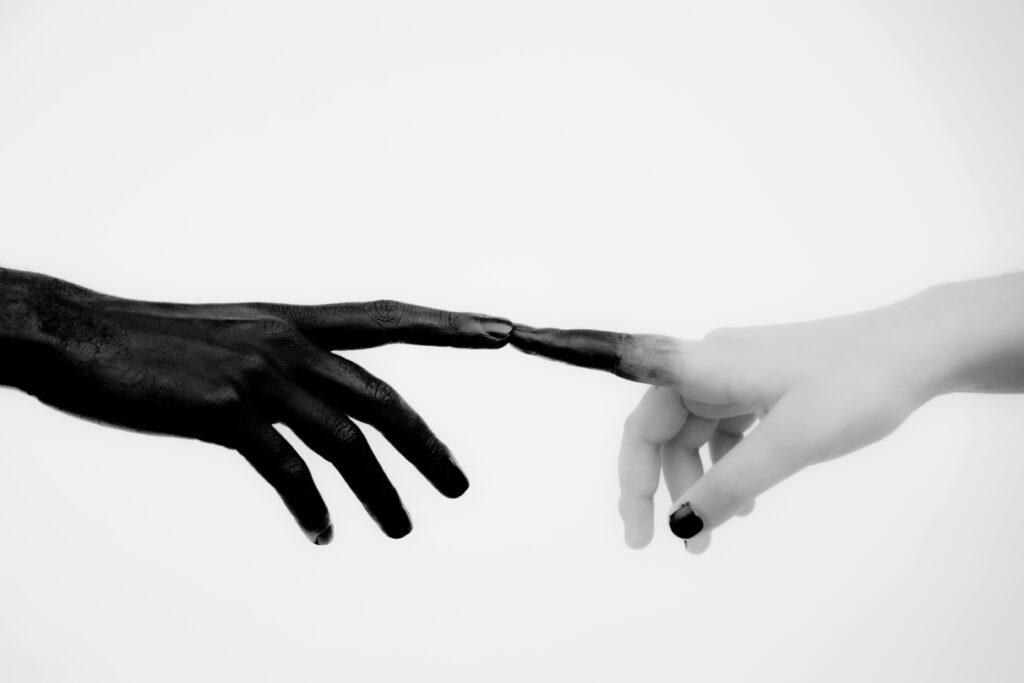
Belief has always shaped perception. This is not a flaw in human design, but a function of how our minds and bodies interact with the world. We don’t experience reality in a vacuum. We interpret it, often unconsciously, through layers of expectation, emotion, memory, and social context.
In any learning environment, these layers are especially active. When a teacher or peer group introduces a concept – particularly one that is subtle or subjective – there is a strong pull to show respect and deference to the teacher, or to align with what others say they are experiencing. If a group of students is told they will feel a change in a patient’s pulse when a certain point is stimulated, many of them will indeed report feeling it, even if nothing measurable has changed. This is not deception, but a reflection of how belief and attention shape sensory experience.
This phenomenon is not unique to acupuncture. We see similar patterns in martial arts, in meditation circles, in religious gatherings, and even in scientific training. Over time, people start to absorb not only techniques, but also shared ways of speaking, interpreting, and assigning meaning. These frameworks can be helpful, but they can also become limiting when they are accepted too readily or defended too rigidly.
Group belief can become self-reinforcing. It provides a sense of belonging and certainty. But it can also discourage questioning. Once a claim has been repeated often enough, it can take on the weight of truth even if it began as a loose metaphor or a personal interpretation. This is one way that certain practices become ossified. What may have started as a creative insight turns into a requirement, passed on without re-examination.
In the realm of complementary medicine, there is sometimes a tendency to adopt new ideas quickly and with enthusiasm. This openness can be a strength. But when novelty is valued more than rigour, or when charisma and presentation carry more weight than study and reflection, the result can be a drift away from both clinical grounding and traditional wisdom.
None of this means that individual insight or subtle perception should be discounted. But it does mean we need to stay aware of the influence of context. The fact that something is widely believed, or commonly taught, does not automatically make it true. Nor does it make it false. The challenge is to keep returning to direct experience, not in isolation, but in relationship with the broader body of knowledge we inherit and the community of practice we participate in. Awareness, not certainty, is often the more useful guide.
The Ineffable and the Limits of Literalism
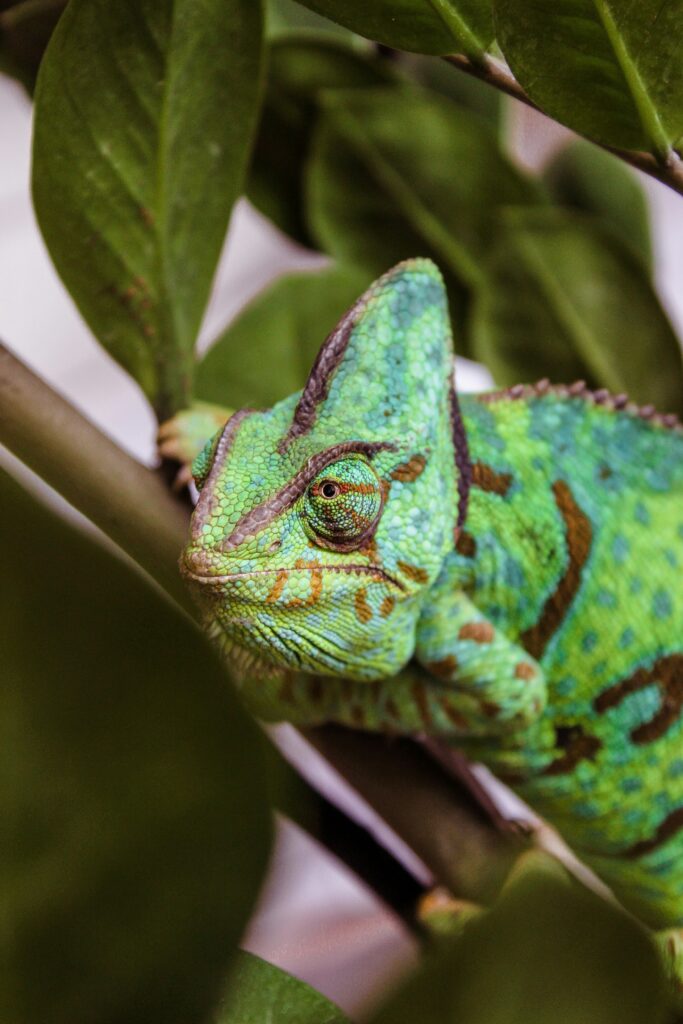
Some truths resist being pinned down. They lose something essential when forced into language. Concepts like God, the Dao, or universal consciousness are not able to be fully explained in words. They are gestures towards something vast and inexpressible – felt experiences, not definitions to be memorised or argued over.
Yet human beings often feel uneasy with ambiguity. We want things to be clear, to be knowable, to be consistent, to be reduced to the subject-object relationship required by language. When faced with the ineffable, we often try to mould it into something we can easily grasp. This is how symbolism becomes doctrine. A metaphor becomes a rule. A teaching that was once meant to provoke reflection becomes a fixed belief.
In Chinese medicine, this tendency shows up when we try to force poetic ideas into anatomical terms, or when classical images are treated as if they describe a literal substance or structure. At the other extreme, it appears when students are encouraged to “feel” something without any guidance on how to evaluate or understand what they’re sensing.
Literalism, in either direction, tends to flatten the complexity of the material. It demands a level of certainty that these systems were never designed to offer. Traditional texts speak in layers. The Huangdi Neijing, for example, a seminal text of Chinese medicine, invites interpretation rather than insisting on a single reading. Its power lies not in giving fixed answers, but in training the mind to think relationally and contextually.
Daoist philosophy offers a helpful lens here. In the Dao De Jing, the very first line tells us that “the Dao that can be spoken is not the eternal Dao.” This isn’t a dismissal of language, but a caution against mistaking the map for the territory. To follow the Dao is not to adopt a set of slogans or rules, but to learn how to respond with awareness, fluidity, and integrity.
This emphasis on responsiveness, on knowing what the moment requires rather than what the rule dictates, offers a powerful antidote to rigid thinking. The practitioner who follows a script, no matter how well designed, will miss what the living body is showing. But the one who listens carefully, both to the patient and to the unfolding situation, has a better chance of offering what is truly needed.
Words and models are useful. They give us a way to think, to communicate, and to organise knowledge. But they are not the thing itself. When we mistake the framework for the phenomenon, we lose touch with the directness of experience.
Practising medicine, especially one as layered as Chinese medicine, requires humility. The willingness to hold complexity without rushing to resolve it is not always easy, but it is often the most honest response.
Embracing a Flexible, Holistic Approach in Practice

To practise Chinese medicine well is to move fluidly between ways of knowing. This is not a matter of choosing between science and tradition, but of understanding when each has something to offer.
Evidence-based medicine plays an essential role. We need solid ground to stand on, especially when we are making decisions that affect people’s health and wellbeing. Research helps us refine techniques, measure outcomes, and improve safety. It also provides a shared language for dialogue with other professions. None of this should be dismissed.
But there are limits to what clinical trials and standardised protocols can capture. Acupuncture, like many hands-on therapies, unfolds within a relationship. Touch, presence, attention, and communication all influence how the body responds. These variables are difficult to isolate, yet they shape outcomes in ways that are clinically relevant.
Belief and expectation also play a part – not as deception or hallucination, but as part of the complex interaction between mind and body. A patient’s response to treatment is rarely a purely physical event. Emotions, habits, past experiences, and even the setting of the treatment room can influence how someone feels and heals.
This doesn’t mean the response is imagined. It means healing is multi-layered. The placebo effect, often misunderstood, is not a trick. It is a demonstration of the body’s capacity to change in response to meaning and context. Every medicine involves this to some degree, whether acknowledged or not.
In Chinese medicine, this interplay is recognised in the concept of Shén: the spirit or consciousness that animates the individual. Shén (sometimes Líng in classical texts) is not separate from the body. It resides within it, moves through it, and reflects it. Physical and emotional symptoms are not treated in isolation because they do not occur in isolation.
This is why adaptability matters. A good practitioner does not simply apply techniques. They observe. They listen. They adjust. Sometimes that means changing point combinations. Sometimes it means adjusting the pace or tone of the session. Sometimes it means knowing when to ask a question, or when to say nothing at all.
None of this can be captured fully by guidelines or mapped neatly onto a treatment protocol. That is not a failure of science. It is a reflection of the complexity of life. Reality is not a static entity, external to ourselves, but a living immersive dialogue of exchange.
Flexibility requires more attention, not less. It asks the practitioner to stay awake to each moment, rather than relying on habit or belief. This is the heart of clinical skill: not just knowing what to do, but knowing when, and why, and with whom.
The Value of the Middle Path

To walk the middle path is not to take no position. It is to choose a position of responsiveness. This path does not avoid depth, nor does it avoid complexity. It acknowledges that tradition, evidence, and personal insight each carry value, and that wisdom lies in knowing when to lean on each one.
Tradition offers us a lineage of tested principles, shaped by generations of close observation and lived practice. It gives context and depth to our work, and anchors us in something larger than individual opinion. But tradition needs conversation. Without new ideas and perspectives, it can become rigid or disconnected from current needs.
Modern research and biomedical understanding offer powerful tools. They help refine what we do, improve safety, and bring acupuncture into wider systems of care. But if they become the only standard by which value is measured, much is left out. The subtler dimensions of clinical presence, therapeutic relationship, and personal meaning cannot always be accounted for in quantitative terms or standardised protocols.
Healthy scepticism is vital. So is curiosity. If we dismiss anything that cannot yet be measured, we narrow our understanding. But if we embrace every claim without discernment, we risk drifting into confusion or inconsistency. Holding both perspectives – critical and open – is a discipline in itself.
In many ways, this is the same discipline Chinese medicine teaches us: to remain present, to observe with care, and to act in alignment with what is actually needed. Whether that need is physical, emotional, or energetic, it must be met without clinging to preconception.
The work of healing is personal and situational. Every patient brings a different story, and every story invites a different response. Our job is not to defend one camp or another, but to stay rooted in principles that are both adaptable and alive.
When this middle ground is embraced, practice becomes more honest. We stop chasing authority in dogma or novelty, and instead find clarity through attentiveness. This kind of clarity has no single formula, but it does have a shape: it listens, it adjusts, and it respects both the visible and invisible forces at play.
This is not only true in Chinese medicine. It holds in any discipline where human beings seek to understand and support one another. The path forward is not to abandon what came before, nor to reject new learning. It is to move with integrity, drawing from all sources with care and responsibility.
If this path feels more difficult at times, it is because it asks us to think for ourselves. But it also allows our work to deepen – not only in skill, but in meaning. And that is something worth cultivating.
If you enjoyed this article, you can explore more reflections on the tensions between tradition and modernity here.