


Searching for natural migraine relief?
Migraines are more than just headaches—they are complex neurological conditions that can significantly impact daily life. Characterized by intense, often throbbing pain, migraines are frequently accompanied by symptoms such as nausea, sensitivity to light and sound, and visual disturbances. For those who suffer from migraines, relief is often a top priority.
Acupressure, an ancient healing technique rooted in Traditional Chinese Medicine (TCM) and older practices, offers a non-invasive and natural way to alleviate migraine symptoms and headache pain. By stimulating specific pressure points, acupressure promotes the smooth flow of energy, or qi (pronounced "chee"), throughout the body, helping to relieve pain, reduce stress, and restore balance. Unlike acupuncture, acupressure involves applying manual pressure rather than needles, making it a safe and accessible treatment option for at-home use.
In this guide, we’ll explore the most effective pressure points for migraine relief, including techniques for stimulation, the modern innovation of auricular therapy, practical tips for using acupressure, and important precautions. Whether you’re seeking a complement to traditional treatments or a natural approach to migraine management, this guide will provide you with the tools and knowledge to get started.
Key Takeaways
- Acupressure is a safe, non-invasive technique for managing migraines by stimulating specific pressure points.
- Commonly used points include Hegu (Large Intestine 4), Taichong (Liver 3), Fengchi (Gallbladder 20), Baihui (Du 20), Taiyang (Extra Point), and Zusanli (Stomach 36).
- Auricular therapy, a modern treatment modality targeting ear pressure points like Shenmen and the Liver Point, is an effective complement to traditional body acupressure.
- Acupressure offers benefits beyond migraine and headache relief, such as reducing stress, improving circulation, and balancing the body’s energy. It may also help reduce accompanying symptoms such as nausea and fatigue.
- Proper technique and precautions are essential to perform acupressure safely and
effectively.
Understanding Acupressure & Migraines

Acupressure is rooted in the Traditional Chinese Medicine (TCM) concept of meridians, or channels, which are energy pathways that flow throughout the body. These meridians correspond to specific organs, and to psycho-emotional and bodily functions. When qi flows freely, the body is in balance, but blockages or disruptions in this energy flow can result in pain, illness, or dysfunction.
Migraines are often associated with the Liver meridian in TCM, as the Liver plays a key role in regulating the smooth flow of qi. Emotional stress, dietary habits, and other lifestyle factors can disrupt this flow, leading to stagnation or excess yang energy, or a deficiency in grounding yin energy, causing yang to rise to the head and cause migraine symptoms. By stimulating specific pressure points, you can unblock and redirect the flow of qi, helping to alleviate migraine symptoms and address the underlying imbalance.
How Migraines Manifest
Migraine attacks are not merely headaches; they are complex neurological events that can significantly impact daily life. Symptoms vary but may include:
- Throbbing or pulsating pain, often on one side of the head and around the eye socket.
- Nausea and vomiting, frequently accompanying the headache.
- Sensitivity to light and sound, making it difficult to function in bright or noisy environments.
- Visual disturbances, such as flashing lights or zigzag patterns, known as migraine auras.
- Fatigue or a “hangover” feeling that persists even after the migraine resolves.
A migraine attack can be debilitating, and frequent occurrences can have a profound effect on both quality of life and mental health. The severe symptoms of migraine episodes reflect a systemic imbalance, which is why addressing the root cause through techniques like acupressure can be so effective.
Why Acupressure is an Effective Treatment
Acupressure is a time-tested therapy that offers many possible benefits for migraine sufferers. Its effectiveness stems from the following attributes:
- Safe and Non-Invasive:
Acupressure uses manual pressure rather than needles, making it a gentle and safe option for most people, including those uncomfortable with acupuncture. - Accessible and Convenient:
Acupressure is a simple and effective treatment that can be performed at home or anywhere, without the need for specialised tools. It’s a self care method that empowers individuals to manage their symptoms independently. - Holistic Approach:
Unlike medications that may only mask symptoms, acupressure addresses the root imbalances that contribute to migraines, such as stress, tension, and poor circulation. - Scientifically Supported:
While more research is needed, evidence suggests acupressure stimulates the release of endorphins, improves circulation, and modulates pain pathways—mechanisms that can directly counteract migraine symptoms. There are plenty of high quality studies on acupuncture, as opposed to acupressure, which robustly support its effective treatment of chronic pain and many other health conditions. More research is being carried out all the time, with acupuncture being one of the most promising and rapidly growing fields of study in modern medicine.
The Causes of Migraines
Migraine attacks have a variety of causes in both Western and Eastern medicine. In TCM, migraines are typically linked to the following patterns:
- Liver Qi Stagnation:
Emotional stress can disrupt the flow of qi, leading to tension that manifests as headaches or migraines. - Liver Yang Rising:
Excess or unanchored yang energy rises to the head, causing throbbing pain, often in the temples or behind the eyes. - Blood Deficiency:
An insufficient supply of nourishing blood to the brain can trigger migraines, often with accompanying dizziness or fatigue. - External Pathogens:
Factors such as wind, cold, or dampness can invade the meridians and disrupt the flow of qi, leading to head pain.
From a Western perspective, migraines may result from:
- Hormonal fluctuations, especially in women.
- Stress and lifestyle factors, including lack of sleep or irregular meals.
- Neurological and vascular dysfunction, involving abnormal brain activity and blood vessel constriction.
How Acupressure Helps with Migraines
Acupressure addresses migraines through both physiological mechanisms and practical self
help benefits.
Physiological Benefits
- Pain Relief:
By stimulating pressure points such as Hegu and Fengchi, acupressure helps release endorphins and block pain signals in the nervous system. - Improved Blood Flow:
Points like Baihui promote circulation to the head, easing vascular tension associated with migraines. - Relaxation and Stress Reduction:
Stimulating Shenmen or Taiyang calms the nervous system, reducing emotional and physical tension. - Restoring Balance:
Acupressure works holistically to correct underlying imbalances in qi, yin, and yang, addressing both symptoms and root causes.
Self-Help and Empowerment:
- Immediate Relief:
During an active migraine, pressing points like Taiyang or Fengchi can reduce intensity and provide relief. - Preventive Care:
Regular stimulation of pressure points such as Taichong or Zusanli can address the triggers that lead to migraines, helping to reduce their frequency and intensity. - Promotes Awareness:
Acupressure encourages individuals to tune into their bodies, identifying patterns and triggers
that contribute to their migraines.
Key Acupressure Points for Migraine Relief

Acupressure for migraines involves stimulating specific pressure points that address pain, tension, and underlying imbalances. Below are the key pressure points, including their meanings, locations, and how to use them effectively. If you have trouble finding any of the points, consider consulting a qualified acupuncturist for proper guidance.
There are many more pressure points that didn't quite make the shortlist, such as Ququan (Liver 8), Sanyinjiao (Spleen 6), Taixi (Kidney 3), or Shuaigu (Gallbladder 8), which an acupuncturist might select depending on your presenting symptoms and underlying energetic disharmonies. Those described here are chosen for their immediate and direct effect, their accessibility and ease of location, and their universal relevance. Which pressure points would make your shortlist? Do you have a favourite pressure point?
Hegu (Large Intestine 4) – “Union Valley”
- Meaning of the name: The name “Union Valley” reflects the point’s role as a junction for energy flow and its effectiveness in clearing stagnation. This pressure point is both the Gao Wu "command point" of the face, making it great for immediate relief of facial or head pain, and the Yuan source point of the Large Intestine channel, meaning it is a place where energy is gathering force and depth, akin to a stream becoming a river.
- Location: On the dorsum of the hand, in the webbing between the thumb and index finger, at the midpoint of the second metacarpal bone.
- How to locate: Find the fleshy area where the bones of the thumb and index finger meet. Apply pressure in the centre of this webbing to feel a slight tenderness close to the bone of the hand.
- How to stimulate: Use the thumb of your opposite hand to apply firm pressure or massage in small circles for 1-2 minutes on each hand.
- Frequency: Stimulate 2-3 times per day during an active migraine or as preventive care. N.B. Hegu is a pointed used to induce labour, and therefore contraindicated during
pregnancy.
Taichong (Liver 3) – “Great Surge”
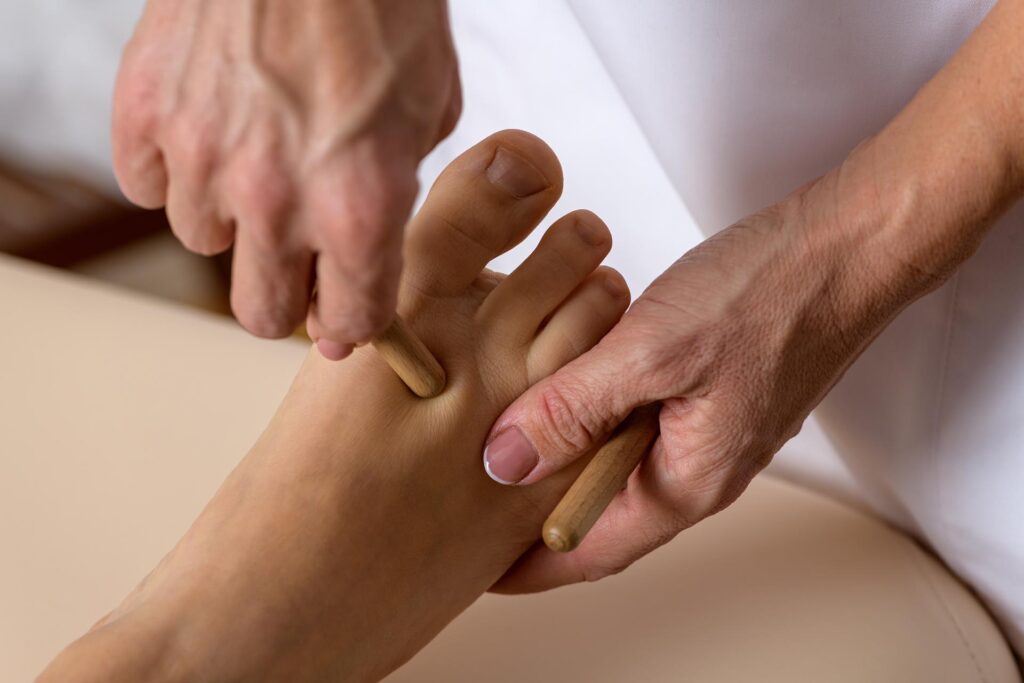
- Meaning of the name: “Great Surge” signifies the point’s remarkable ability to regulate the Liver as the qi begins to surge up from Xingjian (Liver 2). As another Yuan source point, and Earth point of the Liver channel, Taichong is a wonderfully nourishing and powerful pressure point. Studies using brain imaging scans have shown this pressure point to have a profound effect when stimulated.
- Location: On the top of the foot, in the depression between the first and second metatarsal bones.
- How to locate: Slide your finger along the groove between the big toe and the second toe until you find the centre of the depression between the metatarsals.
- How to stimulate: Press firmly with your thumb or massage in circular motions for 1-2 minutes on each foot.
- Frequency: Use this foot pressure point daily for stress-related migraines or at the onset of symptoms.
Fengchi (Gallbladder 20) – “Wind Pool”
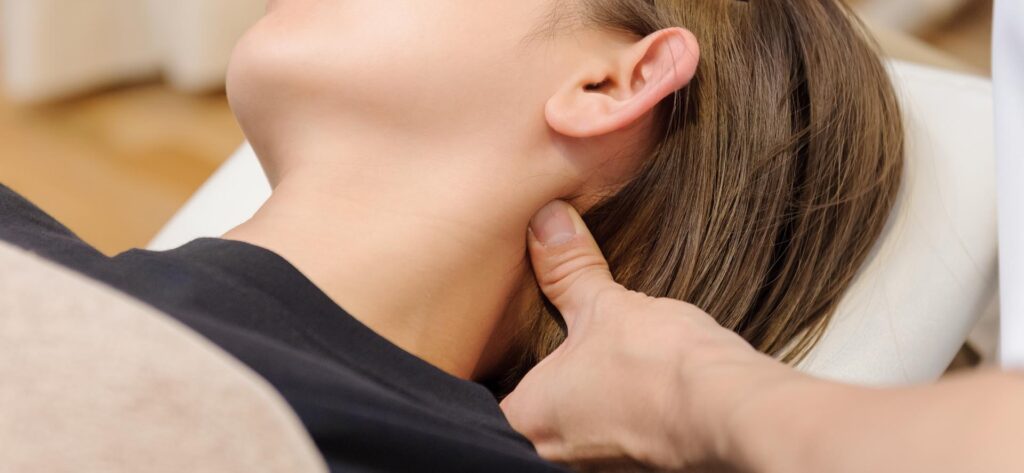
- Meaning of the name: “Wind Pool” reflects this point’s ability to clear external wind and alleviate headaches caused by tension or external pathogenic invasions. Along with Taiyang, Fengchi is an acupressure point migraine sufferers will often instinctively massage to bring relief.
- Location: At the base of the skull, in the hollow between the two vertical neck muscles (i.e., the sternocleidomastoid and trapezius).
- How to locate: Start at the base of the skull and find the outer edges of the spine. From there, move your fingers laterally, rolling over the top of the trapezius muscle into a hollow just below the skull, which can often be tender to press.
- How to stimulate: Apply firm, upward pressure or massage in a circular motion for 1-2 minutes.
- Frequency: Use during an acute migraine or when experiencing neck tension.
Baihui (Du 20) – “Hundred Meetings”
- Meaning of the name: “Hundred Meetings” symbolizes the convergence of multiple energy pathways at the crown of the head. This pressure point is located on the Du channel (the Governing Vessel) at the body's apex.
- Location: On the top of the head, along the midline, directly above the ears. Not to be confused with the vertex of the head, where the hair naturally radiates outward, forming a spiral or "whorl", Baihui is found at the anatomical crown, sitting slightly anterior (towards the fringe) of the natural whorl.
- How to locate: Place your fingers at the tops of your ears and trace upward until your fingers meet at the centre of your head. Search for a small hollow, which marks the closure of the anterior fontanelle.
- How to stimulate: Gently press with your fingertips or massage in a circular motion for 1-2 minutes.
- Frequency: Use during a migraine or as part of a daily relaxation routine.
Taiyang (Extra Point) – “Sun”
- Meaning of the name: “Sun” is an alternative translation for the more literal "Supreme Yang". This reflects the point’s connection to the temporal region, which is strongly associated with the Yang channels (particularly those of the Small Intestine and Gallbladder) and expresses its effectiveness for alleviating excessive Yang activity, such as Heat or rising Liver energy.
- Location: In the depression about one inch behind the midpoint between the outer edge of the eyebrow and the corner of the eye.
- How to locate: Feel for the hollow in your temple area on either side of the head by sliding an inch back and slightly downwards towards the ears from the outer edges of the eyebrows.
- How to stimulate: Use your fingers to apply gentle, circular or steady pressure for 1-2 minutes on each side.
- Frequency: Use as needed during a migraine attack with temple or eye pain.
Zusanli (Stomach 36) – “Leg Three Miles”
- Meaning of the name: “Leg Three Miles” symbolizes the point’s ability to enhance stamina and vitality, allowing one to “walk three more miles.” As an Earth and He Sea point, where qi begins to flow deeper into the body, Zusanli is a commonly-used and versatile pressure point, particularly effective for treating organ-related issues, digestive health, nausea, and general vitality.
- Location: On the outer lower leg, four finger-widths below the kneecap, and one finger-width to the outside of the shinbone.
- How to locate: Slide your fingers up the outer aspect of your shinbone until you feel it begin to curve outwards, about four finger-breadths below the lower edge of the patella (kneecap). The pressure point is located in a frequently tender spot, one finger-width off the edge of the tibia (shinbone).
- How to stimulate: Apply firm pressure with your thumb or massage in a circular motion for 1-2 minutes on each leg.
- Frequency: Use daily to boost energy and as preventive care for migraine pain triggered by fatigue or digestion issues.
Ear Points for Migraines

Auricular therapy, also known as ear acupressure or auriculotherapy, is a modern technique based on the principle that the ear represents a microsystem of the entire body. This method is distinct from Traditional Chinese Medicine (TCM) as it integrates both ancient and modern understandings of the body. By stimulating specific pressure points on the ear, auricular therapy can address various conditions, including migraines.
Ear pressure points are particularly effective because they can be accessed easily and combined with other acupressure techniques. Below are two of the most effective auricular pressure points for migraine treatment and headache relief, with an additional mention of a related pressure point for enhanced results.
Shenmen (Spirit Gate)
- Meaning of the name: “Spirit Gate” signifies its role in calming the mind and regulating the nervous system. Not to be confused with Heart 7, a pressure point on the wrist bearing the same name.
- Location: In the triangular fossa of the ear, a small and sometimes tender depression near the topmost part of the ear, where the antihelix branches in two.
- How to locate: Find the roughly triangular hollow in the upper third of the ear, towards the anterior (eye) side. Shenmen is at the rounded apex of this triangle, towards the centre of the ear, tucked beneath the upper branch of the antihelix.
- How to stimulate: Apply gentle pressure using a fingertip, massage in small circles, or use an ear seed for prolonged stimulation. Stimulate for 1-2 minutes per ear.
- Why it works: Shenmen is a pressure point known for its ability to reduce stress, calm the mind, and alleviate pain, making it a universally effective point for migraines.
Liver Point
- Meaning of the name: Reflects its connection to the Liver channel, which is often implicated in migraines caused by stress or qi stagnation.
- Location: In the cymba concha, a bowl-shaped area near the middle of the ear, above the cavum concha that lies just outside the ear canal opening. The two bowls are split by the root of the helix, and the Liver Point lies just above this root.
- How to locate: Look for the upper hollow region of the ear’s inner concha, from where the root of the helix sprouts. (The helix is the circular, folded-over rim of the ear.) The Liver Point lies just above this emerging root, in a small hollow below the antihelix.
- How to stimulate: Press firmly with your fingertip or a probe for 1-2 minutes. For additional benefit, stimulate the Gallbladder Point, which is located slightly above the Liver Point, still in the superior concha and just under the shelf of the antihelix.
- Why it works: The Liver Point regulates qi flow and relieves stress, making it particularly useful for migraine headaches associated with emotional tension, frustration, or anger.
Gallbladder Point
How to use in conjunction with the Liver Point: Stimulating both the Liver and Gallbladder Points together enhances the flow of qi and addresses migraines with temporal pain or dizziness.
Using Acupressure for Migraine Relief

Acupressure is a practical and effective tool for self care, especially for chronic migraine sufferers. However, it’s essential to use the correct techniques and take appropriate precautions to maximise its benefits and successfully relieve headache pain.
How to Perform Acupressure Safely
- Locate the pressure point precisely: Use anatomical landmarks and descriptions to ensure you are stimulating the correct spot.
- Apply the right pressure: When applying acupressure, the contact should be firm enough to feel a mild soreness or dull ache, but not so firm as to be painful. Use your thumb or index finger for the best control.
- Duration: Stimulate each pressure point for 1-2 minutes. For body points, work bilaterally (both sides of the body).
- Consistency: Use acupressure daily for preventive care or 2-3 times during an active migraine episode.
Tips for Self-Acupressure
- Create a calming environment: Perform acupressure in a quiet, comfortable space to enhance relaxation.
- Combine with deep breathing: Deep, slow, gentle, quiet breaths during stimulation can amplify relaxation and pain relief.
- Use tools if needed: For hard-to-reach pressure points, consider using a massage tool or acupressure probe. You needn't invest in an expensive dedicated tool, either; a simple pencil eraser will do the trick just as well!
- Track your results: Keep a journal of your migraine patterns and note which pressure points provide the most relief.
When to Seek Professional Help
While acupressure can be highly effective, there are times when professional assistance is recommended:
- Persistent migraines: If migraine headaches are severe, frequent, or unresponsive to acupressure, consult a fully qualified acupuncturist or other appropriate healthcare provider.
- Complex conditions: If migraines are accompanied by other symptoms, such as visual disturbances, numbness, or loss of balance, a professional diagnosis is essential.
- Personalised treatment: A properly trained acupuncturist can provide tailored care, through both acupuncture treatment and lifestyle advice, to address the root causes of migraines and relieve headache frequency and severity.
As well as treating various illnesses and health conditions, acupuncturists and acupressure practitioners can also provide direct, accurate, and practical instruction for locating pressure points and stimulating them yourself as a take-home therapy. Regular appointments with a massage therapist can also help alleviate pain, modulate tension, and reduce stress or anxiety associated with chronic migraine pain and recurrent episodes. Tuina medical massage is offered by many traditional acupuncturists and is a particular useful pressure point therapy for migraine, as it combines massage with targeted stimulation.
The Science Behind Acupressure and Migraines

While Traditional Chinese Medicine (TCM) emphasises energy flow (qi) and meridian pathways, modern research has begun to explore acupressure’s measurable physiological effects on the body. Whilst more research is needed, evidence suggests that acupressure may help to relieve headache pain and other migraine symptoms through several mechanisms:
- Pain Modulation:
Stimulating pressure points has been shown to release endorphins, the body’s natural painkillers, which help reduce migraine intensity and relieve headaches. - Improved Circulation:
Acupressure may enhance blood flow to the brain and other areas, relieving vascular tension commonly associated with migraines. - Stress Reduction:
By targeting pressure points like Shenmen or Hegu, acupressure can calm the autonomic nervous system, reducing stress and anxiety—common migraine triggers. - Reduction in Muscle Tension:
Acupressure points like Fengchi and Taiyang help release tension in the neck, shoulders, and temples, which are often tight during migraines.
Although further research is needed to establish acupressure as a standalone migraine treatment, preliminary studies support its efficacy as a complementary therapy.
An overview of systematic reviews by Yu-Xi and others, published in the Pain Research and Management journal in 2020, concluded that acupuncture may be a safe and effective therapy for migraine, but more widespread research is required before acupressure may be awarded similar validation. That being said, anecdotal evidence suggests that including acupressure in a migraine management plan can provide significant relief for many individuals.
Potential Risks and Precautions
Acupressure is generally very low risk, but there are a few considerations to keep in mind to ensure effective and harm-free practice.
Contraindications
- Pregnancy: Certain points, such as Hegu and Sanyinjiao, are known to potentially induce labour and should be avoided during pregnancy unless advised by a qualified practitioner.
- Skin Conditions or Injuries: Avoid stimulating points located over wounds, infections, or severe bruising to prevent further irritation.
- Severe Conditions: People with severe cardiovascular or neurological conditions should consult a healthcare provider before attempting acupressure.
Consulting Healthcare Providers
- Always seek medical advice if migraines are new, worsening, or accompanied by alarming symptoms like vision changes, numbness, or slurred speech.
- Use acupressure as a complementary therapy, not a replacement for prescribed medications or treatments.
Summary
Acupressure offers a natural, non-invasive method to manage migraine attacks and provide relief from headache pain, and associated symptoms like nausea and fatigue, by targeting key pressure points on the body and ears. With regular practice, it can reduce pain, relieve stress, and address underlying imbalances. Incorporating acupressure techniques on points such as Hegu, Taichong, and Fengchi into your daily routine can enable you to take control of migraine symptoms.
While self-acupressure is accessible to most people, it’s essential to practise safely and seek professional guidance when needed, from a licensed acupuncturist or other healthcare provider as appropriate. Whether used as a stand-alone method or alongside other treatments, acupressure is a valuable tool in the journey toward migraine relief.
Frequently Asked Questions
Acupressure is a pressure point therapy that involves applying pressure to specific points on the body to reduce pain and restore balance. For migraines, it can reduce tension, improve circulation, and modulate stress.
Yes, acupressure can be easily performed at home with proper guidance on locating and stimulating the points.
Acupressure is generally safe, but avoid certain points during pregnancy and do not apply pressure over wounds or infections. If in doubt whether to use acupressure or not, consult an acupuncturist or other healthcare practitioner for professional guidance.
Acupressure is an excellent complementary therapy to help find relief from migraine. While more research needs to be done, and whilst acupressure may not replace medications or clinical treatments, it can significantly relieve symptoms and improve quality of life when used alongside them.