

Experience and Uncertainty

One of the stranger things about spending years in healthcare is that some questions become harder to answer rather than easier. That can feel counterintuitive, because most of us expect experience to make people more certain. We imagine the experienced practitioner as someone who has seen so much, studied so much, and treated so many people that they can look at a problem and know exactly what will happen next.
There is some truth in that, of course. Experience does make a huge difference. A practitioner who has spent years working with patients should usually be better at recognising patterns, asking useful questions, spotting warning signs, and judging what kind of treatment is likely to be appropriate. In that sense, experience does bring clarity. It sharpens clinical judgement. It allows a practitioner to move more calmly through situations that might once have felt confusing.
Yet healthcare has a way of complicating the simple idea that more experience leads to more certainty. The longer you practise, the more you see outcomes that do not quite match expectation. A treatment that looks perfectly suited to one person may produce only modest change. Another person, whose case looks more entrenched, may improve far more quickly than expected. A symptom that seems simple may prove stubborn, while something that appears complicated may respond with surprising ease. Sometimes, experience can even blind us to new and unexplored possibilities, as we instinctively revert to what we already know. Or think we do.
The Body Is Not a Machine
This is one of the humbling aspects of clinical work. The body is not a machine that passively accepts repair. It is alive, adaptive, reactive, and shaped by history. It is influenced by sleep, stress, movement, diet, hormones, medication, previous illness, emotional strain, age, constitution, expectation, and all the countless details that make one person different from another. Clinical knowledge matters enormously, but it does not remove all unpredictability.
Most people are familiar with the Dunning-Kruger effect, even if only in a general way. Early confidence can be high because the full complexity of a subject has not yet become visible. As people learn more, they may become less sweeping in their claims, not because they understand less, but because they have begun to see how much there is to take into account. Something similar can happen in healthcare. A practitioner may become more skilled and more cautious at the same time.
That caution should not be mistaken for vagueness or lack of confidence. There is a real difference between having no idea what is likely to happen and having a well-informed sense of what is likely, while still knowing that an individual outcome cannot be promised. A novice and an experienced practitioner might both say, “I can’t guarantee this will work,” but they may be saying it from very different places. One may lack enough experience to judge the situation. The other may have enough experience to know that guarantees are rarely honest.
This is where the patient’s question becomes difficult. Someone asks, quite reasonably, “Will it work?” or “How many sessions will I need to see results?”. They are usually not asking for a philosophical discussion about uncertainty. They are asking because they are in pain, or tired, or worried, or frustrated, and they want to know whether a treatment is worth their time, money and hope. It is a fair question. It is also a question that healthcare can rarely answer with the certainty we might want.
Why We Expect Certainty

Part of the difficulty is that certainty feels reasonable. In many areas of life, it is exactly what we expect from someone with expertise. If the boiler stops working, we call an engineer. If a tyre is punctured, we replace or repair it. If an appliance fails, someone identifies the faulty part and either fixes it or tells us it is beyond repair. The details may be technical, but the basic logic is familiar: there is a fault, there is a cause, and there is a solution.
It is natural to bring that expectation into healthcare. If the shoulder hurts, we want to know what is wrong with the shoulder and what will fix it. If migraines keep returning, we want the cause identified and removed. If digestion has become uncomfortable or unpredictable, we want somebody to find the problem and explain what needs to be done. In many cases, healthcare does provide answers that feel close to this. A fracture can be seen on an X-ray. An infection can respond to the right medication. A mechanical irritation in a joint or tendon can improve when load, movement and treatment are adjusted.
The difficulty is that even when the diagnosis is clear, the person is still more complex than the fault in a boiler or the damaged part in a car. The problem does not exist in isolation from the rest of their life. A painful shoulder belongs to someone who may also be sleeping badly, working long hours at a desk, lifting children, carrying tension through the neck, recovering from an old injury, or worrying about whether the pain means something serious. Each of those things can influence how symptoms behave and how recovery unfolds.
This does not make healthcare hopelessly vague. It simply means that the kind of certainty we expect from mechanical repair does not transfer cleanly into clinical work. Healthcare has to deal with probability, context and response over time. It asks what is likely, what is safe, what is worth trying, and what needs to change if the first approach does not help.
The Difference Between People and Machines
The mechanic analogy is useful, but only up to a point. If two cars arrive at a garage with the same faulty component, and that component is replaced properly in both vehicles, we would usually expect the result to be much the same. With people, two similar-looking problems can behave quite differently, even when the same treatment is offered with care and skill.
This is because human beings adapt constantly. We compensate for pain by changing how we move. We protect injured areas without realising we are doing it. We develop habits around posture, rest, exercise, work, food, sleep and stress. Some of those habits help us cope in the short term while creating new strain elsewhere over time. A symptom may begin in one place, but by the time someone seeks help, it may be part of a broader pattern.
A migraine patient does not arrive with migraines alone. They arrive with a personal history: sleep patterns, hormonal rhythms, working demands, neck tension, visual strain, family stress, medication use, diet, previous illnesses, and perhaps years of learning to manage attacks as best they can.
A person with digestive symptoms arrives with their own history too, including appetite, energy, bowel habits, worry, food choices, medical investigations, routines and periods of strain. You may see two “IBS cases” before you, but they are not the same IBS. The patient with dizziness may bring neck tension, anxiety, inner ear history, medication, blood pressure changes, fatigue, or a pattern that is still unclear at the first appointment. No two cases of dizziness are the same, either.

Patterns and Relationships
This is one reason Traditional Chinese Medicine looks for patterns rather than treating symptoms as isolated events. In Chinese medicine, a symptom is understood in relation to the wider presentation and expressed in concepts like yin and yang. Qi, for example, is a broad term that can refer to the body’s functional activity: movement, warmth, transformation, regulation and the capacity of different systems to work together. It is not helpful to reduce Qi to a single modern substance or mechanism. It is better understood as part of a clinical language developed to describe how living processes behave.
Modern physiology uses a very different vocabulary, but it also shows that symptoms rarely belong to one system alone. Pain affects mood and sleep. Sleep affects inflammation, repair and sensitivity. Stress influences digestion, muscle tone and the nervous system. Movement changes circulation and tissue loading. Hormonal rhythms can alter pain thresholds and energy. The more closely we look at a person’s health, the less convincing it becomes to treat each symptom as a sealed-off event.
This is why prediction is difficult. The practitioner is not simply asking, “What treatment matches this symptom?” They are asking how long the problem has been present, what else is happening around it, how the person tends to respond, what has already been tried, what needs referral, what can safely be treated, and what kind of change would count as meaningful progress. That is a more complex judgement than the question “Will it work?” can easily contain.
A good answer has to be honest about that complexity without becoming evasive. In many cases, the most truthful answer is not a guarantee, but an informed estimate: this looks like the sort of problem that commonly responds well; this may take time; this is worth trying for a short course and reviewing; this may need investigation before treatment goes further. Those answers may feel less satisfying than certainty, but they are usually truer to what healthcare actually involves.
Two Different Kinds of Uncertainty
One thing that becomes apparent after a while in clinical practice is that uncertainty is not a single thing. We tend to talk about it as though it were, but there are different kinds of uncertainty, and they create different challenges.
A straightforward example might be someone who arrives with classic tennis elbow. The history fits. The symptoms fit. Examination findings fit. The diagnosis is not especially mysterious. Most practitioners, whether they are acupuncturists, physiotherapists, osteopaths or doctors, would feel reasonably confident about what they are dealing with.
That does not automatically tell us what will happen next.
Some people respond very quickly. Others improve more gradually. A few make little progress despite treatment that appears entirely appropriate. Some find other symptoms clearing up even while the main issue persists. The uncertainty here lies less in identifying the problem than in predicting the outcome. We have a working diagnosis that we trust, but we are still dealing with a living person whose response cannot be known in advance.
Other cases are uncertain from the very beginning. Dizziness provides a good example. Sometimes the cause is fairly clear. Sometimes it is not. Dizziness can arise from the inner ear, the neck, medication, cardiovascular issues, neurological conditions, stress or anxiety, metabolic disturbances, visual problems and a range of other possibilities. Occasionally several factors seem to be contributing at once.
In that situation, uncertainty exists on two levels. We may be uncertain about the precise diagnosis, and uncertain about how well a particular treatment approach will help. Those are related questions, but they are not the same question.
Diagnosis Versus Prognosis
Most clinicians spend a great deal of their working lives navigating this distinction. There are cases where diagnosis feels clear and prognosis feels murky. There are cases where diagnosis itself remains provisional while further information emerges. There are cases where treatment serves partly as an exploration, helping us learn more about the nature of the problem by observing how it responds.
Patients sometimes assume that uncertainty disappears once a diagnosis has been attached to a condition. Some find a certain comfort or relief in having a label to attach to their condition. In reality, diagnosis is only one part of the picture. Knowing what something is does not always tell us how it will behave. Likewise, uncertainty about diagnosis does not necessarily mean that nothing useful can be done. Clinicians regularly work with incomplete information while still making sensible, evidence-informed decisions about what should happen next.
Perhaps this is another reason why healthcare can feel different from many other fields. The work does not stop once a label has been applied. In some respects, that is when the more interesting questions begin.
Uncertainty Exists Throughout Healthcare

Acupuncture is sometimes discussed as though uncertainty were somehow unique to complementary medicine. It is not. Every area of healthcare operates within probabilities, even when supported by extensive research, sophisticated technology and decades of accumulated evidence.
A medication may help one patient enormously while causing troublesome side effects in another. A physiotherapy programme may restore one person’s function and leave another struggling with persistent symptoms. A surgical procedure may produce an excellent result, while a seemingly identical operation in another patient leads to a slower recovery or an unexpected complication.
Evidence helps us navigate the vast range of outcomes that are possible. It tells us how treatments tend to perform across groups of people. It can identify patterns, estimate risks and highlight likely outcomes. It can tell us that a treatment is more effective than another approach, that certain side effects are relatively common, or that particular groups of patients tend to benefit more than others.
What evidence cannot do is predict with certainty how a specific individual sitting in front of us will respond. That limitation is not a flaw in research. It reflects the fact that research describes populations while clinicians treat individuals. Those two perspectives overlap, but they are not identical.
Anyone who has spent time in healthcare will have encountered examples of this. A medication with strong evidence behind it may fail to help a particular patient. A treatment with relatively modest average results may transform somebody’s quality of life. An intervention regarded as routine may occasionally produce an unexpected problem. Equally, people sometimes recover in ways that exceed expectations.
Risk Versus Benefit
This is also where discussions about risk become important. Every intervention carries some degree of uncertainty, including interventions that are considered highly effective. Medication can produce side effects. Surgery can produce complications. Rehabilitation programmes can aggravate symptoms before improvement occurs. Even doing nothing carries risks in some situations, particularly when a condition is progressive or potentially serious.
According to a review published in the British Medical Journal, medical error is the third most common cause of death in the U.S., after cancer and heart disease. And overuse of medical services (where potential harm exceeds potential benefit) is a massive global problem. In many cases, patients would be better off starting with safer treatments such as acupuncture.
All of this reflects the complexity of working with human beings. The more powerful an intervention becomes, the more important it is to think carefully about both potential benefits and potential harms. Modern healthcare has achieved extraordinary things, yet it still operates within the same biological reality that has always confronted clinicians: people do not respond in perfectly predictable ways.
This is why discussions about treatment tend to revolve around likelihoods rather than guarantees. A practitioner may feel strongly that a particular approach represents the best available option while still recognising that outcomes exist on a spectrum. That is not a contradiction. It is simply an honest description of how healthcare works.

What Clinicians Actually Do
At this point, it is tempting to wonder whether all this uncertainty means that healthcare professionals are simply making educated guesses. That conclusion sounds reasonable on the surface, but it misses something important about what clinical expertise actually consists of.
Experienced practitioners are not trying to predict the future with certainty. They are gathering information, recognising patterns, assessing risk, drawing on research, comparing the present case with hundreds or thousands of previous encounters, and making decisions based on the balance of probabilities. Much of healthcare involves working out what is most likely to be true and what is most sensible to do next.
That process can look deceptively simple from the outside. A patient may describe a symptom, receive a diagnosis and be offered a treatment. Behind that apparently straightforward interaction sits a great deal of invisible reasoning. Clinicians are continually weighing possibilities against one another. They are deciding which explanations fit best, which serious conditions need to be ruled out, which treatments are worth pursuing, and which changes should be monitored over time.
The skill lies partly in knowing what to pay attention to and partly in knowing what not to be distracted by. Two patients may present with similar symptoms while requiring completely different approaches. Equally, two patients whose symptoms appear quite different may turn out to share a common underlying issue.
Confidence Versus Certainty
Pattern recognition plays a major role in this process. That phrase can sound vague, but most people rely on it every day. An experienced teacher recognises when a pupil is struggling long before exam results reveal a problem. An experienced mechanic hears sounds that a novice would ignore. An experienced gardener notices signs of disease or nutrient deficiency before the damage becomes obvious.
Clinical pattern recognition works in a similar way, although with considerably higher stakes and much greater complexity. It develops slowly through repeated exposure to real people rather than textbook examples.
Perhaps this also explains why experienced practitioners sometimes sound less certain than those who are newer to the profession. The experienced practitioner has encountered enough exceptions to know that broad rules always have edges. They have seen common presentations behave in uncommon ways. They have seen diagnoses revised, assumptions challenged and outcomes defy expectations.
That does not make them less confident. In many cases it makes them more confident in their reasoning, while simultaneously making them less willing to promise outcomes they cannot control. Confidence and certainty are related, but they are not the same thing. One can exist quite comfortably without the other.

The Body’s Role in Healing
When people think about treatment, it is easy to imagine the treatment itself as the thing doing the healing. Sometimes that picture is reasonably accurate. An antibiotic eliminates a bacterial infection. A surgeon removes an inflamed appendix. A medication lowers blood pressure. Yet even in these examples, recovery involves more than the intervention alone.
A surgeon can repair a fracture, but the surgeon does not knit the bone back together. A cast helps create favourable conditions for healing, but the cast does not manufacture new bone tissue. The body carries out that work through a complex series of biological processes that remain active long after the clinical intervention has ended.
The same principle appears throughout healthcare. Rehabilitation exercises do not directly rebuild strength. They create conditions that encourage adaptation by the body in response to those exercises – and that’s the thing that builds strength. Similarly, medication may remove an obstacle that has been interfering with normal function. Or lifestyle changes may support processes that were already trying to move in a healthier direction. In one sense, much of healthcare involves helping the body do what it is already attempting to do.
This idea appears in many medical traditions, although they describe it differently. Modern physiology speaks of repair, adaptation, regulation and homeostasis. Homeostasis refers to the body’s ongoing efforts to maintain stability despite changing circumstances. Temperature, blood sugar, fluid balance, immune activity and countless other processes are continually adjusted in response to internal and external demands.
Traditional Chinese Medicine developed its own language to describe similar observations. Concepts such as qi, yin, and yang emerged from centuries of watching how health changes over time. In fact, the balance of yin and yang overlaps considerably with the notion of homeostasis. While these concepts do not map neatly onto modern physiological categories, they are concerned with many of the same questions: how the body regulates itself, how balance is lost, and how it can be restored.
Nudge Versus Fix
Acupuncture sits within that broader context. Rather than being viewed as a treatment that mechanically forces a particular outcome, it is traditionally understood as a way of influencing regulatory processes within the person. It is a nudge rather than a fix.
Modern research has explored effects on the nervous system, circulation, pain modulation and various physiological responses. Chinese medicine describes the process using different terminology, but both perspectives are concerned with how the body responds and adapts.
This may be one reason why answering “Will it work?” can feel difficult. A practitioner can place needles skilfully, choose an appropriate treatment strategy and draw on considerable experience, but the response still emerges from the interaction between treatment and the individual receiving it. The practitioner contributes to the process. The body remains an active participant in it.
Once we start looking at healthcare this way, another common feature of clinical practice begins to make more sense: the treatment course. Why do so many practitioners suggest a series of appointments rather than expecting a definitive answer after a single session?
Why Treatment Courses Exist
At some point in the conversation, many practitioners will suggest a course of treatment. The details vary depending on the condition and the profession involved, but the principle is remarkably common. A physiotherapist may suggest several weeks of rehabilitation before reassessing. A doctor may prescribe medication and arrange a follow-up appointment. An acupuncturist may recommend four to six sessions before reviewing progress.
Patients sometimes feel uncertain when they hear this. If the practitioner is confident, why not simply treat once and see what happens? If the treatment works, surely the answer should be obvious? If it does not work, surely that should become apparent straight away?
Occasionally it is that simple. Some conditions respond rapidly, and both patient and practitioner can see a clear change after a single intervention. More often, however, meaningful improvement emerges gradually. Pain may begin to reduce before function improves. Sleep may improve before energy changes. A symptom that fluctuates from day to day may require several weeks before any genuine trend becomes visible.

Patience, Patient
This is particularly true in chronic conditions. If somebody has been experiencing migraines for ten years, or persistent back pain for several years, or digestive symptoms that have waxed and waned for most of their adult life, it would be strange to assume that the effectiveness of treatment could always be judged within a few days. Sometimes it can. But often it cannot.
In this way, a treatment course is not an attempt to avoid accountability. Nor is it a prediction that improvement will definitely occur. It is a structured way of gathering information. The practitioner is asking a practical question: if we apply this approach consistently for a reasonable period of time, does the situation begin to move in a useful direction?
The answer may be yes. It may be no. It may be somewhere in between. Whatever the outcome, both patient and practitioner usually know far more after a carefully observed course of treatment than they did at the beginning.
This approach reflects the realities of clinical work. Healthcare rarely provides certainty at the first appointment. Instead, information accumulates over time. Symptoms change, responses emerge, expectations are revised. Decisions that initially rested on theory and probability become informed by direct observation of how a particular individual responds.
In many ways, that process is simply an extension of the uncertainty discussed throughout this article. We begin with our best assessment of the situation, make a reasonable intervention, and then pay close attention to what happens next.
Shifting the Question
Perhaps this is why experienced practitioners sometimes find themselves answering a slightly different question from the one that was originally asked.
The patient asks, “Will it work?”
It is an understandable question, and there are situations where a reasonably direct answer can be given. If somebody has a condition that tends to respond well to a particular treatment, it would be unhelpful to pretend otherwise. Clinical experience and research both have value, and patients deserve honest guidance. Yet there are limits to how much certainty can be packed into those three words.
Over time, many practitioners begin thinking in terms that are a little different. Instead of asking whether a treatment will work, they find themselves considering how people with similar presentations tend to respond. They think about probabilities, risks, alternatives, expected timeframes, and what counts as meaningful improvement. They ask whether a treatment is reasonable, proportionate, safe and supported by the available evidence. They think about what should happen if the first approach proves unsuccessful.
Patients often arrive at a similar position themselves once the initial desire for certainty begins to soften. The question gradually shifts from “Can this fix me?” towards something more practical. How likely is this to help? Is this a sensible thing to try? How will we judge whether it is working? What are the alternatives if it does not?
These are not lesser questions. In many respects they are better questions, because they reflect the way healthcare actually functions. They allow room for evidence, experience and uncertainty to coexist without forcing any of them to provide more than they genuinely can.
Research itself operates in much the same way. Clinical studies do not tell us with certainty what will happen to a particular individual. They help us understand what tends to happen across groups of people. They provide estimates, trends, averages and probabilities. Those things are enormously useful, but they do not abolish uncertainty. The clinician still has to interpret that information in the context of the person sitting in front of them. The result may feel less tidy than a simple promise, yet it is usually closer to the truth.
Why Has Acupuncture Survived?
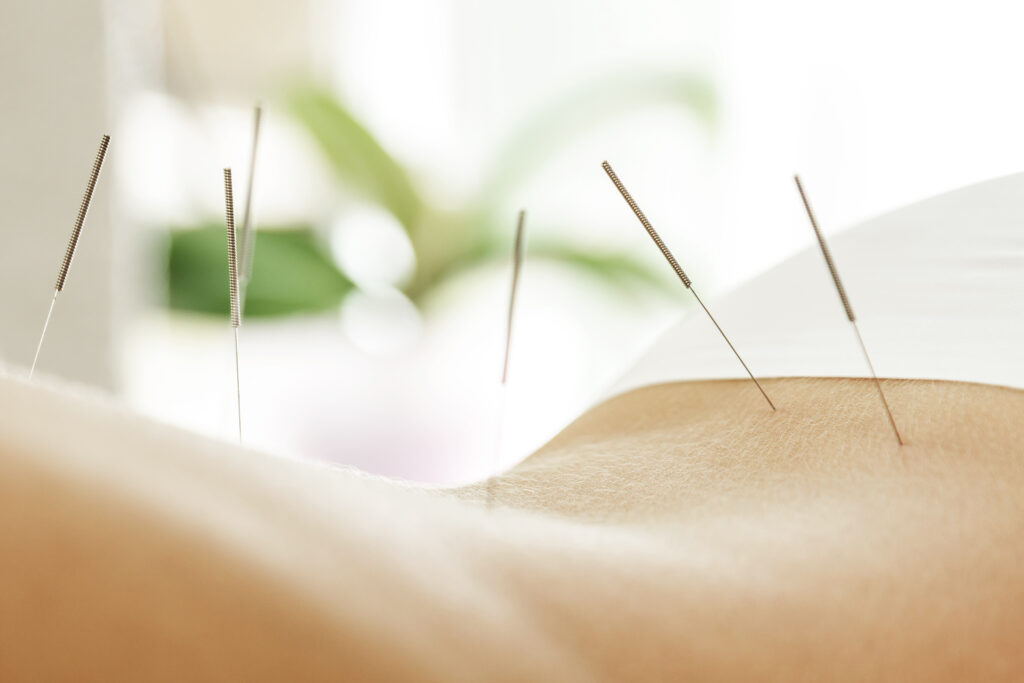
This question eventually leads back to acupuncture itself. One argument sometimes made in favour of acupuncture is that it has survived for more than two thousand years and therefore must work. Taken on its own, that argument is not particularly convincing. Human history is full of ideas that endured for long periods despite being mistaken. Longevity, by itself, is not evidence.
Even so, the sheer persistence of acupuncture remains an interesting thing to think about. Acupuncture has passed through dynasties, wars, political upheavals, cultural revolutions and dramatic changes in medical understanding. It has survived periods of patronage and periods of suppression. It has existed alongside herbal medicine, surgery, religious belief, folk practice, and modern scientific medicine. During that time, it has spread globally and continued to attract patients, practitioners and, more recently, researchers attempting to understand what effects it may produce and how those effects occur.
That persistence does not settle the debate about efficacy, nor should it. Questions about evidence are best answered by evidence. Yet there is still something curious about a practice that has remained part of human healthcare for so long across so many different contexts. Perhaps the most interesting question is not whether age proves effectiveness. It does not. The more interesting question is what would need to be true for a practice to survive for such a length of time in spite of yielding zero results.
If acupuncture genuinely did nothing at all, if nobody derived any benefit from it under any circumstances, its survival would itself be a remarkable historical phenomenon. We would be looking at one of the most enduring healthcare practices in human history persisting, developing, and in some instances thriving for millennia despite contributing nothing meaningful.
Of course, one might argue this is the placebo effect at scale. But large meta-analyses, including those controlling for placebo, suggest acupuncture’s effects exceed expectation alone.
Conclusion
By this point, the original question may feel slightly different from the way it appeared at the beginning.
Will acupuncture work?
It remains a reasonable question. Anyone considering treatment has every right to ask it. The difficulty lies in the fact that healthcare rarely deals in the kind of certainty that the question seems to invite.
The experienced practitioner is not withholding a simple answer. More often, they are trying to answer honestly. They are drawing on research, clinical experience, professional training and the details of the individual case, while recognising that living systems retain an element of unpredictability. They may have a strong view about what is likely to help. They may be cautiously optimistic. They may even be quite confident. None of those things are the same as certainty.
This is true of acupuncture, but it is equally true of medicine, physiotherapy, surgery, psychology and countless other forms of healthcare. All of them involve decisions made under conditions of incomplete information. All of them rely on evidence while recognising the limits of prediction. All of them require practitioners to balance knowledge with uncertainty.
Perhaps the most useful question is not whether a treatment can be guaranteed to work. A more productive place to begin might be asking whether it is a reasonable treatment to try, what the evidence suggests, what risks are involved, and how progress will be assessed along the way.
That approach may lack the reassuring simplicity of a promise, but it reflects the reality of healthcare rather well. We bring together knowledge, evidence, skill, experience and observation, then use them to navigate situations that remain, to some degree, uncertain. The goal is not to eliminate uncertainty completely. It is to make good decisions in its presence.

Thanks for reading!
Visit the British Acupuncture Council's website to find a qualified, regulated acupuncturist in your area of the UK. And visit Evidence Based Acupuncture for discussions of the evidence base and biomechanisms of acupuncture.
Further reading
Read more on the blog:
- How does the body respond to acupuncture? - what happens when we insert a needle
- Which kind of anxious are you? - thoughts on anxiety in Chinese medicine
- Health without hacks - simple wellbeing advice
- A nourishing morning - looking at healthy morning routines from both a modern scientific and Chinese yangsheng perspective
- Foot health, somatic awareness, massage, and the nervous system - standing on your own two feet
- Common traditional patterns of disharmony: Liver Qi Stagnation and Spleen Qi Deficiency
- What is Qi? - an exploration of vital energy
- Why the channel system of Chinese medicine still matters today
- Chronic pain - acupuncture as a first line intervention
- Sailing the Dao - modern misuses of Daoist wisdom
- Six Divisions & TCM Pathology - a comprehensive guide to Chinese medicine
- How many needles? - contrasting styles of acupuncture
- Between freedom & form - tensions between tradition and modern individualism
- Navigating the middle ground - tensions between spiritual healing and modern biomedicine
- How diagnosis works in Chinese medicine
- The scientific mechanisms of acupuncture
- Is acupuncture really "alternative"? - how Chinese medicine stands apart from other alternative therapies
- When wisdom becomes a soundbite - how modern culture uproots classical ideas from their proper context
- Acupressure points for anxiety and migraine relief
- Acupuncture: pseudoscience or evidence-based practice?
- What is tuina? - a look at Chinese massage
- Qi is not quantum - debunking a popular acupuncture myth
- Supporting lymphatic health with acupuncture, tuina, and qigong
- Sleep is sacred: natural ways to ease insomnia
- Is dairy really bad for you? - a Chinese medicine perspective
- Qi in the Age of AI - why Chinese medicine matters more in the information age
- The Chinese body clock - parallels with our modern understanding of circadian rhythms
- Year of the Fire Horse - transitioning into 2026
- How does acupuncture work? - exploring fascia, embryology, and systems science
- Can acupuncture help with hayfever and rhinitis?