

Why the Label Doesn’t Always Tell the Full Story

It’s a common question in clinic: “Can acupuncture help with…?”
The blank is usually filled with a modern biomedical (Western) diagnosis – fibromyalgia, sciatica, IBS, migraine, arthritis, vertigo, overactive bladder...
The person asking has often seen specialists, tried medication, followed test results, but still their condition persists. They’re looking for another way of understanding what’s going on.
The answer many practitioners give is: yes, acupuncture may help – but perhaps not in the direct way the person expects.
Traditional Chinese Medicine (TCM) works from a different foundation. It doesn’t ignore a modern diagnosis, but it doesn’t depend on it either. A term like “IBS” or “sciatica” may describe a set of symptoms, but it doesn’t explain why they’ve arisen in this person, or what combination of factors has allowed them to persist.
Chinese medicine begins there – with the person in front of us, not the label. The biomedical diagnosis is one piece of the puzzle. But it’s not the key that unlocks the whole pattern.
From Labels to Patterns: Why TCM Doesn’t Treat Diagnoses
In Western medicine, many conditions are defined by clusters of symptoms. Fibromyalgia. Sciatica. Irritable Bowel Syndrome. Overactive bladder.
Each of these names points to a recognisable experience: fatigue, pain, bloating, urgency. But the diagnosis itself often doesn’t tell us why these symptoms are happening, or why they express themselves in a certain way in one person but differently in another. One individual with IBS is severely constipated, another has frequent, urgent, loose bowel movements.
In Chinese medicine, these conditions don’t have exact equivalents. Instead of treating “fibromyalgia,” a practitioner works with the underlying pattern of imbalance that gives rise to that person’s specific presentation. Five people with the same Western diagnosis might receive five different treatments.
Take overactive bladder. It’s a term used to describe urgency, frequency, nocturia, and sometimes incontinence. But it doesn’t distinguish between cases rooted in hormonal shifts, nervous system dysregulation, muscular tension, or unresolved emotional stress. Chinese medicine does. Depending on the accompanying signs, the pattern might involve Kidney Yang deficiency, Damp-Heat, or disruption in Heart–Kidney communication.
Or consider IBS. It’s often referred to as a “functional gastrointestinal disorder” – meaning nothing shows up on scans or tests, but the symptoms are real and sometimes debilitating. Bloating, urgency, constipation alternating with diarrhoea, and discomfort that worsens with stress are common patterns. In TCM, this reflects a long-understood relationship between the Spleen and Liver.
The Spleen, associated with digestion and transformation, is easily disrupted by overthinking, worry, and poor eating habits. The Liver, which governs the smooth flow of Qi, is affected by frustration and emotional constraint. When the Liver Qi becomes stagnant, it can “invade” the Spleen, disrupting its function. This dynamic – often called Liver overacting on the Spleen – can lead to symptoms that mirror modern IBS. Depending on the individual, the treatment focus may shift between supporting the Spleen, soothing the Liver, resolving internal Cold, or clearing Damp. But in TCM, we don't label it IBS. It simply doesn't mean anything in Chinese medicine. The underlying patterns describing the person's unique internal environment are the key.
Then there is fibromyalgia. Once viewed primarily as a muscular issue, it was later reclassified as neurological. Today, emerging research suggests it may involve glial cell activation, central sensitisation, and elevated markers such as substance P and pro-inflammatory cytokines. These findings help validate the lived experience of people with chronic pain, but they haven’t yet led to a clear treatment pathway. Chinese medicine approaches this from another angle: not by chasing the latest theory, but by assessing how the body is functioning in real time.
Is there underlying deficiency? Is Qi or Blood stagnant? Is the pain better with warmth or worse? Does the person feel mentally foggy, easily overwhelmed, or emotionally flat? Each answer allows us to hone in on the patterns present, which in turn shape the treatment.
This is why TCM doesn’t treat a label. The label may offer context, but the work happens elsewhere – through listening, observing, touching, and connecting. What matters most is the unique way the imbalance is showing up in this person, at this moment.
Understanding the Building Blocks of a Chinese Medicine Diagnosis

When someone comes for treatment, they may expect to be asked about their diagnosis and the main symptom that brought them in. That’s part of the picture – but in Chinese medicine, it’s only the starting point.
A TCM diagnosis is not built from one symptom, one label, or one test. It’s drawn from many threads: signs, sensations, patterns, rhythms, and the practitioner’s intuition and clinical experience. Over time, these threads form a picture of how the person’s whole system is functioning – physically, emotionally, energetically.
This is called pattern differentiation (bian zheng). It means identifying the particular constellation of signs and symptoms that reflect a person’s current state of imbalance.
To build this picture, the practitioner may assess:
- The appearance and shape of the tongue
- The quality, depth, and rhythm of the pulse
- Patterns across other body systems – digestion, sleep, temperature regulation, menstruation, energy, mood
- The person’s emotional state and constitutional tendencies
- Their environment, habits, diet, and the story of how the issue developed
- Hara diagnosis (in Japanese systems) and palpation of the channels
Each of these elements contributes to a working diagnosis – not in the Western sense of defining disease, but in the sense of identifying what’s blocked, depleted, overheated, or out of harmony.
To use a familiar example: two people come in with migraines. One feels a throbbing, one-sided headache with dizziness and irritability before their period. The other describes a heavy, dull pain across the forehead with a foggy head and bloating after eating. The first person may show signs of Liver Yang rising; the second may be dealing with Spleen deficiency with Damp or Phlegm accumulation. The Western diagnosis is the same. The Chinese diagnosis – and the treatment – is not.
This approach reflects an important principle in Chinese medicine: the relationship between root and branch.
- The branch refers to the symptoms – the discomfort, the diagnosis, the expression of imbalance
- The root refers to the underlying pattern or cause that has given rise to those symptoms
Sometimes the treatment will target both. Sometimes the practitioner will focus on clearing the branch before supporting the root. At other times, the priority is to work with the root, trusting that as deeper balance is restored, the symptoms will shift on their own.
This kind of thinking may feel unfamiliar, especially if someone is used to the idea that symptoms should be targeted directly. But it also explains why acupuncture can help in cases where other approaches have plateaued. By working at the level of the system, not just the symptom, it opens up different possibilities for change.
Research, Regulation, and the Language Gap
Chinese medicine has often been described as difficult to study using standard biomedical frameworks. This isn’t because the medicine lacks depth or validity. It’s because it doesn’t lend itself easily to reductionist models – where one variable is changed, and one outcome is measured.
There are several reasons for this.
- Sham acupuncture, often used as a placebo in trials, isn’t biologically inert. Even superficial needling or needling at non-acupuncture points can produce physiological responses.
- Every treatment in Chinese medicine is individualised, meaning no two people with the same condition receive exactly the same points or techniques. Trying to standardise protocols for the sake of research can strip away the very thing that makes the treatment effective.
- The therapeutic relationship, the regulation of touch, the rhythm of sessions – all of these influence outcome, yet are difficult to measure.
- Large, well-funded trials are still relatively rare. Funding often goes to pharmaceutical interventions, and the cost of running high-quality, large-scale studies is significant.
Even so, the research base for acupuncture is expanding steadily.
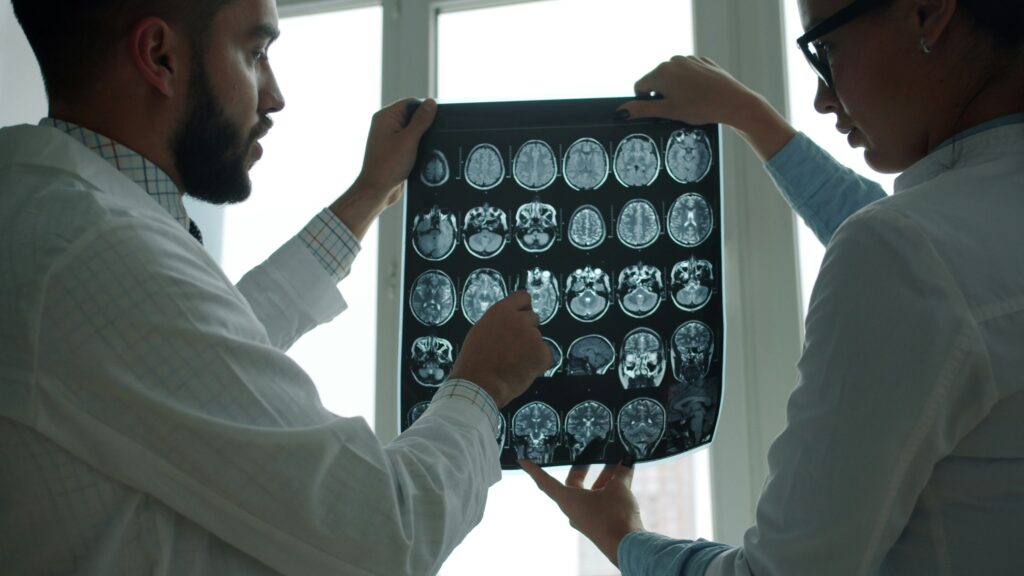
- fMRI imaging shows that needling specific points can activate corresponding regions of the brain.
- Studies have identified mechanisms such as adenosine release (which reduces mitochondrial stress, calms nerves, and reduces inflammation), modulation of TRPV1 pain receptors, and effects on the HPA axis (involved in stress regulation).
- Acupuncture appears to influence both the nervous system and connective tissue, offering promising avenues for understanding pain perception, tension modulation, inflammation, and homeostatic balance.
There is now substantial evidence showing the pain relief mechanisms of acupuncture may include:
- Triggering the release of endogenous opioids (like endorphins and enkephalins) and modulation of neurotransmitters (such as serotonin and noradrenaline).
- Suppression of pro-inflammatory cytokines (e.g. tumour necrosis factor-alpha and interleukin-1 beta).
- Changes to limbic/emotional processing.
- Peripheral sensitisation (reducing inflammatory mediators and increasing neuromodulators that calm nociceptors – our pain-sensing nerve endings).
- Central sensitisation (by stimulating descending inhibitory pathways, modulating spinal cord processing, activating opioids, and calming glial activation to alter the over-amplified pain signals associated with chronic pain).
- Influencing connective tissue through measurable mechano-transduction effects like fascial winding that alter fibroblast behaviour and local tissue tension.
- Regulating the autonomic nervous system by shifting sympathetic and parasympathetic activity in ways that support digestion, circulation, vagal tone, heart rate variability, and stress recovery.
- Improving microcirculation by promoting nitric oxide release and enhancing local blood flow (through capillary dilation) and tissue oxygenation.
- Contributing to neuroplasticity by reshaping sensory and pain-related cortical networks involved in long-term regulation (through reducing hypervigilance, altering pain-related attention networks, and improving sensory discrimination).
- Modulating spinal gating (spinal inhibition) by stimulating A-delta fibres that inhibit C-fibre pain transmission.
- Affecting wider immune activity by affecting mast cells, T-cell function, and microglial responses.
- Engaging psychosocial and interoceptive mechanisms by altering attention, expectation, and emotional regulation in ways that support therapeutic change.
In the UK, the National Institute for Health and Care Excellence (NICE) now recommends acupuncture for chronic primary and secondary pain. The World Health Organization (WHO) also lists a wide range of conditions for which acupuncture has shown clinical benefit.
At the same time, regulatory bodies and professional associations are right to be cautious. Clinical recommendations must be based on a sufficient quantity and quality of evidence. In many areas of traditional Chinese medicine, that evidence is still developing. Most professional acupuncturists support this. It’s important to uphold rigorous standards for clinical research. It’s also important not to make claims that go beyond what the evidence can support.
This is why many practitioners don’t respond to the question “Can acupuncture treat X?” in a straightforward way. That question comes from a model in which conditions are clearly defined, and treatment is applied to match.
Chinese medicine doesn’t always work like that. It’s not about eliminating a label. It’s about supporting the organism as a whole – helping the system find its way back toward internal balance. When that begins to happen, symptoms often shift. The person may sleep better, digest more easily, feel calmer, move with less pain. But the treatment wasn’t aimed at a condition in isolation. It was aimed at restoring coherence.
For that reason, the effects of acupuncture can be subtle at first. They can also be unexpectedly wide-reaching. As one area of imbalance is addressed, others may begin to resolve. This can feel slow, or surprisingly fast, depending on the person’s constitution, the chronicity of the condition, the frequency and dose of treatment, and the strength of the underlying pattern.
Chinese medicine doesn’t reject science. But it does invite us to think in systems, not just in parts.
What to Expect in a TCM Consultation

A practitioner trained in Chinese medicine will, of course, be aware of a person’s Western diagnosis. It may offer useful clues. But the primary focus will be elsewhere.
Rather than slotting someone into a diagnostic category, the practitioner will want to understand the broader picture – how the issue began, how it behaves, and how it fits into the person’s overall health story.
They may ask questions that seem unrelated to the main complaint. These could include details about digestion, sleep, temperature preferences, energy levels, menstruation, and mood. They’ll likely ask about what makes symptoms better or worse, and whether they vary by time of day, season, or emotional state.
They’ll also look at the tongue, feel the pulse, and sometimes palpate the abdomen or the acupuncture channels. These aren’t just add-ons; they’re essential parts of diagnosis. They give the practitioner insight into the underlying terrain.
A consultation might include questions like:
- When did the issue begin, and what was happening in your life at the time?
- Do the symptoms feel hot, cold, heavy, dull, sharp?
- How is your appetite, your digestion, your elimination?
- What’s the quality of your sleep, your emotional state, your energy?
Some of these questions may not have straightforward answers. That’s fine. The purpose isn’t to collect data for a checklist. It’s to understand how the system is functioning as a whole – and where it may be struggling to maintain harmony.
This is especially relevant when it comes to symptom-based diagnoses like fibromyalgia, IBS, or polymyalgia. Many of these labels are descriptive rather than explanatory. They often reflect the person’s experience of distress but don’t tell us much about cause.
The word “polymyalgia,” for instance, literally means “many muscles hurt.” It categorises the problem without illuminating why the pain is happening, or why it behaves the way it does. Chinese medicine wants to know more. Where did the blockage begin? What patterns have allowed it to persist? What else in the body is involved?
In this approach, the person’s history, lifestyle, emotional tendencies, and physiological rhythms all matter. The practitioner is trying to trace the pattern back to its source – whether that lies in constitutional weakness, environmental exposure, dietary habits, emotional holding, or a combination of these.
The goal is not to mask symptoms, but to release what is stuck, nourish what is depleted, and restore natural flow. When the body is supported in this way, change becomes possible. This is also why the consultation process can feel both focused and expansive. The treatment plan is based not just on what’s wrong, but on what’s happening beneath the surface – and how best to encourage the system to rebalance itself.
Moving Beyond the Diagnosis: Symptoms as Signals, Not Identity

In modern healthcare, it’s common to frame illness in terms of something one “has.”
“I have IBS.”
“I have fibromyalgia.”
“I have chronic fatigue.”
There can be comfort in naming a condition. It offers a sense of understanding, and sometimes of validation. But there’s also a risk that the diagnosis becomes a kind of identity. It can subtly shape how someone sees their body – as something broken, burdened, or stuck in a fixed state.
Chinese medicine approaches this differently. A symptom is not an enemy. It’s a message – a signal that something is out of balance, something that needs attention.
Pain, fatigue, fogginess, urgency, insomnia – these are all expressions of an inner disharmony trying to resolve itself. When we learn to interpret these signs, we gain insight into how the system is working. And when treatment helps the system to shift, the message often softens. The symptom begins to lift.
This isn’t about thinking positively or reframing pain as a gift. It’s about recognising that the body has its own innate sort of intelligence – not a thinking intelligence, but a knowing of sorts, nonetheless. That intelligence may not always be pleasant or convenient, but it’s coherent. It responds to stress, remembers trauma, adapts to environment, and expresses imbalance in ways that can be understood.
Acupuncture works with that intelligence. It doesn’t impose a correction from outside. It offers a nudge, a stimulus, a suggestion. It reminds the system of its capacity to move, reorganise, shift out of habitual holding patterns, and settle into a different state.
This is why the effects of treatment can be both subtle and far-reaching. Someone might come in with headaches and find that their sleep improves. Or they may seek help for sciatica and notice that their digestion becomes more regular. These changes aren’t side-effects – they’re signs that the system is beginning to move toward greater coherence.
A practitioner of Chinese medicine may not be interested in “curing” a diagnosis. They want to help, of course, but that’s just not the framework they’re working in. Their job is to see the person clearly, understand the pattern at play, and offer treatment that invites change.
Western-trained clinicians aren’t expected to know about San Jiao function or Liver Qi stagnation. In the same way, Chinese medicine practitioners aren’t expected to explain the molecular details of nerve demyelination or receptor binding. A good TCM acupuncturist will have sound knowledge of physiology in biomedical terms, as they have to be able to communicate with patients and doctors who speak that language, and of course they must be able to recognise medical red flags and cautions or contraindications to treatment. But they don't need an encyclopaedic knowledge of every Western medical condition in order to do their job. They work in a different paradigm.
Each system has its own strengths. When used well, they can support one another. Acupuncture can sit alongside medication, physiotherapy, psychotherapy, or nutritional care. Sometimes it fills a gap. Sometimes it works best in concert. Above all, it invites a different kind of question – less about what condition someone has, and more about what their body is asking for.
Two Lenses, One Human Story

Western medicine excels at defining, naming, measuring, and intervening. It offers us precision, protocols, and life-saving technologies.
Chinese medicine offers something different: a view of the body in motion; a system in relationship with its past, its environment, and its inner landscape. It pays attention to rhythm, resonance, and flow. It asks how things got stuck, where the strength has gone, and how to gently help the system move again. Its tools – acupuncture, massage, cupping, moxibustion, herbal medicine, qigong – are designed not to fight pathology, but to support vitality.
These two systems don’t need to be in conflict. They offer different ways of seeing the same human body. Each brings something valuable. Each has its limits.
A Western diagnosis can provide structure and clarity. It can explain symptoms, justify treatments, and offer reassurance. But it doesn’t always tell the whole story. It rarely explains why the condition arose when it did, or why it behaves differently from one person to the next.
Chinese medicine steps into that gap. It listens for the underlying pattern. It treats the system, not just the symptom. And it does so with a clear internal logic that is both ancient and clinically relevant. The role of the practitioner is to make sense of that pattern, and to support the person’s movement toward balance. Not in a perfect, idealised sense of health – but in the grounded, practical sense of greater ease, clarity, and resilience.
For someone living with fibromyalgia, IBS, or chronic pain, that might mean better sleep, clearer digestion, reduced sensitivity, or fewer flare-ups. For someone with anxiety or fatigue, it might mean feeling more centred and less reactive. For others, the changes may be small but meaningful – less bloating, more stable mood, a stronger sense of self. The guiding principle is not to “treat the disease,” but to support the person.
When someone asks whether acupuncture can help with a particular diagnosis, the answer isn’t always straightforward. But the better question might be: Can acupuncture help the body return to balance? And from there: What changes become possible when the system is no longer stuck?
That’s the space in which Chinese medicine works. Not by ignoring the diagnosis, but by looking beneath it. By trusting the body’s ability to respond. And by meeting each person, not as a case – but as a whole story, still in motion.
Read more on acupuncture and complementary therapies in Chinese medicine, or continue exploring our blog.