

Half-stories and uprooted beliefs

Modern wellness culture often borrows fragments of traditional wisdom and presents them as universal truths. A single idea is lifted from its original setting, polished into a slogan, and shared as a lifestyle shortcut or trendy "hack". What gets lost is the context that once made the practice safe, meaningful, and effective. Traditions were shaped by climate, community, philosophy, and lineage. They were relational systems, not isolated techniques.
These fragments circulate quickly because they are easy to package. Cold plunges promise resilience. Breathwork promises transformation. Meditation promises inner peace. The difficulty is that none of these were ever meant for everyone. Traditional teachers did not give the same practice to every student. They assessed constitution, readiness, emotional steadiness, and the person’s internal climate before deciding what to offer.
This is the part of the story that rarely survives the journey into modern culture.
Traditional systems assessed readiness, not just enthusiasm
In classical yoga, Daoist internal work, qigong, monastic training, and indigenous ritual life, personal assessment was always the starting point. Teachers understood that people arrive with different strengths and vulnerabilities. Some have strong yang but little yin. Some have deep sensitivity but fragile grounding. Some carry trauma that alters how their breath, attention, and emotions behave under strain.
Readiness was not a judgement of worth, but a form of care. A student might learn seated meditation only after building steadiness through movement and breath. Someone with excess heat might be guided towards cooling practices. Someone depleted might be protected from fasting or austerity. People with a history of trauma might be versed in more externally-focused visualisations, instead of immediately being asked to silently look deeply inside – straight at their demons. This ensured the practice met the person where they were, safely and sensitively, rather than forcing the person to match an ideal. When the assessment disappears, the method becomes blunt.
Breathwork without energetic insight

Breathwork is one of the clearest examples of knowledge reduced to a soundbite. Techniques such as Bhastrika, Kapalabhati, or modern hyperventilation methods are often promoted as universally strengthening. In their original settings these methods were advanced practices. They were never meant to be the first thing a student learned, and they were never applied without careful attention to the individual’s pattern.
Strong, forceful breathing builds internal heat and intensifies activity in both mind and body. This can be valuable when someone is sluggish, cold, or weighed down by stagnation. It can be destabilising when the person is already hot, agitated, anxious, or running on very little reserve. Yin deficiency, insomnia, palpitations, and rising Liver patterns all tend to react poorly to high-intensity breathwork.
Traditional lineages understood this well. They taught grounding breaths first, then breath retention, then stronger methods only when the student could regulate their responses. Modern adaptations often skip the progression and present the final technique as the main event.
Meditation is not automatically calming
Meditation is widely viewed as a universal stress reducer, yet traditional lineages never treated it that way. Teachers observed how a person responded to stillness before prescribing long periods of seated practice. Some minds settle when the body grows quiet. Others become flooded with unresolved material. For some, attention becomes sharp yet steady. For others, the mind collapses into dissociation.
Shen disturbance, trauma activation, and severe deficiency can all make seated meditation difficult. The practice may amplify what is already unstable. For these individuals, grounding movement, chanting, breath-led coordination, or external visualisations are often safer points of entry. Monastic systems knew this and guided students accordingly. Their approaches were relational, not formulaic.
Modern presentations of meditation often flatten this nuance, promising calm to everyone despite very different internal landscapes.
Heat and cold practices taken out of balance

Strong heat practices are often treated as a universal route to vitality. Hot yoga, tapas-driven sequences, intense vinyasa, and high-energy breathwork all promise transformation. These can be genuinely therapeutic when someone feels heavy, cold, or stuck. In those cases the additional warmth can lift the system and spark movement.
Heat is not always helpful. People with Liver fire, yin deficiency empty heat, anxiety, migraines, or palpitations are already running hot. Their systems are sensitive to overstimulation. For them, aggressive heat practices can push symptoms toward agitation, poor sleep, and emotional volatility. Classical training recognised this and would guide such students toward cooling, grounding, or descending practices instead.
Cold exposure has gone through a similar shift. Ice baths and cold immersion are promoted as universal tools for resilience, but cold can also deplete yang, weaken digestion, aggravate menstrual irregularities, or deepen fatigue. Some people respond well to cold when introduced gradually. Others feel worse even with short exposure. Traditional Daoist approaches used cold exposure only after building sufficient internal warmth, often through movement, breath, and seasonal alignment. The preparation mattered. Without that preparation, heat and cold become extremes rather than medicines.
Fasting, diet, and detox culture without constitutional awareness
Fasting existed in many traditions, yet it was rarely used as a regular wellness tool. It was applied carefully, usually for short periods, and often within ritual, religious, or therapeutic contexts. Practitioners observed the individual’s strength, digestion, emotional state, and season before offering fasting as a method.
Modern detox culture strips away the criteria that once kept fasting safe. People with blood deficiency, chronic cold, weak digestion, low reserves, or emotional fragility can be pushed into deeper depletion by abstaining from food. Even strong individuals need a thoughtful reintroduction of nourishment after fasting, something that traditional systems always emphasised. The issue is not that fasting is harmful. It is that it is incomplete without guidance, context, and a clear understanding of who benefits and who does not.
Certain foods become branded as “bad”, too, without consideration of the essential question: bad for whom? Even in Chinese medicine circles, dairy is often demonised even though its cooling and moistening qualities can be a wonderful tonic for certain constitutions, in moderation of course. And yet for those whose internal environment is already damp or cold, dairy may indeed not be the best choice. The right question is rarely just whether something is good or bad; it’s whether it’s good or bad in relation to a certain physiological configuration. Read more on dairy in Chinese medicine here.
Herbal remedies removed from diagnostic roots
Herbs such as ashwagandha, ginseng, and astragalus are marketed as broad solutions to stress or fatigue. In reality, they have specific energetic qualities. Ashwagandha is warming and stimulating. Ginseng strongly tonifies qi and can intensify stagnation or heat. Astragalus is strengthening but not suitable when there is unresolved internal heat or inflammation.
Traditional herbalism is always diagnostic. A herb is chosen because it suits a particular pattern, not because it suits a particular trend. When these remedies are lifted out of their diagnostic framework they become unpredictable. Someone may experience genuine benefit, while another may feel more tense, warm, sleepless, or unsettled.
The herbs themselves are not the problem. The loss of discernment is. It is far safer to consult a practitioner trained in herbal medicine than to self-prescribe based on online suggestions. Chinese herbalists work with detailed knowledge of dosage, preparation, and the way herbs combine in relation to a person’s presenting pattern. This ensures that any formula is tailored for both safety and therapeutic effect. If you are interested in herbal remedies, it is essential to consult with a professional herbalist.
Qi practices without containment or grounding
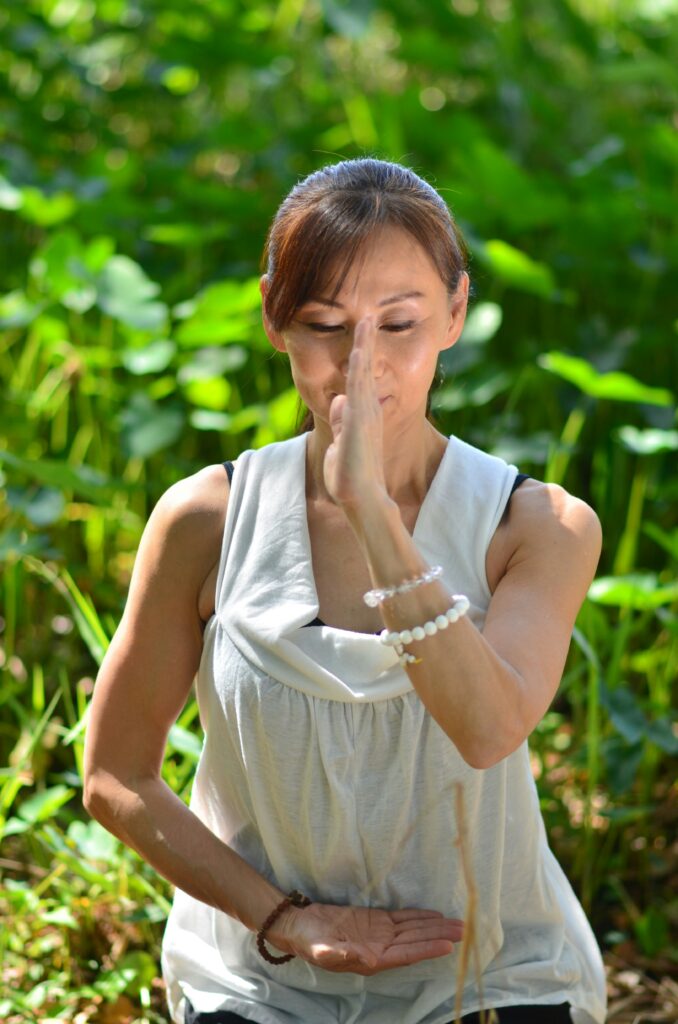
Qigong and other internal practices rely on structure and method. Movements are sequenced to build, circulate, settle, and store. Teachers emphasise grounding, breath regulation, and closing forms that bring qi back to the lower dan tian. These elements protect the practitioner, keep emotions stable, and prevent qi from rising uncontrollably.
Modern adaptations sometimes remove closing sequences or encourage open, expansive practices without containment. This can lead to dizziness, agitation, emotional overflow, or difficulty sleeping. Classical methods guarded against this by teaching rooting first and expansion later. Without those safeguards, what was once a steadying practice can become destabilising.
Borrowed indigenous ritual without safeguards
Many contemporary wellness spaces draw inspiration from indigenous ceremonies such as sweat lodges, drumming, trance work, and ecstatic movement. In their original settings these practices were held within a community, shaped by elders, and supported by shared cultural meaning. The group itself provided containment. Those who led the rituals understood how to guide people through intense emotional and physical states, and how to return them safely to ordinary awareness.
Modern adaptations often remove the cultural structures that provided those layers of safety. Without the grounding influence of elders and community, people may find themselves overwhelmed. Emotional flooding or confusion can arise when powerful ritual techniques are separated from the support systems that once held them. This is not a criticism of adaptation. It is a reminder that strong methods need containers.
The limits of “listen to your body”
The instruction to listen to the body is valuable. It encourages sensitivity and cultivates a relationship with inner experience. Yet the body does not always speak with clarity. Trauma, long-term stress, deficiency, or stagnation can distort signals. A depleted person may crave practices that deplete them further. An anxious system may interpret stillness as danger. Someone habitually running hot may feel drawn to intense activity rather than the cooling practices they genuinely need. Someone with stagnant energy may diligently work to build their inner resources before they’ve sufficiently moved what has become stuck, and find themselves even more mired in stagnancy. Someone living with the aftermath of serious trauma may feel they are healed, without realising there are deeper layers still to acknowledge and work through.
Traditional teachers helped students develop discernment before handing over that responsibility. They taught how to sense true needs rather than rely on conditioned impulses. Listening to the body is meaningful when supported by guidance. Without that, the inner signals can be hard to interpret.
Listening outward with discernment is also crucial and too often overlooked. Spiritual openness is a quality widely regarded as universally laudable in popular spirituality. But when we’re open to everything, and guarded against nothing, we make ourselves vulnerable to all kinds of spiritual threats. Not every spirit is benevolent.
Misunderstanding yin and yang
Yin and yang are sometimes treated as labels for passive or active tendencies. The reality is more subtle. Yin and yang describe processes that rise, fall, contract, expand, warm, cool, nourish, and transform. They describe relationships rather than traits. A yin practice is not simply soft. A yang practice is not simply strong. Their value depends on the state of the person.
Someone depleted in yin may react strongly to any rising or stimulating activity. Someone cold and stagnant may feel heavy under practices that favour stillness. Traditional training observed these differences closely. Modern categories often flatten the dynamic nature of yin and yang into simplified types that stand alone, instead of understanding them as relational concepts. This makes the language easier to package but much less accurate.
Understanding yin and yang as living processes restores some of the nuance that gets lost when these ideas travel into trend culture.
Why context matters

Traditional systems are coherent worlds. They are shaped by the environments, philosophies, and cultures that produced them. A practice is not only a technique. It is part of a wider ecosystem of meaning. Teachers, communities, and lineages created pathways that kept practitioners steady while they explored deeper layers of body and mind.
When practices move into modern settings they can still be powerful, but the surrounding context thins out. What remains is often the surface technique without the relational structure that once protected and guided the student. This is how half-stories arise. The method stays but the framework that made sense of it and adjusted it the individual simply falls away.
Reconnecting with context does not require a facsimile return to ancient forms. It simply asks for curiosity about origins, respect for the cultures that carried the teachings, and awareness of the conditions under which practices were meant to flourish.
Traditional systems are rich because they arise from lived experience. They are grounded in observation, relationship, and adaptation over generations. When their teachings survive only as internet memes and brief slogans, the depth that once guided them can disappear. Yet their value remains. With thoughtful engagement they can support healing in a way that honours both their origins and the needs of contemporary life.
A practice becomes most powerful when it is understood in context. It becomes steadier when carried with discernment. It becomes medicine when it meets the person where they are.
Read more on the distinctions between traditional medicine and New Age healing practices here.