

Acupuncture Dose, Cultural Differences, and the Dogma of Elegant Minimalism
The appeal of “elegant” acupuncture
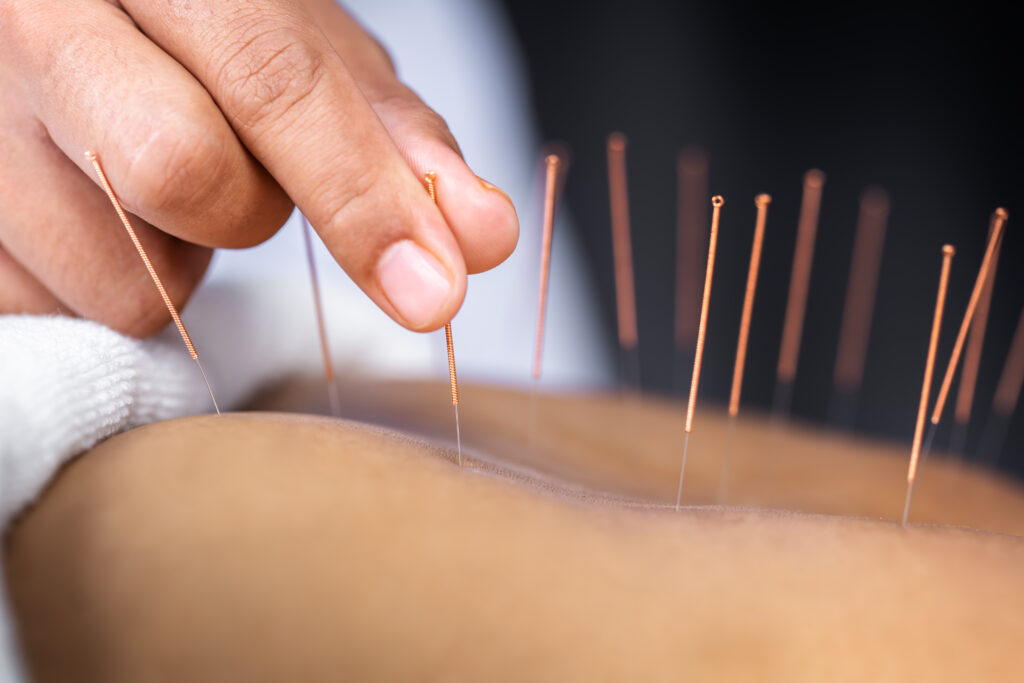
Students of acupuncture are often told that a good treatment should be “elegant.” The ideal prescription is described as minimal yet perfectly chosen: a few fine needles, each placed with intention, capable of rebalancing the whole system. The implication is that fewer needles show greater mastery.
It is a seductive idea. There is grace in simplicity, and anyone who has practised for long knows that some of the most memorable results come from a handful of points. Yet the notion that minimalism is inherently superior has become so embedded in Western acupuncture culture that it is rarely questioned. It carries an aesthetic charm but also a certain air of exclusivity, even pretentiousness: the practitioner as artist, the treatment as subtle act of creation, or magical intervention.
The problem is that this view may not reflect how acupuncture is actually practised in most of the world, nor what clinical evidence tells us about effectiveness.
Where the idea of elegant minimalism came from
The modern Western acupuncture scene was shaped not only by translations of Chinese medical texts but also by the counter-cultural movements of the 1960s and 70s. Many early teachers came from backgrounds in philosophy, psychology, or alternative spirituality rather than clinical medicine. They introduced acupuncture through the language of art and mysticism, describing qi as a spiritual current and the acupuncturist as a conduit of subtle energy.
This framing appealed to students seeking depth or mystery beyond the reach of conventional science. It also differentiated acupuncture from Western biomedicine, positioning it as a gentler and more intuitive discipline. Over time, these ideas hardened into teaching dogma: that the most refined practitioner could correct imbalance with only a few perfectly chosen points, or by opening an arbitrarily small number of channels, and that over-needling showed a clumsy lack of subtlety or sensitivity.
In Chinese terms this was never the issue. Classical physicians certainly valued economy and precision, but their minimalism was clinical, not aesthetic. They aimed for efficiency, not esotericism. If the condition required stronger stimulation or multiple channels, they provided it without apology.
Qi, translation, and the problem of “energy medicine”
Much of this Western reinterpretation rests on a single linguistic problem: the translation of qi as “energy.” The Chinese character 氣 (qi) refers to air, vapour, breath, or the dynamic movement of substances. It describes process, not a material entity. Early missionaries and sinologists, working within nineteenth-century frameworks that mixed physics and metaphysics, rendered qi as “vital energy.” That word carried the flavour of élan vital and spiritualist thought rather than physiology.
Qi is energy, but it's not a paranormal, undiscovered substance: it's an umbrella term to describe many interrelated, complex but mundane processes, or indeed specific physiological ones, depending on context. In the classical medical texts, qi simply denotes function: the activity of organs, the movement of blood, the transformations of metabolism, the pulsations of life that modern physiology would express through chemical and electrical language. When qi is understood this way, acupuncture becomes a precise intervention in regulatory physiology, not an act of dubious supernatural energy manipulation.
This shift has important consequences. It rescues acupuncture from quasi-mystical caricature and places it within a framework that scientists can examine: the modulation of neural, vascular, and connective-tissue signalling. It also removes the need to defend practices on metaphysical grounds. There is nothing less wondrous about acupuncture when it is understood physiologically. Both manual manipulation and electroacupuncture have been shown to activate descending inhibitory pain pathways, increase local blood flow, and modulate brain regions associated with autonomic regulation.
In many ways it becomes more impressive: a hands-on method for influencing the body’s own adaptive, homeostatic capacity to self-regulate, regenerate, and communicate between systems.
Read more on misinterpretations and mistranslations of Chinese thought here.
What the evidence says about needle dose
When we look to modern research, the evidence does not support the idea that “less is more.” Several large meta-analyses on chronic pain show that outcomes improve with greater treatment dose. “Dose” here means not only the number of needles but also the intensity of stimulation, the session length, and how frequently the treatment is delivered.
Studies that compared once-weekly sessions with two or more treatments per week found clearer, longer-lasting benefits at higher frequency. Trials that used a greater number of needles or included electroacupuncture often achieved stronger effects. A large individual-patient data meta-analysis confirmed this dose–response relationship: more needles and more sessions correlated with better pain reduction. Multiple randomised controlled trials have also shown improved outcomes with higher frequency.
This pattern mirrors real-world practice in China, where patients are commonly treated three to five times per week for short courses. Western clinics, by contrast, usually offer weekly sessions because of cost, scheduling, and a cultural tendency towards weekly structuring. The result is a substantial difference in cumulative stimulation, which may explain part of the East–West gap in reported efficacy.
Deqi, the characteristic heavy or spreading sensation around the needle, is another area of divergence. In traditional teaching it signifies a successful connection with the body’s response. Some trials suggest that obtaining deqi enhances outcomes for certain conditions, but others find no clear advantage. Even minimal or superficial needling can evoke measurable nervous-system and circulatory changes. The safest interpretation is that deqi is valuable but not universally required. Its importance likely varies with both the condition and the patient’s sensitivity.
Evidence therefore points toward a simple conclusion: acupuncture, like any other physiological intervention, follows a principle of adequate stimulus. The body needs a clear signal, repeated often enough, to reorganise. “Elegance” may lie in precision of diagnosis and technique, not in how few needles are used.
Cross-cultural styles of needling
Across East Asia, acupuncture evolved through many regional schools, each reflecting local philosophy, clinical priorities, and healthcare systems. The contrasts are striking, not only in technique but in what each culture defines as an effective dose.
Mainland China (hospital practice)
In large teaching hospitals, patients are commonly treated several times per week. Needle counts range from moderate to high, and deqi is deliberately sought. Electroacupuncture is routine for musculoskeletal and neurological disorders. The guiding principle is functional restoration through cumulative stimulation: enough input, delivered frequently, to produce visible change.
Japan: Meridian Therapy and Toyohari
Japanese systems developed under different conditions. Toyohari practitioners often work with ultra-fine needles or even contact needling that does not pierce the skin. The aim is to regulate the flow of qi through the primary channels using the lightest possible touch. Deqi is not pursued, and patient comfort is paramount. This approach excels with frail, anxious, or highly reactive individuals.
Japan: Kiiko-style palpation
This modern lineage uses palpatory feedback to guide each point. Needles are added or removed until palpable reflexes soften. The number of needles is modest, but stimulation is responsive rather than symbolic. The emphasis is diagnostic precision more than restraint.
Korea: Saam and hospital systems
Traditional Saam acupuncture uses four or six needles based on five-phase theory to tonify or sedate organ systems. Korean hospitals, however, mirror the Chinese model, combining body points, electroacupuncture, and sometimes pharmacopuncture (herbal injection therapy). Frequency and intensity are again considered essential to outcome.
Taiwan and South-East Asia
Many clinicians blend Tung and Tan distal methods with standard body points. These systems use resonant channel relationships to generate fast results while maintaining moderate overall needle numbers. The strength of stimulation, not the count itself, defines the therapeutic dose. Results of these distal balancing methods can be dramatic but are sometimes lacking in sustained or deep effect when used without supporting constitutional points.
Western minimalist approach
In much of Europe and North America, acupuncture developed as a private-practice service delivered once per week. High-frequency treatment is rarely feasible, so weekly sessions became the aesthetic and practical norm. The model suits sensitive patients and aligns with Western ideals of refinement, but often provides a lower cumulative stimulus than the courses used in Asian hospitals. When low-frequency treatments are combined with low needle count in the name of "elegance", outcomes can suffer.
Community acupuncture clinics
An interesting hybrid has emerged in group settings, where fewer needles are used per person but treatments occur more often. The higher frequency compensates for lighter per-session input, illustrating that repetition can outweigh minimalism in determining total dose.
The lesson across all these settings is that frequency and stimulation strength usually matter more than needle count alone. Minimalism works best when sensitivity or context demands it; for robust patients and structural pain, a stronger course often delivers superior results.
You can read more about different acupuncture styles here.
Why minimalism persists
If stronger stimulation and higher frequency generally yield better outcomes, why does the minimalist ideal remain so influential in the West?
Partly, unfortunately, it is delusion and ego. Elegant minimalism flatters the practitioner’s identity. It offers an image of mastery, suggesting that insight alone can move the body’s currents. It also distinguishes acupuncture from conventional medicine, reinforcing a sense of special artistry.
Perhaps a kinder interpretation is that this artistic or spiritual framing provided meaning and sensitivity in an era when biomedicine was mechanistic and often dismissive of the importance of the inner life on health and wellbeing. But emotional health, mindful thought patterns, and positive framing are becoming increasingly recognised in fields of standard care, and modern physiology now gives us a more grounded language for that mind-body connection.
The cultural backdrop matters too. Western society prizes individualism and aesthetic refinement. The idea that a few perfectly chosen points can heal the whole system fits that aesthetic. It also aligns with the legacy of translating qi as “energy,” which encourages belief in invisible, pseudo-spiritual influence rather than physiological modulation. In Japan, a minimalist approach is concordant with the culture, but may have roots in more historical reasons, too. Toyohari acupuncture, for instance, emerged after World War II, when needles were scarce, leading to a preference for more minimal, contact styles.
Minimalism endures because it is beautiful. But beauty is not always effective medicine. It has its place, for sure; in treating anxiety, PTSD, long COVID, or chronic fatigue syndromes, light needling can prevent over-activation. The Ling Shu, a classical text on Chinese medicine, describes vigorous needling and manipulation for certain conditions, and a lighter touch for fearful or energetically deficient patients. Clinical skill lies in judging when a light signal will suffice and when the body needs something stronger.
A pragmatic model of dose

A useful way to reconcile these traditions is to think in terms of dose ladders rather than fixed philosophies. Each rung represents a balance between patient sensitivity and therapeutic intensity.
1. Reactive or depleted systems
Use gentle or contact needling. Limit to six to twelve points. Avoid heavy manipulation or electroacupuncture. One or two treatments per week is usually enough until strength returns.
2. Internal regulation and emotional balance
Use twelve to twenty points with moderate stimulation. Combine root and branch treatment. Weekly or twice-weekly sessions for three to six weeks are typical.
3. Chronic musculoskeletal or pain syndromes
Use eighteen to thirty points, locally and distally, sometimes with electroacupuncture or deliberate manual techniques. Treat two to three times per week initially, then taper as stability improves.
4. Neurological and multi-region pain
Use twenty to thirty-six points, often in scalp-plus-body combinations. Apply firm stimulation and high course frequency, three to five sessions per week for short intensive periods before review.
This framework allows sensitivity and robustness to guide the level of stimulation, not ideology. Safety protocols (accurate counting, clear needling zones, consistent removal checks) become especially important at higher counts.
Balancing art and science
Acupuncture remains an art, but in the same sense that surgery or physiotherapy are arts: applied skills refined through observation, feedback, and practice. Its artistry lies in discernment and timing rather than in mystery.
When the work is grounded in physiology, its credibility strengthens. Needles influence the nervous system, vascular tone, connective-tissue tension, and brain networks. These mechanisms do not diminish acupuncture’s depth; they reveal why it can affect pain, emotion, and internal function together.
This is not to detract from personal style, either. Some acupuncturists cultivate a more clinical atmosphere, while others prefer soft lighting and calming music. There is much to be said for the latter, since these gentle sensory cues can have real effects on the nervous system, as can a well-timed smile or reassuring touch. Once again, the best practice is to stay adaptable to the client’s presentation and preferences.
The true elegance of acupuncture is not measured by how few needles we use but by how accurately we judge what the body needs. Sometimes that means a whisper. Sometimes it means a clear, repeated signal that cannot be ignored.
Explore how acupuncture works here.
Beyond mystique
Acupuncture does not require anything supernatural to be profound. It stands on its own as a system of regulation developed through careful empirical observation. When we treat it as a spiritual performance, we risk obscuring its scientific richness and alienating those who might benefit from it.
Reclaiming a pragmatic view of dose brings the medicine back to its roots: responsive, physiological, and accountable. The balance between sensitivity and stimulus is what defines good practice, not adherence to any ideology of minimalism or power.
When practitioners shed the ornament of mystique and focus on what the body can actually integrate, acupuncture reveals itself as both subtle and strong: a method of communication with the living processes that sustain health.
Perhaps the next useful step for our profession is not to debate in a partisan or idealistic way which style is superior, but to study and share how dose, frequency, and patient sensitivity can be matched more systematically. Dogmatism about needle numbers or channel combinations is rarely helpful.
In a medicine that prides itself on individualised treatment, remaining adaptable and responsive to the person in front of us would be far more valuable than adhering to any rigid formula.
“The superior physician adjusts his treatment according to the times, the local conditions, and the constitution of the person.”
— Huangdi Neijing Suwen
Find lots more articles like this on our blog.