

Understanding Qi and Chinese Medicine
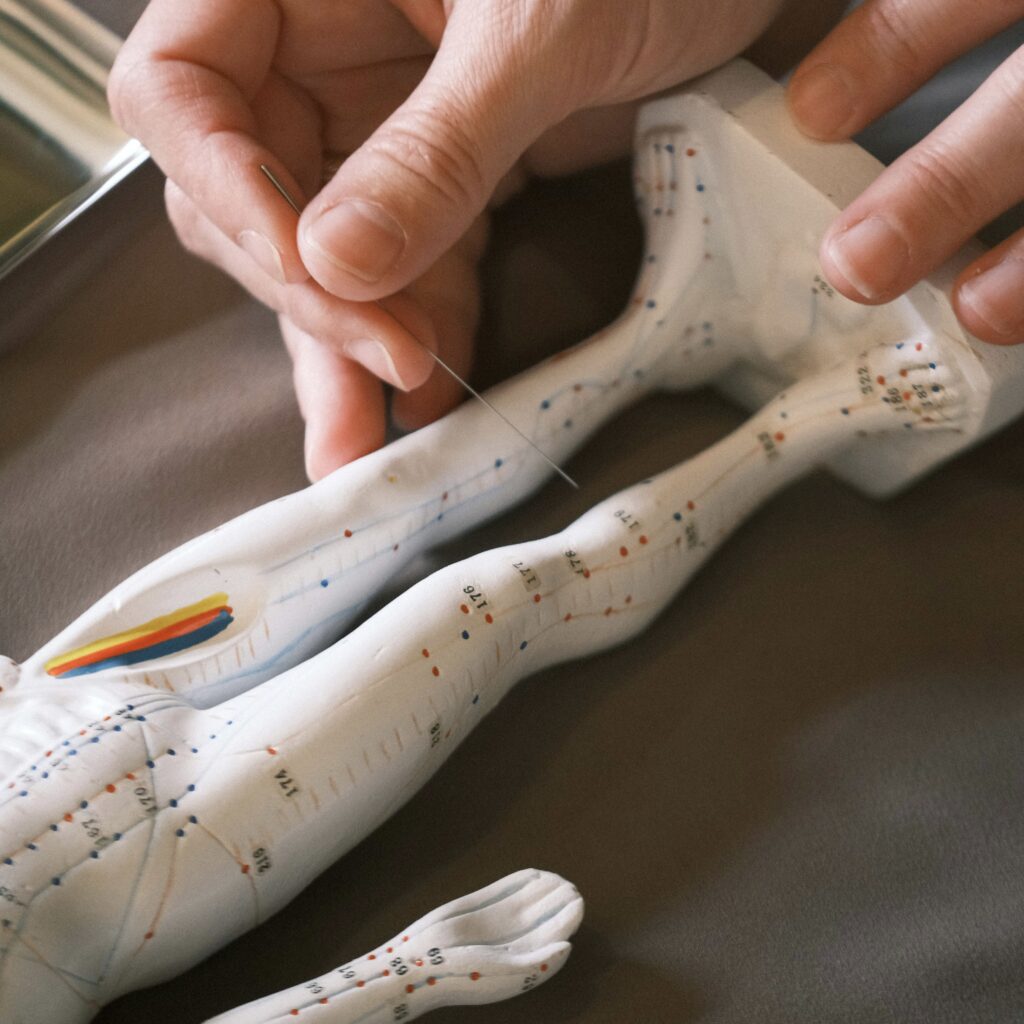
People sometimes come for acupuncture expecting something closer to energy healing. They may imagine that treatment involves balancing spiritual energy, clearing blockages, opening chakras, or somehow tuning an invisible field around the body.
This is understandable, because acupuncture is often placed under the broad heading of “alternative medicine,” where very different traditional medicines and New Age practices can become blurred together into one, often highly individualised, interpretation. But acupuncture is not energy healing – at least, not in the way it is often framed in alternative spaces.
It’s important to make clear they this is not intended as a criticism of the alternative scene. Reiki, crystal healing, chakra systems and other spiritual or energetic approaches all have their own histories, languages, methodologies, and communities. They are simply not what classical Chinese medicine developed as, and energy work is not what acupuncture is trying to do in a clinical setting.
What Kind of “Energy”?
A lot of the confusion comes from one word: qi (pronounced chee). Qi is often translated into English as “energy”. That translation is convenient, but it can also be misleading. In modern English, and propagated in part by popular culture and media, energy often sounds like a subtle invisible substance, something spiritual or mystical that flows around the body beyond the reach of our normal senses or measuring devices. Once qi is understood in that way, acupuncture can start to sound as though it works by manipulating a kind of esoteric life-force.
That is a reading that sits uneasily with the classical texts of Chinese medical literature, where qi is referred to in relation to bodily functions – circulation, protection, transformation, the function or efficiency of an organ – or breath and oxygenation, and not as a disembodied field. In Chinese medicine, it is used in a mundane manner, not a mysterious one.
In fact, qi appears in many everyday Chinese words and expressions, and its meaning depends heavily on context. It can refer to air, breath, atmosphere, vitality, movement, influence, function, or the way something expresses itself. Someone may talk about the qi of a room, the qi of the weather, or the qi of a person’s presence without implying anything supernatural. It is an ordinary and common word used in many different ways.
Chinese medicine uses the word in similarly varied ways. We may speak of Lung qi, Spleen qi, Liver qi, Wei qi, Gu qi, Zong qi, Zheng qi and many other forms. These are not all the same “thing” moving around under different labels. They are different ways of describing the body’s functions, relationships, protective capacity, nourishment, transformation, circulation, and regulation.
This is why translating qi simply as “energy” can cause problems. It may be useful as a rough shorthand, but it can also pull the idea into a modern New Age framework that does not belong to Chinese medicine.
At the other extreme, there are some who strive to fit qi neatly into a direct single equivalent. But saying that qi is just ATP, oxygen, electricity, or nerve signalling is also too narrow. Those may all be relevant to particular aspects of physiology and internal communication, but none captures the breadth of what the classical term was used to describe.
An Empirical Model

Chinese medicine developed as an observational medicine. Its physicians did not have microscopes, blood tests, MRI scanners, or our modern understanding of physiology. They observed symptoms, pulses, tongues, temperature changes, pain patterns, digestion, sleep, breathing, menstruation, mood, complexion, movement, and the way people responded to treatment. Over time, they looked for recurring patterns and developed a language to describe them.
That is where ideas such as channels, organ systems, qi, patterns of disharmony, and yin and yang became clinically useful – and still are today. They are not arbitrary beliefs placed apart from the physical body; they are part of a system developed to make sense of repeated clinical observations. A patient with poor digestion, fatigue, heaviness, and loose stools may be understood through one pattern. A patient with stress, tightness, disturbed sleep, and heat signs may be understood through another.
This empirical side of Chinese medicine is easy to overlook. Acupuncture has always included very practical observation. The idea of an Ashi point is a good example. An Ashi point is not necessarily a named textbook point. It is a tender, reactive or clinically relevant place found by palpation. In simple terms, the practitioner presses, the patient says “ah, yes, that’s it,” and that point may become part of the treatment.
Equally, many standard acupuncture points are located at sites of increased neurovascular and connective tissue significance, including places where nerves lie relatively close to the surface, regions of fascial convergence, and areas that frequently correspond with motor points or myofascial trigger points.
None of this is mystical. It is palpation, observation, and clinical response. The practitioner is looking for what the body presents, not only applying a theoretical map. This is one reason acupuncture can be both systematic and flexible. The channel system gives structure, but the actual treatment is shaped by the individual person and the findings on the day.
Into the Modern Age
Modern research gives us another layer of explanation. When a needle is inserted, it does not “balance energy” in a vague spiritual sense. Needling has measurable effects on local tissues, nerves, blood flow, connective tissue, immune signalling, and pain modulation. It can influence the release of endogenous pain-relieving chemicals and affect the way the nervous system processes pain.
Acupuncture can also influence the autonomic nervous system, including the balance between sympathetic arousal and parasympathetic settling. Many patients recognise this as a feeling of deep relaxation during or after treatment.
From a traditional perspective, much of this might be described in terms of regulating qi. From a modern physiological perspective, we might speak about nervous system regulation, pain pathways, and changes in muscle tone.
These two ways of speaking do not have to be enemies. The classical language arose from careful observation before modern scientific instruments existed. Modern physiology can now describe many of the processes involved in a different way. One language is older and pattern-based. The other is anatomical, biochemical, and neurological.
Pattern-Seeking Medicine
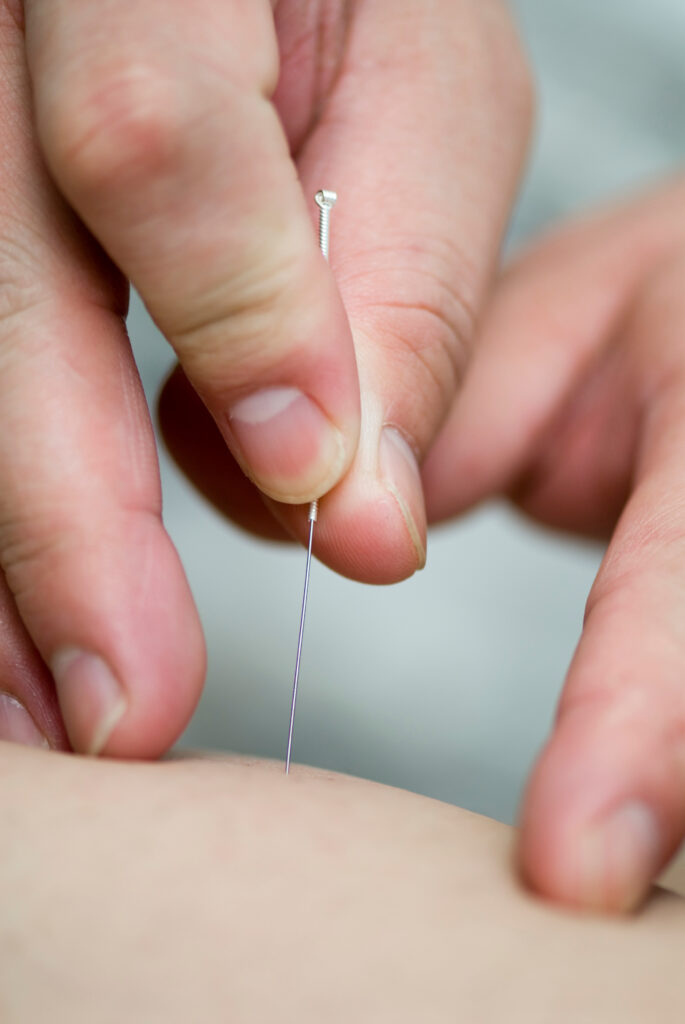
The classical model remains useful because patients rarely arrive with one isolated symptom. They come with clusters of experience: pain, sleep disturbance, fatigue, stress, digestion, temperature changes, menstrual changes, emotional strain, tension, and altered movement. Chinese medicine is good at looking for patterns across those clusters, rather than treating each symptom as though it belongs in a separate box.
So, acupuncture may be described as helping the body rebalance itself, but that does not mean balancing chakras or manipulating a mysterious spiritual energy or vital force. This has largely arisen through the way the medicine has been translated, interpreted, and popularised in the West, and conflated with Indian yogic traditions via New Age spirituality.
Balance and harmony in Chinese medicine are perhaps closer in spirit to the modern idea of homeostasis than to balancing a spiritual energy field. It means helping regulate bodily processes that have become stuck, strained, undernourished, overactive or poorly coordinated. The language of qi can still be useful here, provided it is understood as part of a clinical model rather than as an ill-defined mystical substance.
Chinese medicine is a traditional medical system with its own methods of observation, diagnosis, and treatment. It developed before modern science, but not outside observation, experience, or practical testing. Treating it as something that somehow requires training extra-sensory faculties or some mystical intuition does a disservice to the longstanding pragmatic tradition to which it belongs.
Chakras and Dantian
The chakra system belongs to the spiritual and philosophical traditions of India rather than China. At a glance there are superficial similarities with the upper, middle and lower dantian described in Chinese qigong and internal meditation (neidan), and the two are sometimes treated as though they were equivalent. They are not. Although both traditions use the body as a map for cultivation and self-understanding, they developed independently from one another and rest on quite different philosophical foundations. Treating them as interchangeable tends to blur both traditions rather than clarify either.

Conclusion
The more carefully we use its language, the easier it becomes to appreciate what Chinese medicine is actually trying to do. Qi is not simply “energy” in the modern spiritual sense, nor is it reducible to one biochemical process. It is part of a broader way of describing function, relationship, and change within the living body.
Acupuncture does not depend on mystical forces or extra-sensory perception. It depends on careful observation, thoughtful diagnosis, skilful needling, and the body's own remarkable capacity to respond.
Thanks for reading!
Find a qualified and regulated acupuncturist in your part of the UK by visiting the British Acupuncture Council's website.
Further reading
Read more on the blog:
- When the needle goes in... - find out how the body responds to acupuncture
- Which kind of anxious are you? - thoughts on anxiety in Chinese medicine
- Acupuncture research - the state of the evidence
- The emotional life of the organs: what Chinese medicine says about how we think and feel
- Health without hacks - simple wellbeing advice
- A nourishing morning - looking at healthy morning routines from both a modern scientific and Chinese yangsheng perspective
- Foot health, somatic awareness, massage, and the nervous system - standing on your own two feet
- Common traditional patterns of disharmony: Liver Qi Stagnation and Spleen Qi Deficiency
- What is Qi? - an exploration of vital energy
- Why the channel system of Chinese medicine still matters today
- Chronic pain - acupuncture as a first line intervention
- Sailing the Dao - modern misuses of Daoist wisdom
- Six Divisions & TCM Pathology - a comprehensive guide to Chinese medicine
- How many needles? - contrasting styles of acupuncture
- Between freedom & form - tensions between tradition and modern individualism
- Navigating the middle ground - tensions between spiritual healing and modern biomedicine
- How diagnosis works in Chinese medicine
- The scientific mechanisms of acupuncture
- Is acupuncture really "alternative"? - how Chinese medicine stands apart from other alternative therapies
- When wisdom becomes a soundbite - how modern culture uproots classical ideas from their proper context
- Acupressure points for anxiety and migraine relief
- Acupuncture: pseudoscience or evidence-based practice?
- What is tuina? - a look at Chinese massage
- Qi is not quantum - debunking a popular acupuncture myth
- Supporting lymphatic health with acupuncture, tuina, and qigong
- Sleep is sacred: natural ways to ease insomnia
- Is dairy really bad for you? - a Chinese medicine perspective
- Qi in the Age of AI - why Chinese medicine matters more in the information age
- The Chinese body clock - parallels with our modern understanding of circadian rhythms
- Year of the Fire Horse - transitioning into 2026
- How does acupuncture work? - exploring fascia, embryology, and systems science
- How does the body respond to acupuncture? - what happens when we insert a needle
- Can acupuncture help with hayfever and rhinitis?
- Will the treatment work? A look at how we estimate outcome probabilities in living, responsive, complex bodies