

One Needle, Many Responses
One of the challenges of explaining acupuncture is that the conversation can turn into a disconnected list of effects. It can influence neurotransmitters. It encourages the release of endorphins. It affects the immune system. It alters hormone levels. It changes blood flow. It modulates inflammation.
The list grows longer every year as research uncovers new physiological effects. All those statements may be true, yet they still leave an obvious question unanswered:
"How can one simple intervention influence so many apparently different systems?"
Perhaps the answer lies not in looking for a separate explanation for every individual effect, but in considering the first system acupuncture interacts with when we insert a needle. That system is the nervous system.
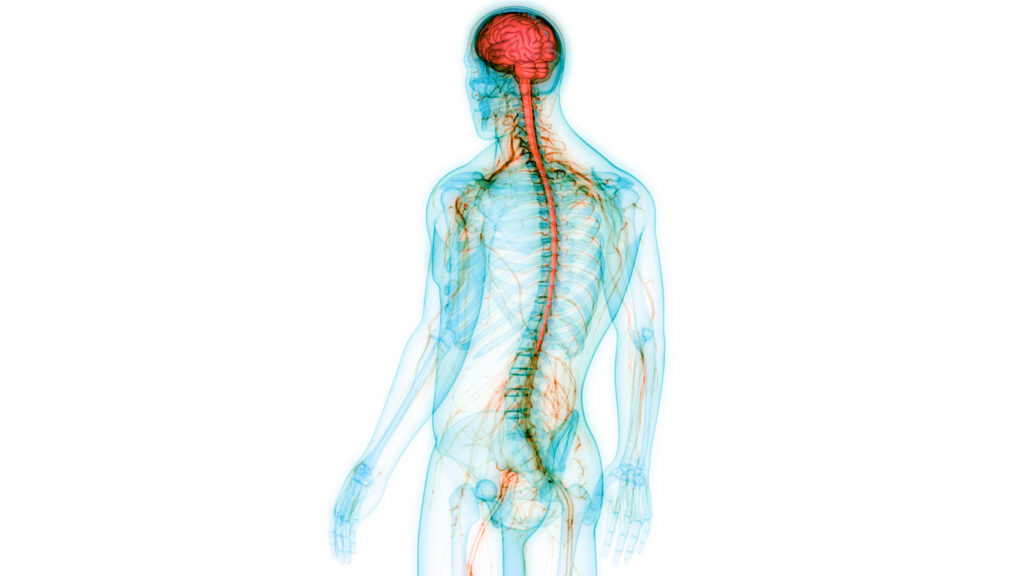
The needle itself is a remarkably simple tool, but inserting it creates a carefully controlled sensory stimulus. Receptors in the skin, muscles and connective tissues respond immediately, activating sensory nerve fibres that carry information to the spinal cord, brainstem, and higher centres of the brain. In other words, the very first conversation acupuncture has with the body is a neurological one.
From there, everything begins to make a little more sense. The nervous system is much more than a collection of wires carrying messages to and from the brain. It is the body’s principal regulatory network, constantly receiving information from both inside and outside the body before coordinating countless physiological processes in an effort to maintain homeostasis. Pain perception, muscle tone, circulation, digestion, immune activity, hormone release, and autonomic function are all influenced by this continuous flow of information.
A Body-Wide Conversation
If that is the system acupuncture is primarily interacting with, it becomes far less surprising that its effects can extend well beyond the site where the needle is placed. Changes in pain perception, for example, are not simply the result of endorphins being released. Descending pain pathways originating in the brainstem can alter how pain signals are processed in the spinal cord before they ever reach conscious awareness. Endorphins form part of that response, but they are only one piece of a much larger picture.
The same principle applies elsewhere. The nervous system communicates constantly with the endocrine system through structures such as the hypothalamus and pituitary gland. It communicates with the immune system through an intricate network of neural and biochemical signalling. It regulates the diameter of blood vessels, influences heart rate and digestion through the autonomic nervous system, and it continually adjusts muscle activity to maintain posture and movement.
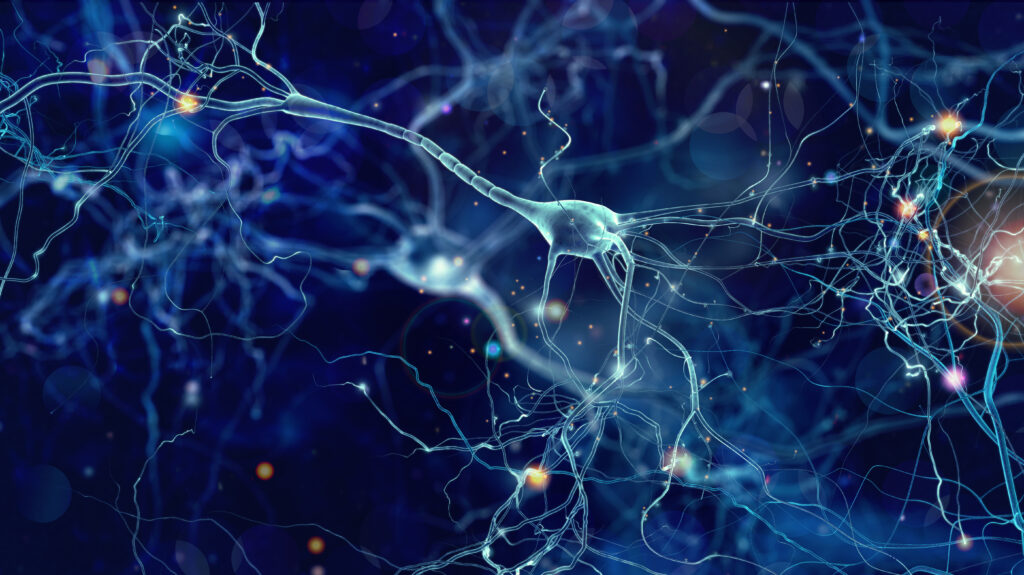
Rather than viewing these as a series of unrelated mechanisms, they begin to look like different effects arising through the same underlying interface. A carefully controlled sensory stimulus is presented to the body’s principal regulatory system, which then coordinates whatever responses are appropriate.
The Whole Story
That does not mean the nervous system is the whole story. Needling also creates immediate local effects. Connective tissue deforms around the needle, causing fibroblasts to respond. ATP is released and subsequently converted into adenosine, a molecule known to influence pain signalling. Local inflammatory mediators change, and blood flow may increase around the needle itself.
These events do not sit in isolation from the nervous system. They rapidly become part of an ongoing dialogue between the local tissues and the nerves supplying them. Signals travel in both directions. The tissues influence the nervous system, while the nervous system simultaneously alters the behaviour of those tissues. Rather than separate explanations competing with one another, they appear to be different parts of the same physiological conversation.
Specificity
This way of thinking also helps explain why point selection is important. If acupuncture simply worked by “stimulating the nervous system”, every point might reasonably be expected to produce the same effects. Yet both clinical experience and emerging research suggest this is unlikely to be the case.
Different parts of the body contain different combinations of sensory receptors, connective tissue architecture and nerve supplies. Signals entering the nervous system from one anatomical location are not necessarily processed in exactly the same way as signals arriving from another. The depth of needling, the type of tissue being stimulated and even the intensity of stimulation all appear to influence which neural circuits become involved.
The Vagus Connection
One example is Stomach 36 (ST-36), classically called Zúsānlǐ (Leg Three Miles), situated just below the knee. Experimental studies have shown that low-frequency electroacupuncture at this point can engage neural pathways involving the vagus nerve, producing measurable anti-inflammatory effects in animal models. Researchers believe the stimulation recruits specific sensory nerve fibres which, through the brainstem, activate vagal pathways that ultimately influence immune activity.
The research is still developing, and this work has been carried out in mice rather than humans. Even so, the findings are fascinating because they begin to show, in anatomical and physiological terms, how stimulation at different locations may preferentially recruit different regulatory networks within the body.
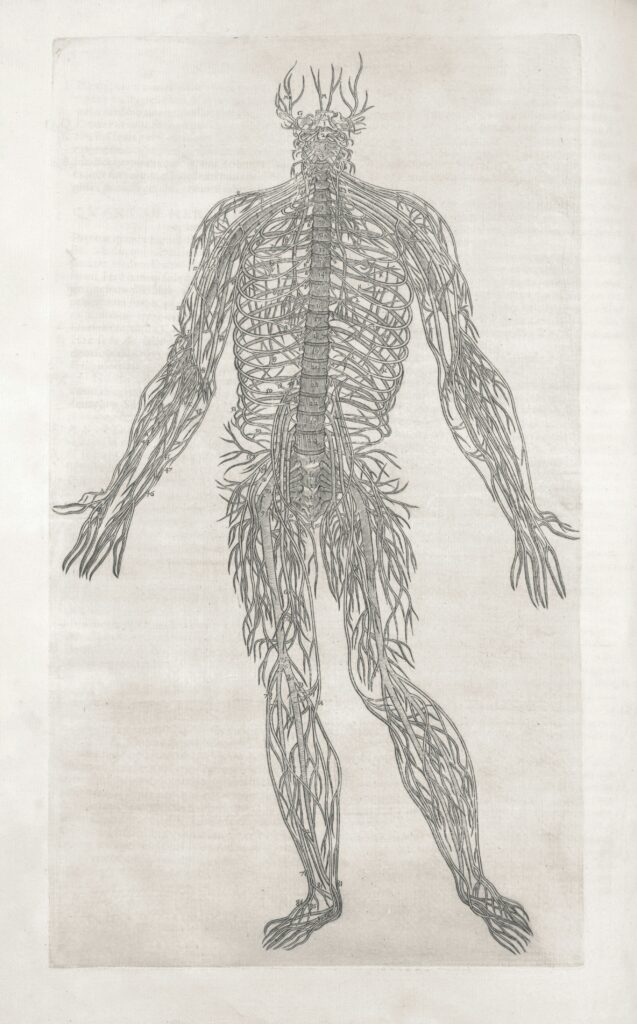
This represents an important shift in thinking. Rather than asking which neurotransmitter a particular point releases, or which hormone it influences, a better question might be:
"Which neural circuits are being engaged, and what physiological responses do those circuits normally regulate?"
That feels like a much more coherent framework than viewing every observed effect as a separate mechanism. It also helps explain something many practitioners notice in everyday practice. Whether we describe a patient’s problem as persistent inflammation, altered pain processing, muscle tension or autonomic imbalance, the treatment itself often looks remarkably similar. The needles have not changed. What changes is our understanding of why the nervous system might respond to that sensory input in a particular way.
An Integrated Response
It seems likely that is because the nervous system is not designed to regulate one function at a time. It regulates the body as an integrated whole. Seen from that perspective, acupuncture no longer appears to have dozens of unrelated effects. Instead, it provides a carefully controlled sensory input into the body’s principal regulatory network, allowing local tissues, peripheral nerves, the spinal cord, the brain, and the autonomic nervous system to participate in an ongoing process of adaptation.
Many questions remain unanswered, and there is still much to learn. Yet thinking about acupuncture as interfacing primarily with the nervous system provides something that lists of neurotransmitters and biochemical pathways cannot achieve. It offers a single, coherent model capable of bringing many seemingly separate observations together.

Thanks for reading!
Find a qualified and regulated acupuncturist in your part of the UK by visiting the British Acupuncture Council's website.
Further reading
Read more on the blog:
- When the needle goes in... - find out how the body responds to acupuncture
- Which kind of anxious are you? - thoughts on anxiety in Chinese medicine
- Acupuncture research - the state of the evidence
- The emotional life of the organs: what Chinese medicine says about how we think and feel
- Is acupuncture energy healing? - a look at whether acupuncture is a kind of "energy work"
- Health without hacks - simple wellbeing advice
- Fit for what? - thinking about strength training for everyday life
- A nourishing morning - looking at healthy morning routines from both a modern scientific and Chinese yangsheng perspective
- Foot health, somatic awareness, massage, and the nervous system - standing on your own two feet
- Common traditional patterns of disharmony: Liver Qi Stagnation and Spleen Qi Deficiency
- What is Qi? - an exploration of vital energy
- Why the channel system of Chinese medicine still matters today
- Chronic pain - acupuncture as a first line intervention
- Sailing the Dao - modern misuses of Daoist wisdom
- Six Divisions & TCM Pathology - a comprehensive guide to Chinese medicine
- How many needles? - contrasting styles of acupuncture
- Between freedom & form - tensions between tradition and modern individualism
- Navigating the middle ground - tensions between spiritual healing and modern biomedicine
- How diagnosis works in Chinese medicine
- The scientific mechanisms of acupuncture
- Is acupuncture really "alternative"? - how Chinese medicine stands apart from other alternative therapies
- When wisdom becomes a soundbite - how modern culture uproots classical ideas from their proper context
- Acupressure points for anxiety and migraine relief
- Acupuncture: pseudoscience or evidence-based practice?
- What is tuina? - a look at Chinese massage
- Qi is not quantum - debunking a popular acupuncture myth
- Supporting lymphatic health with acupuncture, tuina, and qigong
- Sleep is sacred: natural ways to ease insomnia
- Is dairy really bad for you? - a Chinese medicine perspective
- Qi in the Age of AI - why Chinese medicine matters more in the information age
- The Chinese body clock - parallels with our modern understanding of circadian rhythms
- Year of the Fire Horse - transitioning into 2026
- How does acupuncture work? - exploring fascia, embryology, and systems science
- How does the body respond to acupuncture? - what happens when we insert a needle
- Can acupuncture help with hayfever and rhinitis?
- Will the treatment work? A look at how we estimate outcome probabilities in living, responsive, complex bodies
- How does acupuncture engage the body's pain relief mechanism? - expanding on an article in National Geographic