

When the needle goes in...
Many people notice something at the moment of insertion – a heaviness, a dull ache, maybe a spreading sensation that seems to travel away from the point. That feeling has a name in Chinese medicine: deqi, meaning the arrival of qi.
The experience varies enormously from person to person, and from point to point – some people feel very little, but that doesn’t mean very little is happening. What’s actually occurring beneath the skin is something physiology can now describe in some detail – and the picture is a surprisingly intricate one.
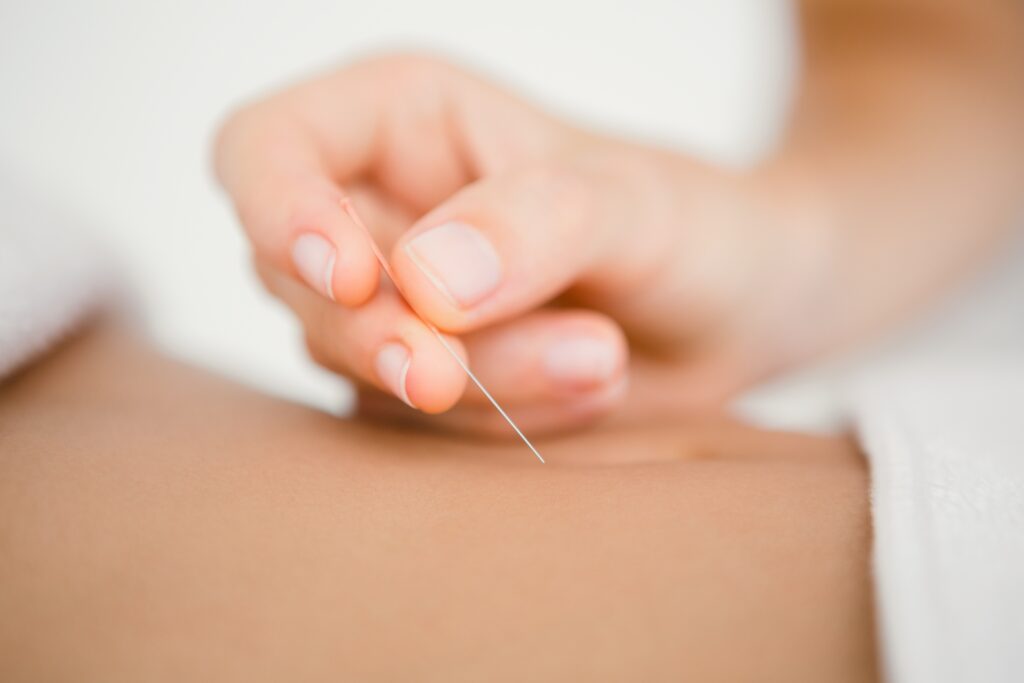
First contact
The first thing the needle meets is connective tissue – the continuous web of fibrous material that wraps around and runs between every muscle, nerve, blood vessel, and organ in the body. Think of it less like packaging and more like a living communication network, threaded through everything.
The moment the needle contacts this tissue, mechanoreceptors – specialised nerve endings that respond to physical pressure and movement, the same ones that tell you when something is touching your skin – begin firing. And here’s something worth knowing: when those receptors are active, the nervous system tends to quieten down the pain signals coming from the same area.
It’s a bit like two radio stations competing for the same frequency – the mechanical signal gets in first and turns the volume down on the pain channel. This is one reason why movement and exercise help with chronic pain, and it’s part of what happens from the very moment a needle makes contact, before any manipulation takes place.
When the needle is then rotated or lifted and pressed, connective tissue fibres begin to wind around it – the tissue physically grips the needle, like the way spaghetti winds around a fork. This isn’t just a sensation; it generates further mechanical signals that radiate outward through the connective tissue network, extending the reach of the stimulus well beyond the insertion point itself.
A chemical cascade
At the same time, a local biochemical conversation starts up. The needle triggers the release of ATP – the tiny molecule that every cell in your body uses as its basic unit of energy, like a kind of universal cellular currency. Under normal circumstances ATP stays inside cells doing its job; when it’s released into the surrounding tissue, it rapidly converts into a different compound called adenosine.
Adenosine then binds to receptors on nearby nerve endings and effectively tells them to calm down – it’s one of the body’s own built-in pain-dampening signals, switched on not by anything injected or introduced, but simply by the mechanical event of needling.
Local immune cells called mast cells also respond to the needle’s presence, releasing histamine and serotonin – chemical messengers that alert nearby nerve endings, a bit like a local alarm system waking up the neighbourhood.
Neuropeptides – short protein chains that nerves use to talk to each other and to surrounding tissue – are also released, including substance P and CGRP. These fine-tune the local inflammatory environment, helping to shift the tissue from a state of ongoing irritation toward something more like active repair.
Nervous highways
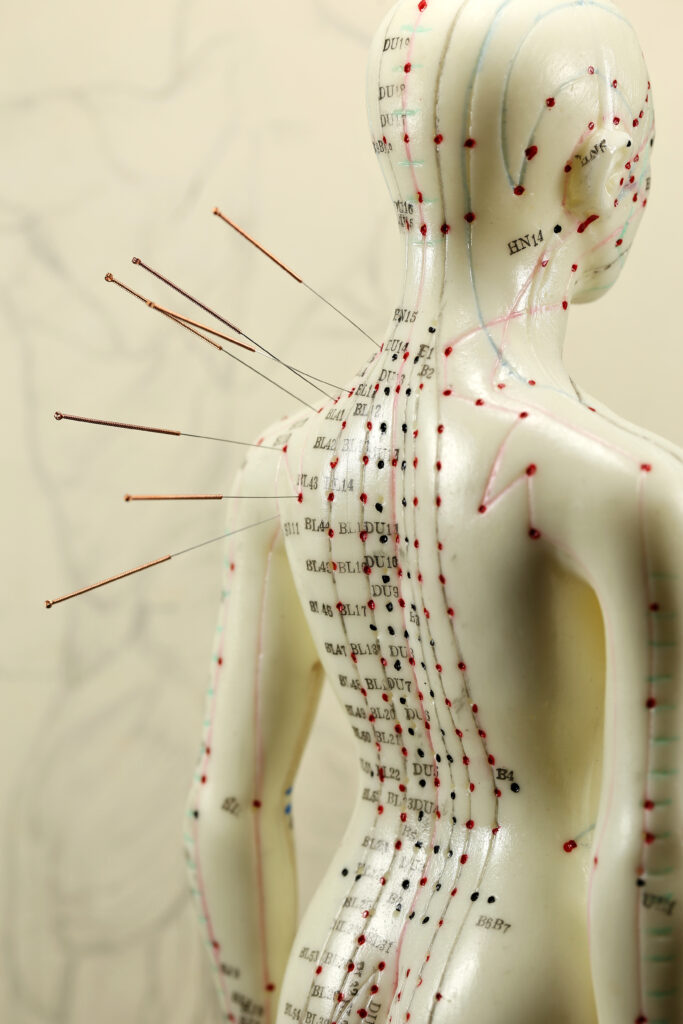
None of this stays local for long. The signals generated at the needle site travel along peripheral nerves toward the spinal cord – the main motorway for sensory information heading up to the brain. There they interact with the gate control system mentioned earlier, but now at a spinal level: incoming signals from the needle influence whether pain signals from elsewhere in the body get amplified or suppressed. The balance tips toward suppression.
Further up the chain, the brain itself becomes involved. One of the most striking findings from acupuncture research is that needling stimulates the release of the body’s own opioid compounds – enkephalins, beta-endorphins, dynorphins.
These are the same family of molecules responsible for a runner’s high, or the reason morphine works: they bind to opioid receptors and reduce the perception of pain. The difference is that here the body is making them itself, in response to the needle. Deep brain structures then activate descending pathways – signals sent back down the spinal cord that actively suppress incoming pain information, like a commanding officer ordering troops to stand down.
Mood and perception
Brain imaging studies have shown measurable changes in regions involved in pain perception, emotional processing, and autonomic regulation – the part of the nervous system that governs heart rate, digestion, breathing, and the body’s overall state of arousal or rest.
Acupuncture also influences the availability of serotonin and noradrenaline, neurotransmitters that play a central role in mood, sleep quality, and how the body manages stress – which begins to explain the wider effects that patients often notice beyond the immediate area being treated.
A cumulative effect
Over a longer timescale, shifts in immune function and inflammatory balance develop. This is why acupuncture’s effects tend to be cumulative: one session sets off a complex cascade, but repeated treatments allow those effects to interact and build, the body gradually recalibrating rather than just responding to a single stimulus.
What this whole sequence describes is not one mechanism but many, unfolding concurrently across local, peripheral, spinal, and central levels – biochemical, neural, and systemic, all at once. The needle is the starting point, but the response belongs entirely to the body. Which is perhaps the most interesting thing about it.
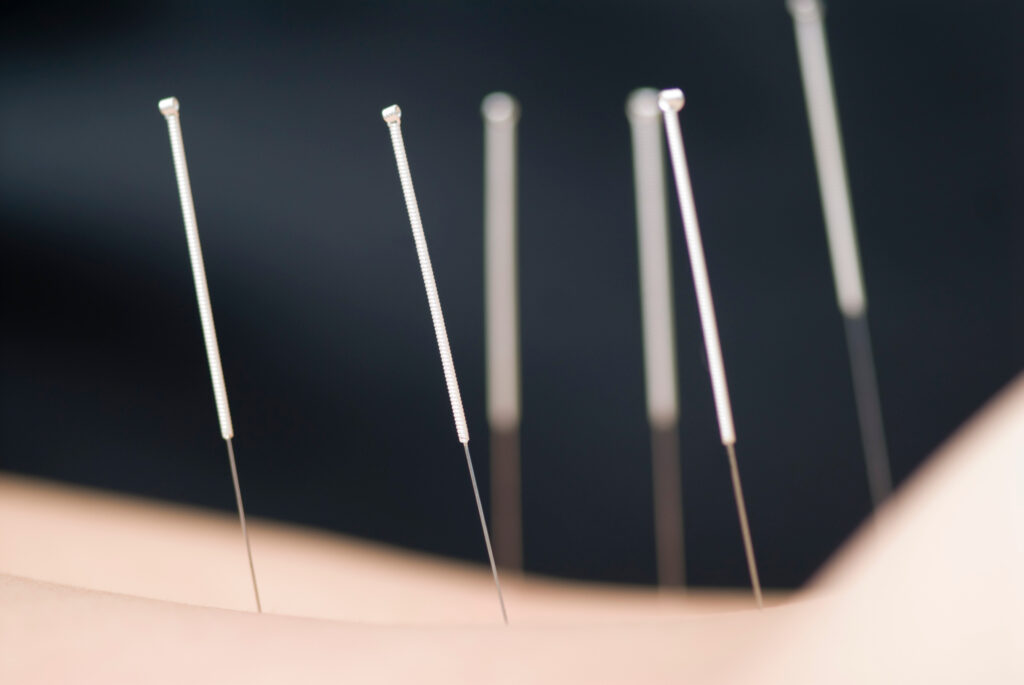
If that’s the cascade, what conditions does it actually help with?
Pain is the most researched area, and the mechanisms we’ve just described go a long way toward explaining why acupuncture has become one of the more evidence-backed options for chronic pain, headaches, and migraines. For migraines specifically, there’s good evidence that acupuncture influences the trigeminovascular system – the network of nerves and blood vessels whose dysregulation underlies migraine – partly through the same serotonin modulation described above.
But the cascade doesn’t stop at pain. Take anxiety, low mood, and sleep disturbance. The autonomic nervous system – the body’s accelerator and brake pedal, governing whether we’re in a state of alertness and reactivity or rest and recovery – is directly influenced by acupuncture, as we’ve seen.
So is the availability of serotonin and noradrenaline, the neurotransmitters that regulate mood, emotional resilience, and sleep quality. These aren’t separate mechanisms being invoked to explain a different set of conditions; they’re the same mechanisms, with a wider reach than pain modulation alone.
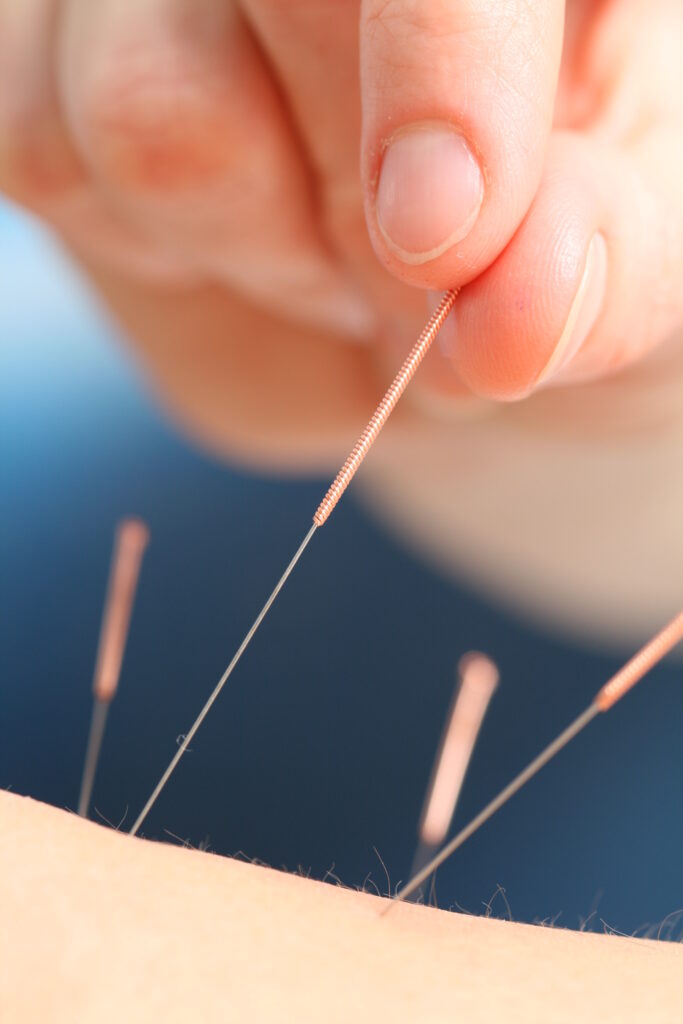
Stress and fatigue
For stress and chronic fatigue in particular, the HPA axis – the hypothalamic-pituitary-adrenal axis, which is essentially the body’s central stress management system, a kind of command chain running from brain to adrenal glands that governs the release of cortisol and other stress hormones – appears to be modulated by acupuncture.
When that system has been running too hot for too long, as it tends to in chronic stress or burnout, the downstream effects touch almost everything: energy, immunity, digestion, sleep, mood, hormonal balance. Acupuncture’s influence on that central system helps explain why people often report improvements across several of these areas simultaneously, rather than in just one.
Your second brain
Digestive issues are an interesting case. The gut has its own extraordinarily complex nervous system – sometimes called the enteric nervous system, or the gut’s second brain – containing more nerve cells than the spinal cord. It communicates constantly with the brain via the vagus nerve, a long wandering nerve that runs from the brainstem down through the chest and into the abdomen, carrying signals in both directions.
Acupuncture influences vagal tone – essentially how well that two-way communication is working – which helps explain its relevance to conditions like irritable bowel syndrome, bloating, nausea, and sluggish digestion.
The evidence for nausea in particular is quite strong: the point Neiguan (Inner Pass, Pericardium 6), on the inner wrist, has been studied extensively in this context, including for chemotherapy-induced and postoperative nausea – and familiar to most of us as the point stimulated by travel sickness wristbands.
Women's health
Menstrual irregularities and perimenopause bring us into endocrine territory – the body’s hormonal signalling network. Via the HPA axis and its influence on the hypothalamus and pituitary gland, acupuncture appears to affect the release of the hormones that regulate the menstrual cycle and ovarian function.
The evidence here is more mixed than for pain or nausea, and the mechanisms are less precisely mapped, but clinically it’s an area where many practitioners observe consistent and meaningful results. The same applies to fertility, where improved uterine blood flow and reduced stress hormone levels are the most plausible mechanisms currently proposed. The research is promising but still developing, and it would be overstating things to claim acupuncture as a fertility treatment in the way that, say, the pain evidence allows us to speak with more confidence.
Skin conditions like eczema and psoriasis sit at the more speculative end of the spectrum. The inflammatory regulation mechanisms are relevant – acupuncture does appear to influence immune activity and inflammatory signalling – but the pathway from needle to skin condition is longer and less direct, and the evidence base is thinner. It’s not implausible, and some patients do report marked improvement, but it’s an area where honest uncertainty is the right response.
The body as ecosystem
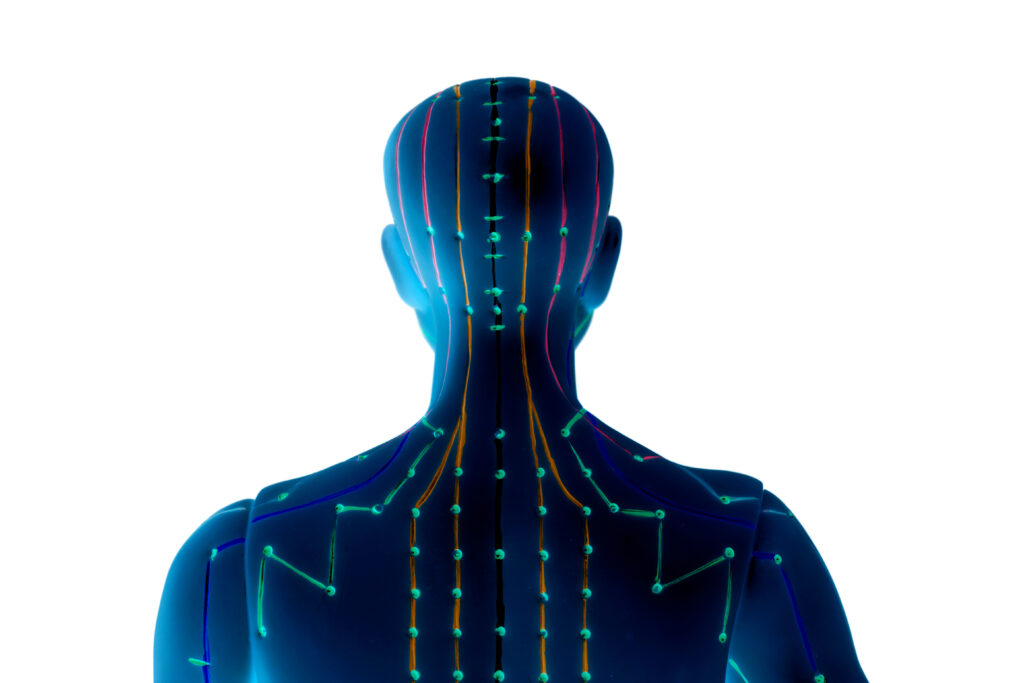
What connects all of these is the systemic nature of what a needle actually does. The cascade described in the first part of this piece isn’t a targeted pharmaceutical hitting one receptor for one effect. It’s a conversation with multiple systems simultaneously – nervous, immune, endocrine, connective tissue – and those systems don’t operate in isolation from one another.
The body is not a collection of separate departments. It’s more like a weather system, where a change in pressure in one region shifts conditions across a much wider area. Acupuncture is working with that interconnectedness – using the body’s own signalling systems to shift conditions across a much wider area than the needle itself ever touches.
Thanks for reading!
Further reading
Read more on the blog:
- How does the body respond to acupuncture? - what happens when we insert a needle
- Which kind of anxious are you? - thoughts on anxiety in Chinese medicine
- Acupuncture research - the state of the evidence
- The emotional life of the organs: what Chinese medicine says about how we think and feel
- Health without hacks - simple wellbeing advice
- A nourishing morning - looking at healthy morning routines from both a modern scientific and Chinese yangsheng perspective
- Foot health, somatic awareness, massage, and the nervous system - standing on your own two feet
- Common traditional patterns of disharmony: Liver Qi Stagnation and Spleen Qi Deficiency
- What is Qi? - an exploration of vital energy
- Why the channel system of Chinese medicine still matters today
- Chronic pain - acupuncture as a first line intervention
- Sailing the Dao - modern misuses of Daoist wisdom
- Six Divisions & TCM Pathology - a comprehensive guide to Chinese medicine
- How many needles? - contrasting styles of acupuncture
- Between freedom & form - tensions between tradition and modern individualism
- Navigating the middle ground - tensions between spiritual healing and modern biomedicine
- How diagnosis works in Chinese medicine
- The scientific mechanisms of acupuncture
- Is acupuncture really "alternative"? - how Chinese medicine stands apart from other alternative therapies
- When wisdom becomes a soundbite - how modern culture uproots classical ideas from their proper context
- Acupressure points for anxiety and migraine relief
- Acupuncture: pseudoscience or evidence-based practice?
- What is tuina? - a look at Chinese massage
- Qi is not quantum - debunking a popular acupuncture myth
- Supporting lymphatic health with acupuncture, tuina, and qigong
- Sleep is sacred: natural ways to ease insomnia
- Is dairy really bad for you? - a Chinese medicine perspective
- Qi in the Age of AI - why Chinese medicine matters more in the information age
- The Chinese body clock - parallels with our modern understanding of circadian rhythms
- Year of the Fire Horse - transitioning into 2026
- How does acupuncture work? - exploring fascia, embryology, and systems science
- Can acupuncture help with hayfever and rhinitis?
- Will the treatment work? A look at how we estimate outcome probabilities in living, responsive, complex bodies.