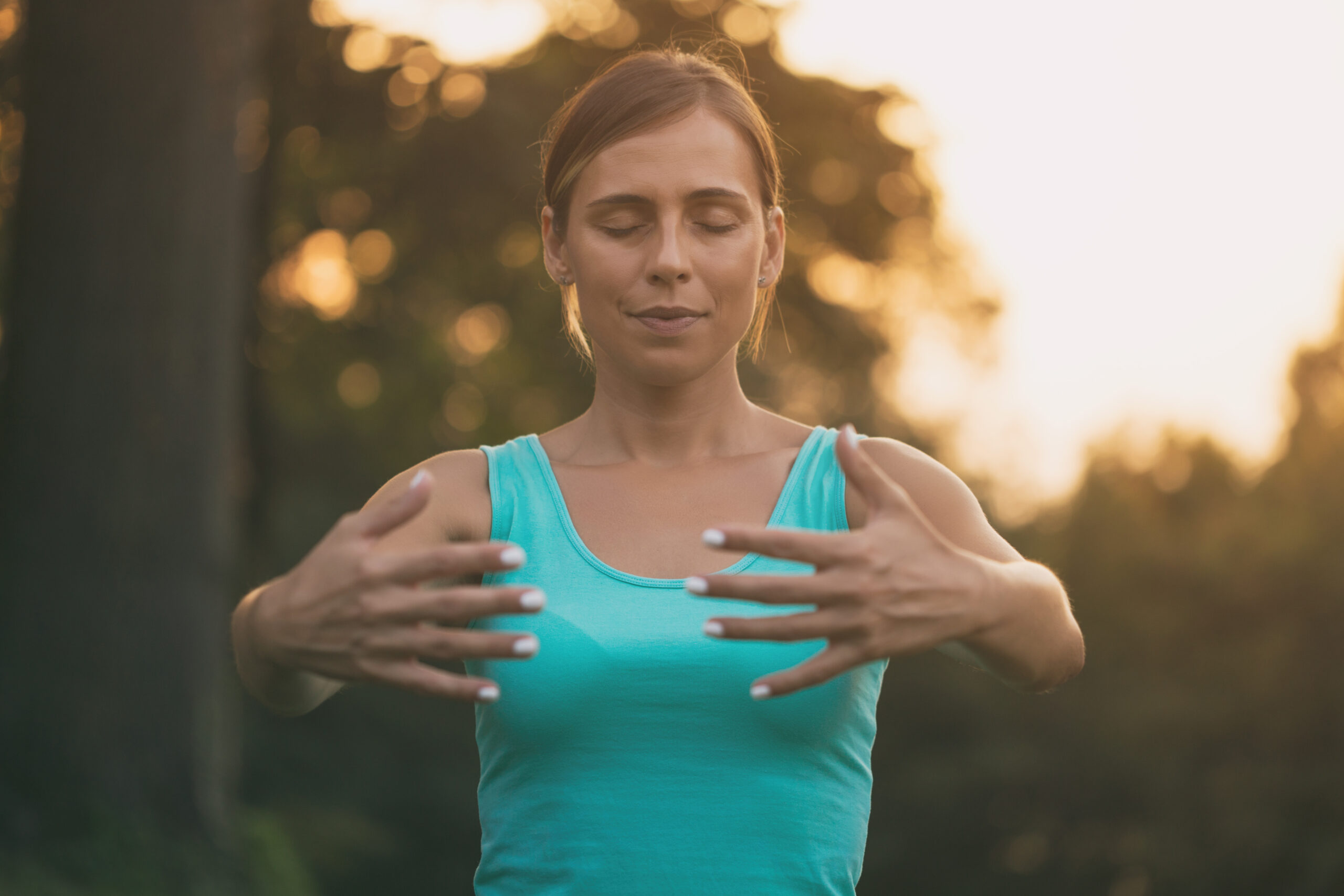
Qigong is a traditional Chinese practice combining movement, standing, breathing, and awareness. At its simplest, it gives us an opportunity to slow things down, pay closer attention to the body, release unnecessary tension, and explore ways of moving with greater ease.
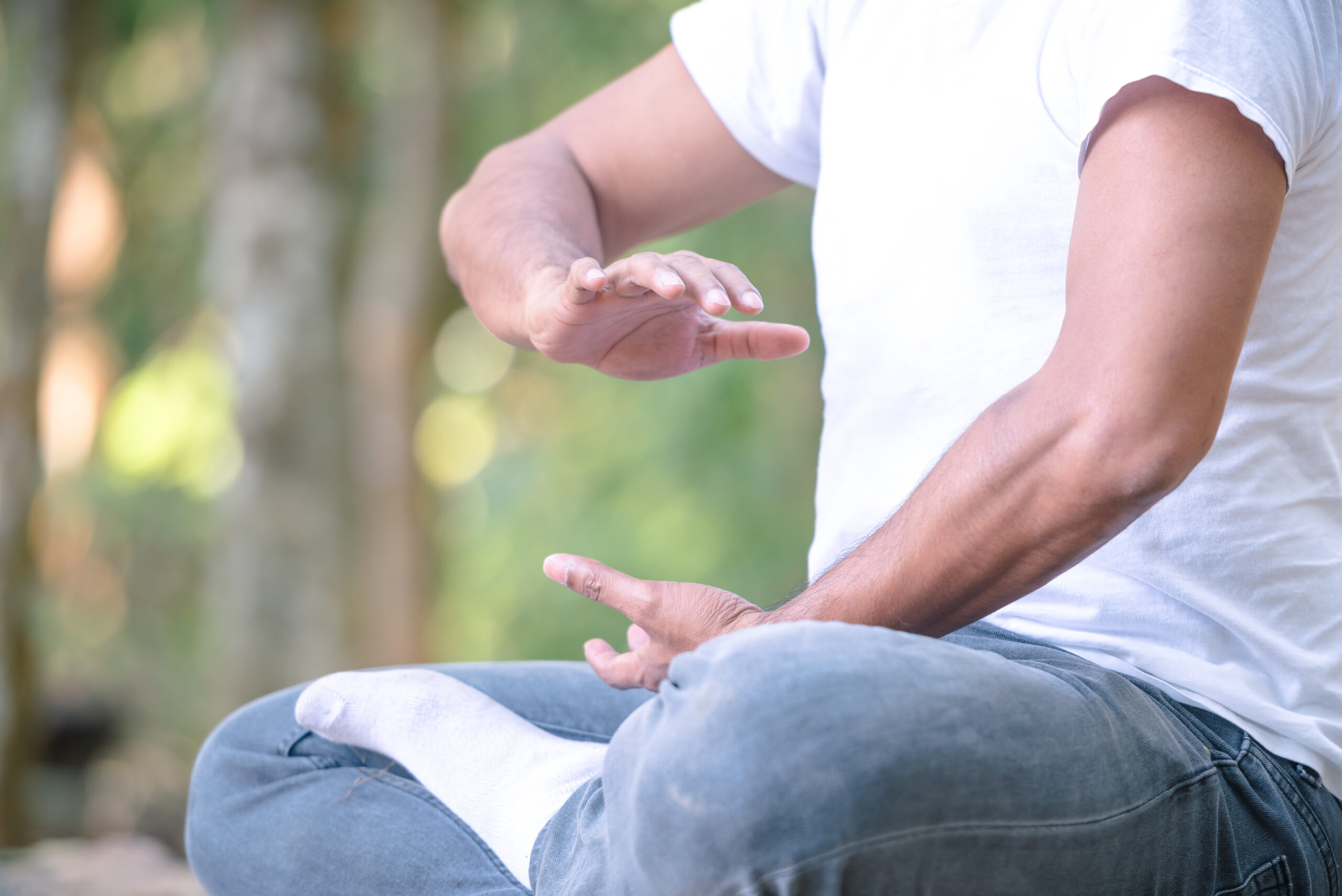
The movements themselves are simple and accessible. The interest lies in how we practise them: learning to feel where we are holding tension, improving balance and coordination, becoming more aware of the breath, and gradually developing a greater sense of connection throughout the body.
You don’t need to be particularly fit or flexible, and you don’t need any previous experience. Qigong can be practised at any age, and exercises can be adapted to individual needs.
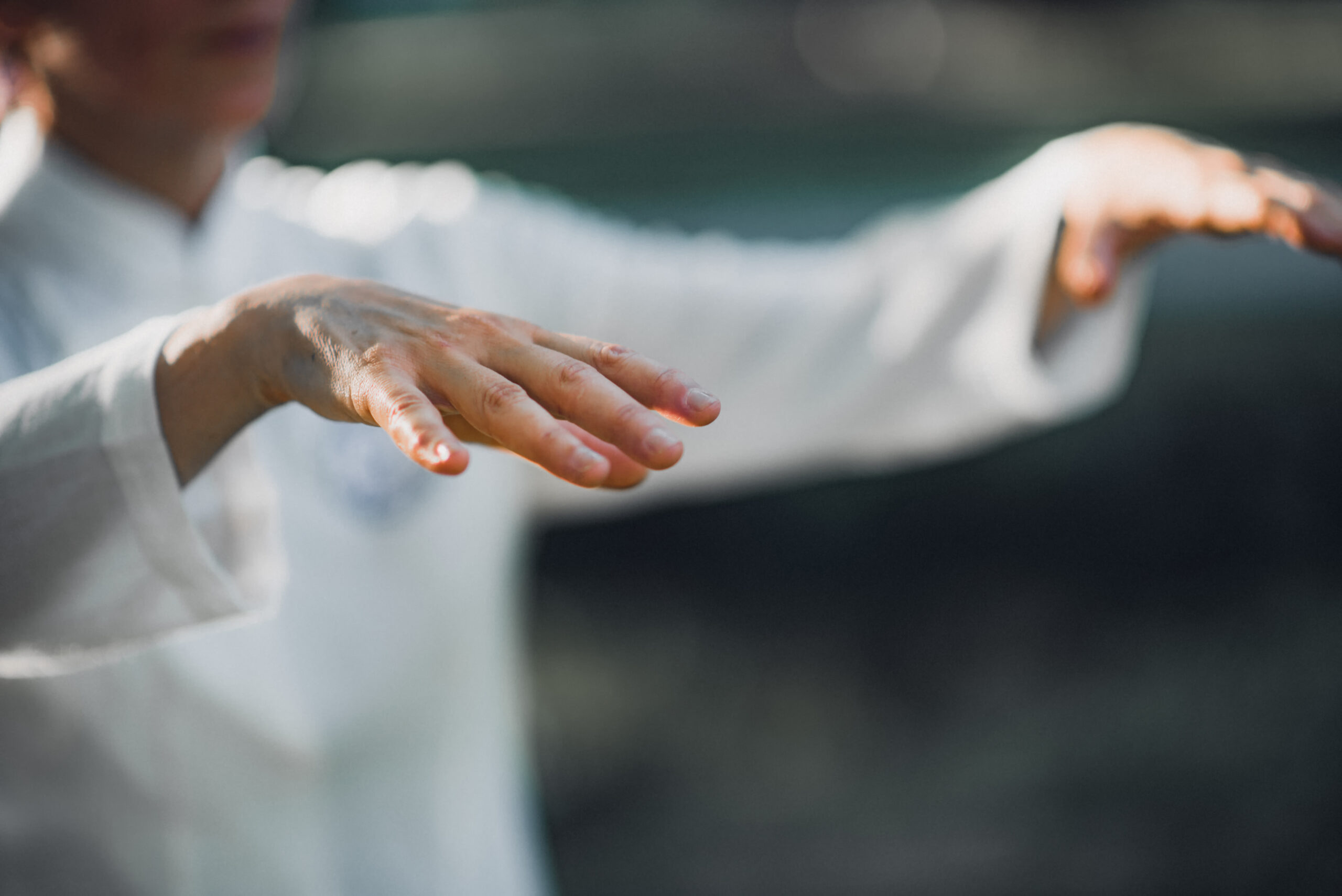
Modern life gives us plenty of opportunities to become disconnected from our bodies. We sit for long periods, repeat the same movements, rush from one thing to another, and often don’t notice how much unnecessary tension we’re carrying until something starts to hurt.
Qigong (sometimes written as chi kung, and pronounced chee-gung) approaches things from the other direction. Instead of pushing harder, we slow down enough to notice more. Through attentive practice, we can explore how to stand with less effort, move more freely, breathe more comfortably, and become more aware of the relationship between posture, movement, tension, and our state of mind.
People come to qigong for different reasons. You might be looking for an accessible way to become more active, wanting to improve mobility or balance, hoping to manage stress and tension more effectively, or simply interested in developing a movement practice that feels restorative and enjoyable.
Qigong is exercise, but it can also offer a rather different relationship with movement. Exercise is often something we’re told we should do: another obligation, another task to complete, another way of working on ourselves. Qigong can be much closer to curiosity and play – exploring movement because it feels interesting and enjoyable, and noticing what changes when we slow down, release a little more, or pay closer attention.
There is a psychological and emotional dimension to this too. Through repetition, we begin to build associations between attention, breathing, movement, release, and a quieter state of mind. Rather than trying to make ourselves calm, we practise creating conditions in which the body and mind can settle naturally, while remaining present, responsive, and engaged.
Qigong has a long association with Chinese medicine and is described as one of its branches, alongside practices such as acupuncture, tuina (Chinese medical massage), herbal medicine, and dietary therapy. It also sits naturally within the broader tradition of yǎngshēng – “nourishing life” – concerned with the everyday cultivation and maintenance of health and wellbeing.
Qigong, acupuncture, and tuina are distinct practices, but they share an interest in the body as an interconnected whole. Movement, touch, breathing, and attention offer different ways of working with that whole, and the practices can complement one another naturally.
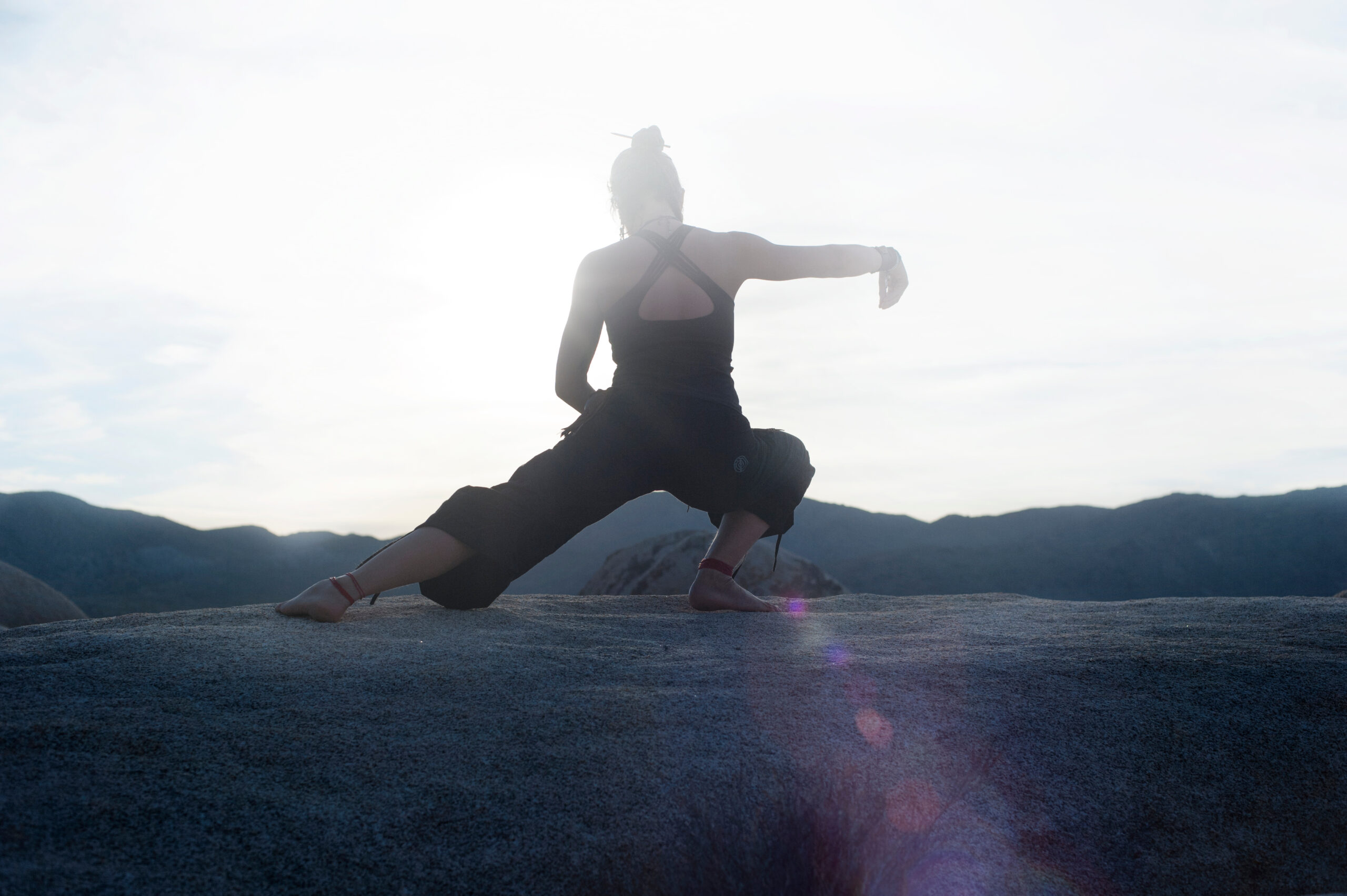
Classes combine a number of complementary practices rather than simply learning a sequence of movements to copy. We begin with warm-ups and loosening exercises to mobilise the joints and spine, and reduce unnecessary muscular tension.
From there, we may explore standing practices, breathing exercises, self-massage and acupressure, traditional qigong forms, and circular and spiralling movements that develop smooth, continuous, whole-body movement. Some practices involve movement, and others are still. Even the simplest exercises can continue revealing more as we learn to look and feel more closely.
Throughout the practice, the emphasis is on qualities such as softness, structure, balance, coordination, connection, and attention. Rather than trying to force ourselves to relax, we learn to create the conditions in which unnecessary tension can begin to release naturally.
The aim isn’t simply to accumulate more exercises, but to become more sensitive to what is happening within the exercises we already know.
Slowing movement down gives us time to feel it more clearly. Paying attention can reveal patterns of tension or effort that we hadn’t previously noticed. As those patterns begin to change, movement can become smoother, more coordinated, and less effortful.
This is where apparently simple exercises can become surprisingly absorbing. With continued practice, we can develop a finer sense of balance, posture, internal sensation, and movement – increasing the “resolution” with which we experience the body.
There are profound and subtle levels of skill available within qigong, but there is nothing magical involved. The practice develops through patience, curiosity, and gradually becoming better at noticing.
Qigong needn’t remain something we only do during a class. The qualities we develop through practice can gradually find their way into everyday life: noticing how we’re standing or sitting, becoming aware of unnecessary tension and allowing it to release, feeling the ground beneath us as we walk, or simply returning our attention to the breath for a few moments.
As these experiences become more familiar, breathing, attention, posture, and movement can begin to reinforce one another. We become better at recognising unnecessary tension, finding release, and returning to a state that is both quieter and more present.
The point isn’t to turn everyday life into another self-improvement project, but rather to make some of the qualities we explore in class available outside it – and perhaps to rediscover some curiosity and enjoyment, even wonder, in something as ordinary as moving and breathing.
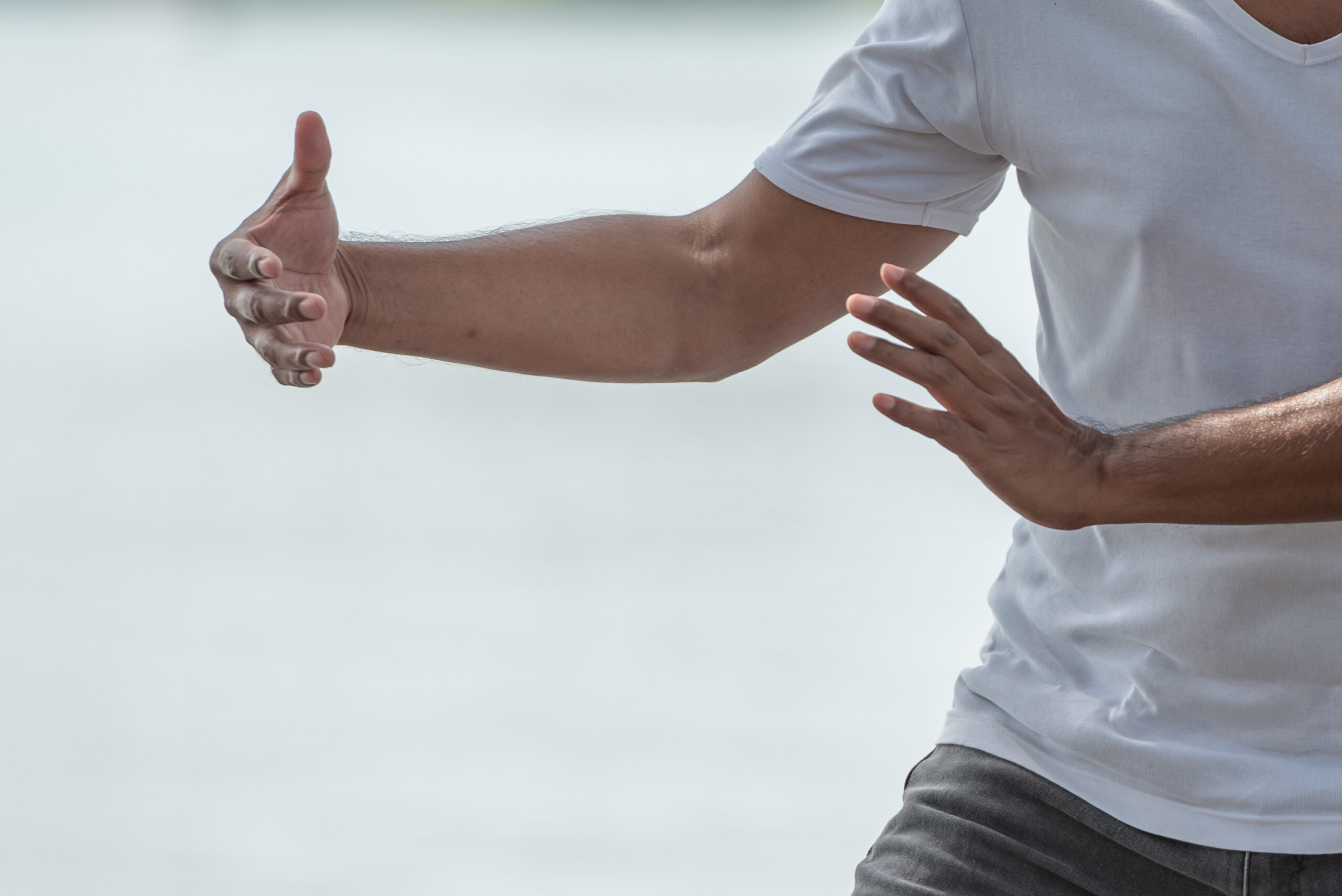
If you’re new to qigong, the best place to start is Qigong Fundamentals, a four-session introductory course designed to give you the foundations for developing a practice of your own. Each session lasts 90 minutes, giving us time to explore the practices without rushing and gradually build on what we’ve covered from week to week.
We’ll explore:
The four sessions are structured around the paired channels of Chinese medicine. This provides a framework for exploring different qualities of movement, breathing, and awareness, while introducing some of the ideas that connect qigong with acupuncture and traditional Chinese approaches to health. This aspect of the course draws particularly on my own background and training as an acupuncturist.
Across the course, we’ll draw from complete traditional qigong sets including the Eight Silk Brocades and Five Element Qigong, alongside movements from tai chi and the Chinese internal martial arts.
After completing Qigong Fundamentals, you’ll have enough material to begin developing your own home practice, with the option of continuing through regular guided group sessions or private lessons if you’d like to consolidate the material, deepen your practice, or simply enjoy practising with others.
No previous experience of qigong, tai chi, or Chinese martial arts is needed.
You don’t need special clothing or equipment – just wear something comfortable that allows you to move freely. Exercises can be adapted where necessary, including seated alternatives for some practices.
If you’re unsure whether the course would be suitable for you, you’re welcome to contact me before booking.
Classes take place at:
Holding Space
John Street
Saltaire
Shipley
BD18 3HU
Qigong Fundamentals: four 90-minute sessions — £80 for the complete course
Ongoing group classes: 60 minutes – £10 per session
Course dates and times: Contact me for upcoming course dates
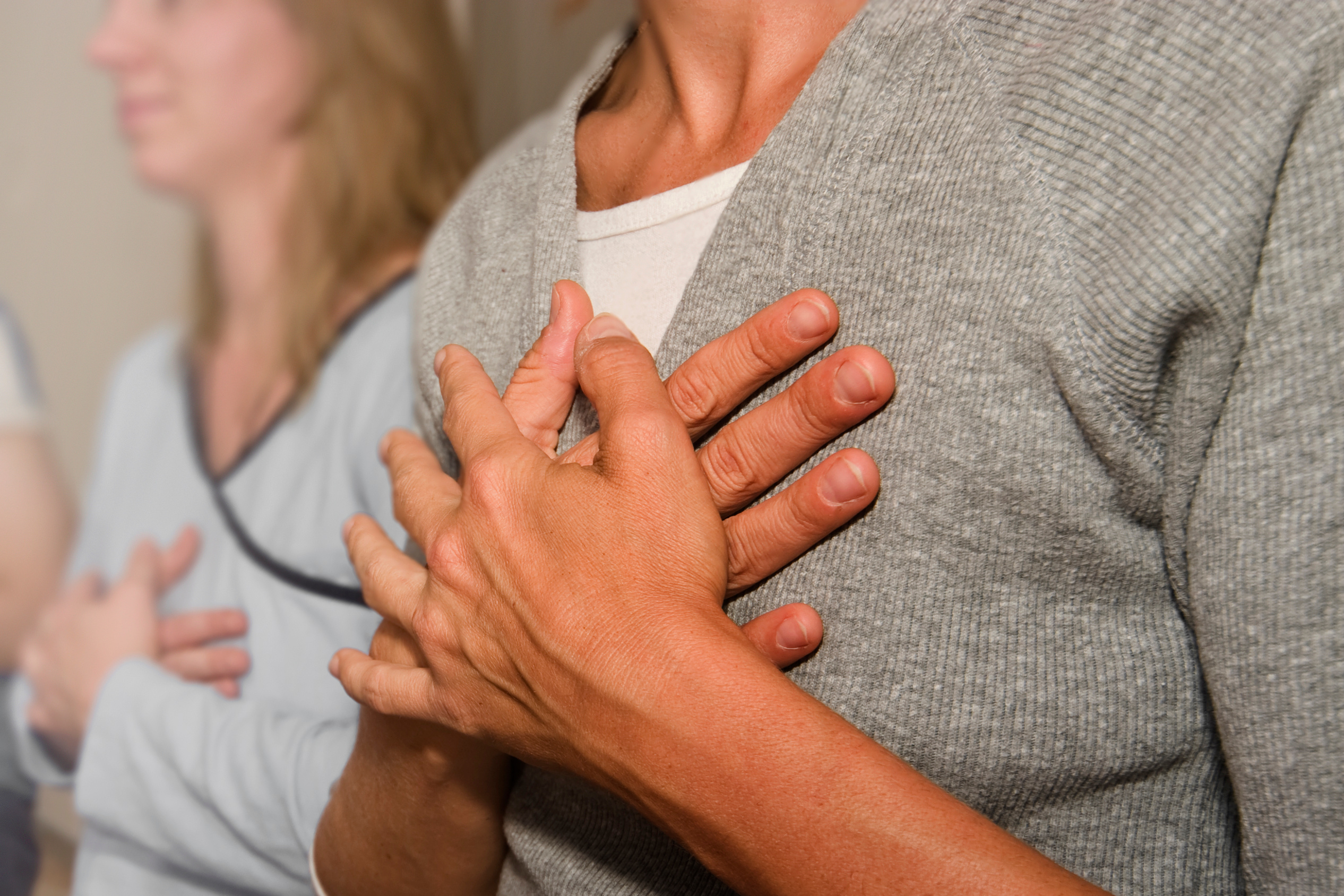
Private tuition is also available either in-person or online if you’d prefer to learn individually, want more focused guidance, or would like help developing your own practice.
One-to-one sessions give us more time to look closely at posture and movement, revisit particular exercises, explore areas you’re especially interested in, or put together a simple practice to continue at home.
Sessions can be shaped around what you’d like to get from qigong – whether that’s developing your practice, exploring the exercises in greater depth, improving particular aspects of movement or mobility, or simply enjoying some individual guided practice.
Private sessions can be one-to-one or arranged for a small group if you’d like to learn with a partner, friend, or family member.
Private tuition: 60 minutes – £50 one-to-one, plus £10 for each additional person
Location: Holding Space, Saltaire, Shipley
Online: Private qigong sessions are also available via video call

I’m Richard, an acupuncturist, tuina and massage practitioner, and qigong teacher. I’ve completed year-long teacher-training courses in both qigong and yoga, and my own continuing movement practice is particularly focused on the Chinese internal martial arts of tàijíquán, bāguàzhǎng, and xíngyìquán, as well as qigong.
Qigong sits naturally alongside my work with acupuncture and Chinese massage. Across these practices, I’m interested in the relationship between body and mind, and in how touch, movement, breathing, and attention can help us become more aware of the body, release unnecessary tension, find more comfortable and efficient ways of moving, and explore how changes in the body, movement, and breathing can influence how we feel.
For upcoming course dates, questions about classes, or private tuition, please get in touch through the Contact page or call 01274 003 008. (If I'm with an acupuncture or massage client, please leave a message and I'll get back to you as soon as I’m able.)
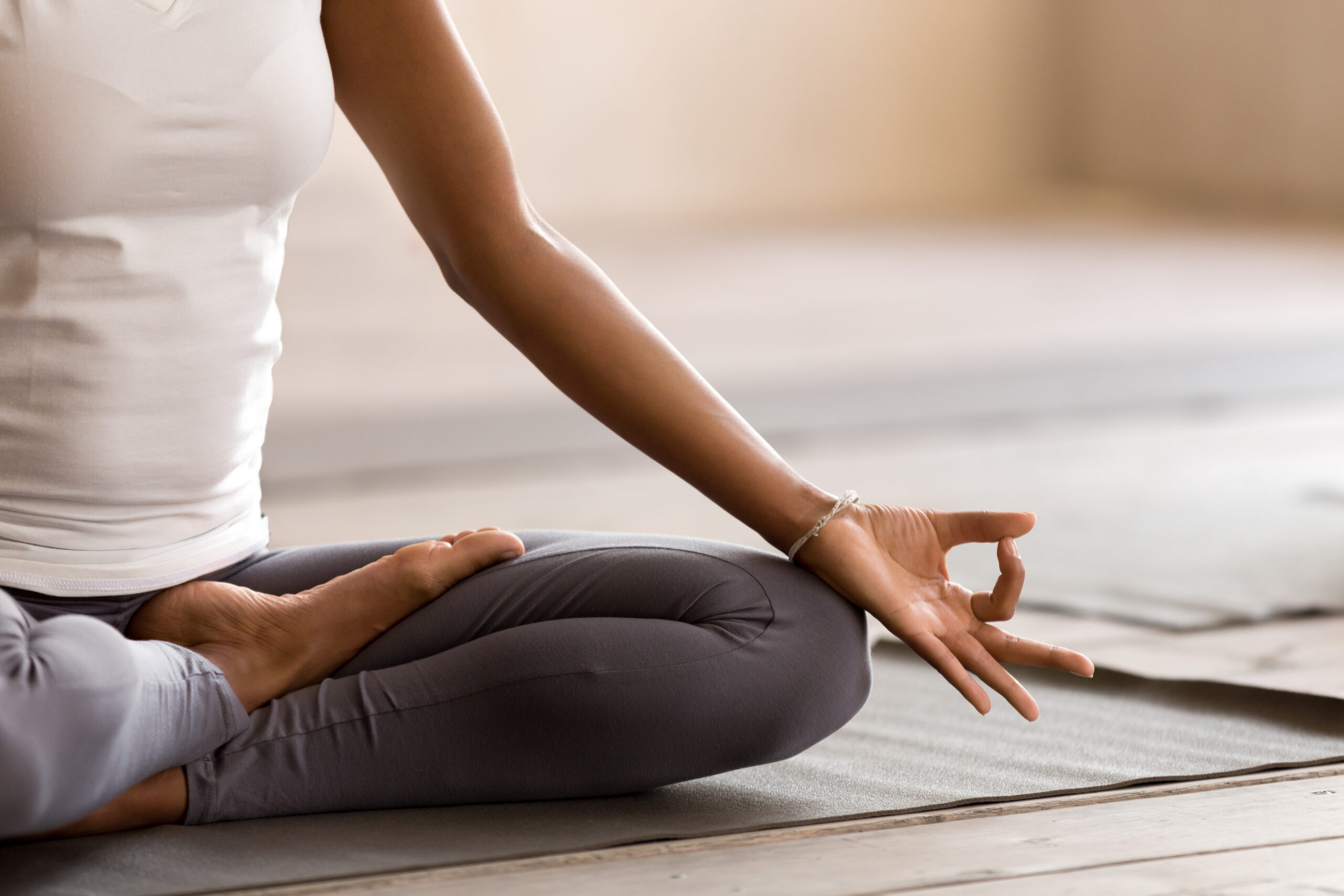
Private yoga tuition is also available, either individually or for small groups. Unlike a general class, these sessions can be tailored to your needs – your experience, mobility, strengths, and limitations, and what you would particularly like to work on.
That might mean focusing on mobility in a particular area, developing strength and balance, working with breathing and relaxation, or simply building a varied personal practice that suits your body. My background in acupuncture, massage, and movement informs this individual approach, particularly when working with people who have areas of stiffness, weakness, or restricted movement.
Sessions don't have to fit neatly into one discipline either. If it would be useful, we can combine yoga with qigong, drawing on whichever exercises and practices are most appropriate for you.
Private yoga tuition: 60 minutes – £50 one-to-one, plus £10 for each additional person
Location: Holding Space, Saltaire, Shipley
If you’re interested in private yoga tuition, please get in touch to discuss what you’re looking for and arrange a session. You can reach me via the Contact page or on 01274 003 008.