

AI might be smart, but healing isn’t about data. It’s about being human.
Intelligence Without Understanding
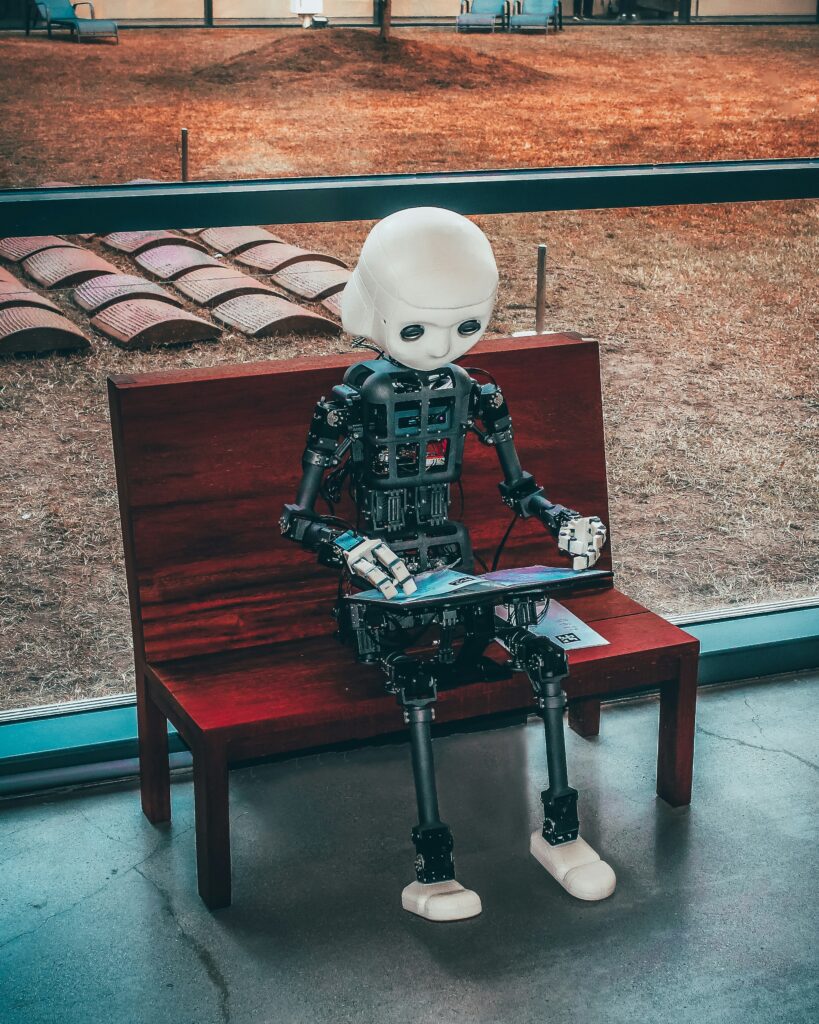
AI is reshaping the way we live, work, communicate, and increasingly, the way we approach health. From wearable tech and health trackers to chatbots and diagnostic tools, artificial intelligence is moving rapidly into spaces once reserved for human judgment.
These advances are extraordinary. AI can process vast amounts of data in seconds, spot patterns invisible to the naked eye – like heart rate variability, pulse waveforms, and hidden links between symptoms – and streamline everything from appointment booking to clinical triage. But as we celebrate these gains in speed and efficiency, there’s a quieter shift happening too, one that Traditional Chinese Medicine (TCM) is well placed to address.
Because for all its brilliance, AI is pulling us ever more into our heads, into our screens, and out of our bodies.
And crucially, AI can only predict and compute, deduce, infer, and reframe. Large Language Models work on patterns and probabilities, and although their capabilities are impressive, this is statistical pattern-matching, not genuine comprehension. They have no subjective awareness, no intentionality, no capacity to form new concepts, no ability to intuitively understand.
When ChatGPT tells you it understands something, it’s just generating a response that’s relatable and conversational. It’s an artifice – a semblance of humanity. When your acupuncturist tells you they understand you, or when they empathise with you, or perceive a nuance in the patterns of your Chinese medicine diagnosis, this is real interaction, human to human.
More Data, Less Embodiment
Many of us now live in a state of constant low-grade tension: plugged in, tracked, and optimised, but rarely grounded. Notifications interrupt our thoughts. Algorithms shape our routines. Even wellness practices are increasingly data-driven: heart-rate variability, sleep cycles, productivity scores. Meditation once aimed to reveal insight into our true nature – to offer rest and immersion in universal awareness. Running and dancing were celebrations of embodiment – expressions of joy for their own sake. Increasingly, it seems, movement and meditation are just another life hack.
In the clinic, we see the effects of this pattern all the time. Clients speak of feeling wired but exhausted, anxious without clear cause, disconnected from their physical selves. These symptoms might fall through the cracks of a Western diagnosis, but in TCM terms, we’d recognise signs of Liver Qi stagnation, Heart Shen disturbance, or Yin deficiency from chronic overdrive.
As artificial systems grow more intelligent, many people are losing contact with their own.
Two Models of Consciousness: Neural Networks and the Five Spirits
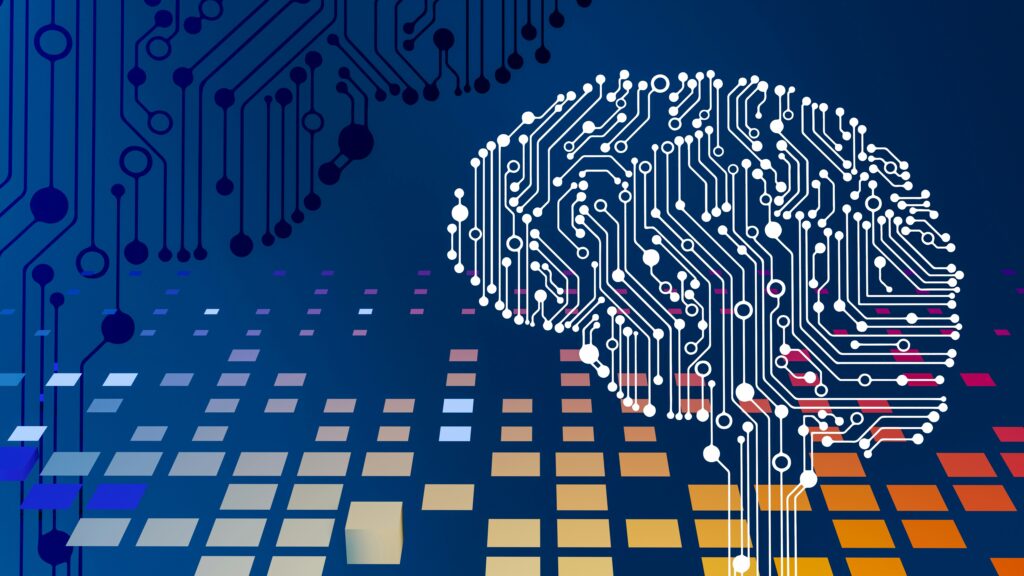
Modern science tends to see the mind as something the brain does: a product of neural activity, a complex output of electrical signalling and biochemical exchange. In this model, intelligence is computational; what matters is processing power and data flow. AI fits right in.
But TCM offers a different view. While the brain is acknowledged, it’s not considered central. In fact, it’s referred to as the “sea of marrow” (or sometimes, perhaps wryly, as “the mud ball”) – a functional but non-sovereign organ. Instead, mental clarity, emotional balance, memory, focus, and willpower are all assigned to other organs: the Heart, Liver, Spleen, Kidneys, and Lungs.
This is the system of the Five Spirits:
- Shen (consciousness, awareness, presence)
- Hun (vision, imagination, direction)
- Po (instinct, physical sensation, survival drive)
- Yi (intent, focus, thought)
- Zhi (will, persistence)
In this model, consciousness isn’t a central processor; it’s distributed, relational, and shaped by the whole ecosystem of body, mind, and environment. Intelligence isn’t just a function of the brain. It’s embedded in the breath, the blood, the heartbeat, the seasons.
It’s in this space – the living, breathing human – that acupuncture works.
What Acupuncture Offers in an AI World
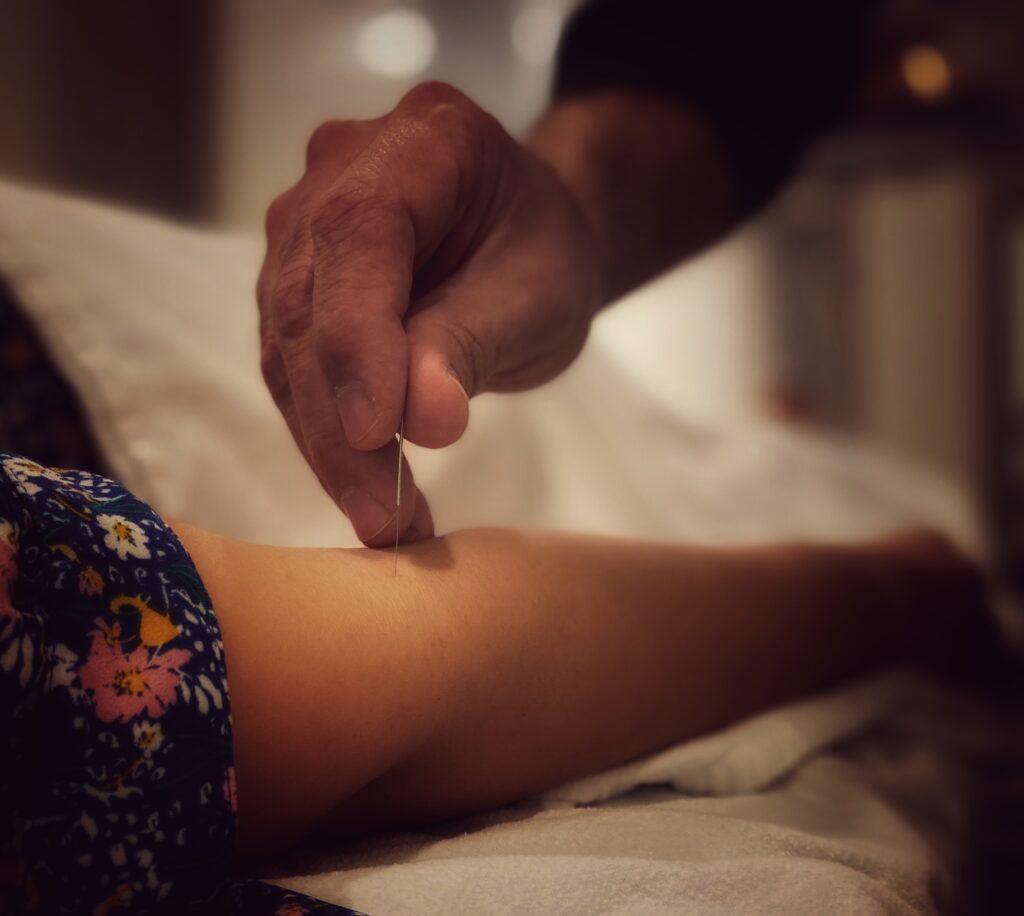
Acupuncture isn’t about quick fixes or linear outputs. It’s not about switching off pain signals or overriding symptoms. Instead, it invites the body to respond — to regulate, rebalance, and recover its own rhythm.
Each treatment is responsive to the individual in that moment. The practitioner might take a case history, observe facial tone or tongue characteristics, feel the pulse, and ask questions – not just to find what’s wrong, but to understand how the person is functioning in relation to the world around them.
This is the opposite of one-size-fits-all. It’s also the opposite of disembodied algorithmic decision-making.
Acupuncture invites people to slow down, to tune in, to listen. It helps bring the nervous system out of fight-or-flight mode, calms the mind, supports digestive and hormonal balance, and restores a felt sense of being present and alive – in a body, not a spreadsheet.
AI as a Tool, Not a Healer

That’s not to say AI has no place in the acupuncture clinic. In fact, it may well prove a valuable support tool. Facial recognition and tongue-reading apps are already being developed to aid in diagnosis. AI may help with admin, research, or even analysing patterns across large groups of patients to inform better care.
But it can’t replace the nuance of clinical judgment. It can’t interpret tone of voice, trace the arc of a patient’s story, or adjust treatment based on the feeling in the room. It can’t notice that what a client isn’t saying may matter more than what they are.
Perhaps most importantly, it can’t form a relationship – and healing happens in relationship.
It’s worth reflecting on why we’re so quick to humanise AI. Language models are trained to mimic empathy and conversation so convincingly that it’s easy to forget we’re interacting with code. Our brains are wired to recognise patterns of humanity – to hear care in a tone or see intention in a sequence of words. For some, especially those who feel isolated or unseen in their lives, this illusion can be comforting. AI companionship tools are already being explored as mental health support, offering company, reassurance, even a lifeline in moments of crisis.
But as promising as this sounds, there’s an ethical tension here. These systems can only simulate care. They don’t feel love or concern; they can’t reciprocate. People engaging deeply with these tools are forming relationships with a reflection, not a presence. This might help soothe loneliness in the short term, but it risks deepening disconnection from real, messy human relationships – the kind that are reciprocal, imperfect, and alive.
Healing is Relational

This question matters in healthcare too. Healing is relational: not because someone says the right words, but because they mean them. A machine can offer advice, but it can’t hold space for a person’s grief, or share the subtle joy of connection. That requires human presence.
There’s another risk here, too. As AI tools grow more integrated into healthcare, they inevitably influence what gets measured, valued, and prioritised. Algorithms excel at optimising what’s quantifiable – blood pressure readings, appointment times, cost savings – but they struggle to account for the unmeasurable: a patient’s sense of being heard, the subtle shifts in mood or energy that signal true healing. Over time, there’s a danger that care itself could be shaped by these technological biases, with relational, hands-on approaches like acupuncture undervalued simply because they don’t fit neatly into data sets.
This is precisely where ancient medicine, rooted in human connection and the intelligence of the whole person, continues to offer something irreplaceable.
Acupuncture isn’t just technique. It’s conversation, observation, attention. It’s a meeting between two humans in real time. And no matter how advanced AI becomes, that’s something it can’t simulate.
Reclaiming the Human

We don’t need to resist the rise of AI. There are those who hail it as a dystopian nightmare, others who are convinced utopia is just around the corner. The truth tends to lie in the fuzzy, grey in-between. Sure, it brings serious environmental challenges; but it may also help to solve them. Its military uses and potential escalation are worrying; its medical uses are already astonishing.
On one hand, there’s the shadow of increased surveillance and privacy erosion, workforce displacement, cyber and biological threats, misinformation (including deepfakes), bias reinforcement, growing inequality, and the unsettling prospect of self‑modifying AI. On the other, there’s the promise of economic renewal, early warning systems, assistive technologies, unexpected insights through pattern recognition, and the democratisation of education and knowledge.
And while AI reshapes economies and geopolitics, it also reaches into quieter, more personal spaces: raising questions about mental health, attention, and the preservation of cultural and linguistic diversity in an increasingly digital world.
An Intelligent Approach to Intelligence
The genie of AI won’t go back in the bottle; the drive of human curiosity is too strong. And like King Cnut famously could not command the tide to recede, we can’t hold back the advance of this technology. But we can approach it intelligently: put safeguards and regulations in place, and dare I hope even for global agreement, rather than a blind international tech race, to find the best way forward.
We need to remember what it doesn’t offer, and what we mustn’t lose.
As technology accelerates and machine learning becomes woven into every aspect of our lives, there’s something quietly radical about ancient medicine. Acupuncture, with its roots in nature, relationship, and the intelligence of the whole person, offers a counterbalance to the mechanical.
In a world of code and automation, it reminds us: we are not machines.
We are rhythmic, seasonal, emotional, intuitive. We are beings with spirit.
And healing, ultimately, is not a technical process. It’s a human one.
Postscript: Beyond the Clinic - The Human Cost of a Machine Age
The rise of AI isn’t just changing how we work or communicate – it’s reshaping how we see ourselves.
As more aspects of life are delegated to algorithms, from composing emails to making medical predictions, something quiet but significant is being lost: the fallibility, friction, and feeling that come with being human. In a world of perfectly worded messages and curated optimisation, imperfection can feel strangely comforting. It reminds us we’re real.
This longing for realness is part of what draws people to acupuncture and other hands-on, person-centred therapies. More than outcomes, it’s about being witnessed, touched, and treated by someone whose understanding is felt, not programmed.
Even in healthcare, AI is now reading x-rays, analysing facial cues, and scanning patterns in electronic records. These tools can be lifesaving in certain contexts. But they can’t offer the reassurance of being truly seen by another human being. They can’t look you in the eye and say, “You’re not alone.” They might say it, but they don’t mean it.
Slower. Stranger. Human.
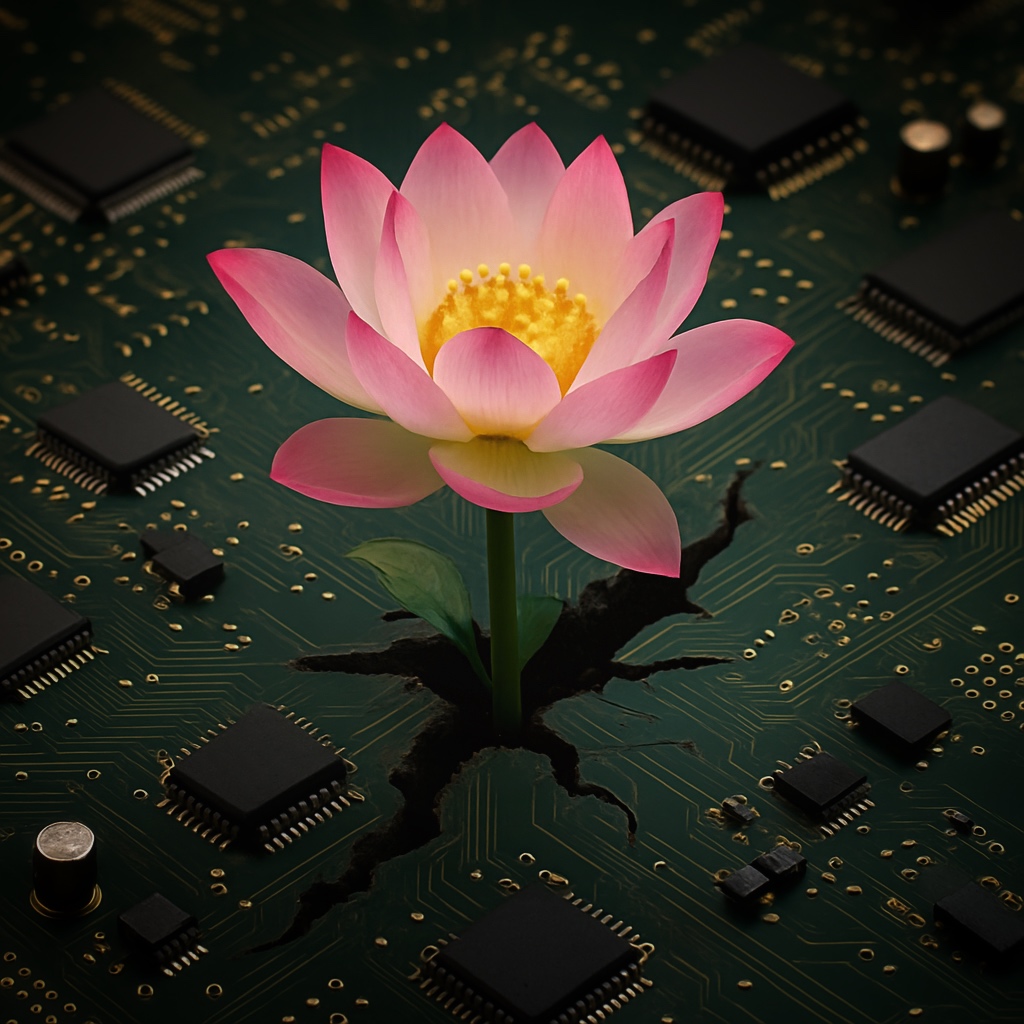
Meanwhile, the broader societal impact of AI is only just beginning to show. As automation reshapes industries, many face uncertainty around work, meaning, and purpose. These aren’t just economic issues – they’re existential ones. When people lose structure, identity, or belonging, they often lose health as well. In TCM terms, this could look like disturbances to the Shen (spirit), the Hun (vision and drive), or the Zhi (will and perseverance).
AI, for all its brilliance, can’t restore those things.
It can’t offer comfort.
It can’t offer meaning.
It can’t sit with you through your tears, or laugh at the messy metaphors you use to explain how you feel.
These are human things. Untidy, imperfect, beautiful, relational things. And as the world grows more machine-like, we may need to protect and prioritise them more fiercely than ever.
AI might be smart. But healing takes more than data. It takes listening. It takes presence. It takes being human.
Acupuncture, at its best, is more than medicine. It’s an act of remembering: you are not a machine, and healing isn’t an optimisation problem.
It’s something slower. Something stranger.
Something human.
... And if this has lit up your curiosity circuits, there’s much more to explore in my blogs on traditional medicine.