

A healthy morning routine

What makes for a sustainable and healthy morning routine? The first hours of the morning are an important threshold. We move from a long period of rest, stillness, and withdrawal into activity, engagement, and outward attention.
Modern physiology describes this transition in terms of hormones, hydration, circulation, and nervous system tone. Chinese medicine has long described the same shift using a different vocabulary; one rooted in rhythm, balance, and the cultivation of vitality.
What is striking is how often these perspectives converge. When we look closely, many practices now promoted for circadian health mirror older ideas about how to begin the day in a way that supports steadiness, clarity, and resilience across the hours that follow, and that helps to facilitate quality sleep the following night.
This article explores a simple, healthy morning routine that draws on both viewpoints. It does not assume prior familiarity with Chinese medicine, nor does it ask for rigid repetition. Instead, it describes a way of meeting the day that respects and converges with how our systems actually wake up. Adhered to over time, these small habits can make a huge positive impact on our physical and mental health and wellbeing.
Yangsheng: nourishing life through daily habits

In Chinese medicine, there is a long tradition known as yangsheng. The term is usually translated as “nourishing life.” It refers to the everyday habits that support health over time, rather than treatments aimed at fixing a problem once it has fully developed. It takes as first principle the notion that a healthy lifestyle is the best medicine. Prevention is better than cure.
Yangsheng includes how we sleep, how we eat, how we move, how we breathe, and how we place our attention. It rests on the idea that health is not built through occasional interventions alone, nor through intense periods of “health drive”, but through repeated, ordinary actions that support balance and adaptability. Drop by drop, day by day, we establish consistency and thus fill the bucket of our own health and wellbeing. These practices are meant to fit into daily life, changing subtly with age, season, and circumstance.
Seen this way, a healthy morning routine is not a productivity or optimisation strategy. It is one of the most practical expressions of yangsheng, because it shapes how the body and mind shift from rest into activity. It is about returning to our natural flow and balance. Not over-reaching, not straining to find “the best possible you”, but finding a simple rhythm that matches your body’s own.
Waking gently: before the day properly begins

During sleep, we go many hours without drinking. Movement is minimal. Circulation slows, digestion pauses, and much of the nervous system’s activity turns inward. By morning, we are mildly dehydrated, relatively immobile, and just beginning to re-enter the world.
Modern physiology describes this state as mildly catabolic. Energy use has continued overnight, but intake has not. Chinese medicine describes the same period as a time of deep yin. Yin, in this context, refers to rest, cooling, stillness, and inward focus.
The first moments after waking set the direction of the transition back toward yang, the qualities of warmth, movement, and outward activity. How abrupt or gradual that shift is can make a noticeable difference to how the rest of the morning feels.
Before rising
Rather than moving straight from bed into urgency, there is value in allowing a brief pause. Setting a gentle alarm rather than an urgent siren can set the tone from the beginning. Keeping lights low at first also smooths the passage from sleep to wakefulness. Then, before rising, sitting up slowly, noticing the body, and letting attention return to physical sensation creates a smoother handover from sleep to activity.
Simple self-contact can help with this. Rubbing the face around the temples and brow, loosening the jaw, rolling the shoulders, or taking a moment to massage the feet brings awareness back into areas that have been still for hours. A mental body scan can be accompanied by using the hands to trace the full length of our physical form.
In Chinese medicine, this kind of contact is understood as encouraging the circulation of Qi and Blood. Qi, often misunderstood as something mysterious, is better thought of as a way of describing activity, movement, and coordination in the body. Blood refers not only to the substance itself, but to nourishment and presence within the tissues. Gentle stimulation on waking helps both begin to move again after the quiet of the night.
This early attention to the body has a psychological effect as well. It establishes our internal somatic map and grounds our thoughts into an embodied form. It awakens the nervous system and helps us notice areas of the body we might lose awareness of as we go about our daily activities. And it marks the start of the day as something entered consciously rather than something we are pulled into by unconscious habit.
First steps

As you rise from bed, you can keep that sense of mindfulness by placing the feet mindfully upon the floor. Keep the soles warm to avoid cold entering the Kidney channel. Allow yourself to stretch and yawn intuitively.
Stretching and yawning are not habits we need to learn. They appear spontaneously across the animal kingdom at moments of transition, especially on waking. Physiologically, stretching helps rehydrate connective tissue, restore joint range, and re-establish circulation after prolonged stillness. Yawning, meanwhile, is closely linked to changes in arousal state. It is associated with deep inhalation, shifts in blood gases, and increased activation of brainstem and cortical networks involved in alertness.
Together, these behaviours help move us from the low-activity state of sleep into a more organised, wakeful mode. The rest of the routine builds from this initial orientation.
Light, timing, and daily rhythm

One of the clearest meeting points between modern physiology and Chinese medicine is the importance of timing. Our bodies do not respond to inputs in the same way at all hours. Light, movement, food, and rest have different effects depending on when they occur.
From a physiological perspective, morning light plays a central role in regulating circadian rhythm. Exposure to natural light early in the day suppresses melatonin and helps anchor the daily rise and fall of cortisol.
Ten to thirty minutes of morning light exposure within an hour of waking is ideal. If it's cloudy or you're getting light through a window, you may need longer, while bright, direct outdoor light may require less. A clear morning signal makes it easier for cortisol levels to fall later in the day, which supports sleep at night. What you do first thing has a direct effect on readiness for sleep hours later.
Consistency is key

Modern sleep science research suggests that waking at the same time every day is the most important factor, more important than a consistent bedtime or total time asleep, as waking time directly dictates when our melatonin rhythm is set for the following evening. Melatonin secretion is tightly linked to the circadian clock in the brain, which uses consistent wake times and morning light exposure to calibrate when melatonin will begin to rise later in the day.
Once that rhythm is established, melatonin typically starts to increase a few hours before sleep, gradually lowering alertness and preparing the body for rest. If waking times drift later and later, that rise is delayed, making it harder to feel naturally sleepy at a reasonable hour, even if we are physically tired.
This helps explain why going to bed before around 11pm can be important. Early sleep tends to coincide with the first and deepest part of the night’s sleep cycles, when slow-wave sleep is most prominent. This phase is strongly associated with physical restoration, immune function, and metabolic repair. If bedtime is pushed later, those early cycles are shortened or missed altogether, and the body is forced to prioritise lighter or REM-heavy sleep instead.
Over time, this can leave people feeling unrefreshed even if they spend a similar number of hours in bed. It is linked to slower tissue repair, impaired metabolic regulation, and an increased risk of chronic disease. The issue is not just how long we sleep, but when that sleep occurs in relation to our internal rhythms.
Chinese wisdom

Chinese medicine has long paid attention to this daily rhythm through what is often called the body clock. The twenty-four-hour day is divided into phases in which different functional systems are most active. In the early morning, emphasis is placed on the Lung system (3am–5am), followed by the Large Intestine (5am–7am), and Stomach (7am–9am). These systems are associated with breathing, oxygenation, elimination, breakfast, and the first outward movement of the day.
This is one reason mornings have traditionally been associated with fresh air, yawning and stretching, light movement, and bowel regularity. It is not a rigid prescription, but an observation that our bodies work best through certain processes at certain times.
Seasonal context matters here as well. In the UK, winter mornings are often dark. In those conditions, stepping outside into bright daylight may not be possible before work. This does not invalidate the principle. It simply calls for adaptation, such as a high lux daylight lamp, or even a short walk later in the morning. Yangsheng is concerned with awareness and responsiveness, not fixed rules.
Patterns of insomnia

Modern sleep science also recognises that insomnia is not a single problem. Some people struggle to fall asleep, others wake repeatedly through the night, some wake very early, and others sleep for a full night yet still wake feeling unrefreshed. These patterns are increasingly understood as reflecting different underlying disruptions, involving circadian timing, stress physiology, arousal levels, and sleep architecture rather than a single fault with sleep itself.
Chinese medicine has worked with a similar idea for a long time, although it uses a different clinical language. Rather than treating insomnia as a single condition, it differentiates between patterns based on how sleep is disturbed and what else is happening in the body. Difficulty falling asleep may be understood differently from waking during the night, early waking, or sleep that lacks depth and restoration.
Patterns traditionally described as Blood deficiency, Yin deficiency, or Qi deficiency reflect different kinds of depletion or imbalance, each associated with a characteristic sleep picture. These terms describe functional internal conditions, pointing to real physiological states such as inadequate nourishment or poor recovery.
In this way, both sleep science and Chinese medicine arrive at a similar conclusion: sleep problems vary in quality, timing, and cause, and meaningful support depends on recognising those differences rather than applying a single explanation or solution.
Cold exposure and waking yang

Cold exposure has attracted a great deal of attention in recent years, usually discussed in terms of nervous system activation and stress adaptation. In the morning, its relevance lies in timing rather than intensity.
Cortisol naturally rises after waking. Brief cold exposure can amplify this existing signal, reinforcing the transition from sleep to alertness. For many people, this results in a clearer sense of wakefulness and a more decisive start to the day.
In Chinese medicine terms, a short shock of cold is a stimulus that provokes movement. Applied briefly, it can help wake yang, the warming and activating aspect of physiology. Too much cold, however, would be associated with stagnation and lack of circulation. Moderation is key.
The experience should therefore be invigorating rather than taxing. A self-punishing routine is rarely adhered to for long, anyway. What we are looking for is something sustainable. Taking a normal warm shower and switching to cold for the final few seconds is often enough. Over time, that period can be extended gradually.
The emphasis is not endurance but maintaining steady breathing and composure while the body adjusts. A few calm breaths under cold water can be more useful than a longer exposure that creates physical tension and psychological resistance.
Different strokes
Individual constitution matters, too. Someone who already feels persistently cold, depleted, or fatigued may not respond in the same way. In Chinese medicine, this would be described as a pattern of yang deficiency, where additional cold stimulation may not be supportive.
This is where personal assessment becomes valuable. An acupuncturist or Chinese medicine practitioner can help determine whether cold exposure is likely to be beneficial, neutral, or counterproductive for a given individual.
It is important not to see these ideas as rigid or all-encompassing; what works for one person may not work for another. We are all different, and Chinese medicine recognises this – this insight is one of its greatest strengths.
For the majority of people, brief cold contact in the morning is well tolerated and can be incorporated as a regular practice. It works best when understood as one element within a broader sequence that includes nourishment and settling. All these ideas work best as complementary strategies.
Hydration and internal climate

By the time we wake, most of us have gone seven or eight hours without drinking. Fluid has been lost through breathing, perspiration, and basic metabolic activity. From a physiological point of view, mild dehydration in the morning is common. From a Chinese medicine perspective, the internal environment is relatively dry and inward, still carrying the imprint of the night.
Beginning the day with water addresses this directly. Warm water in particular tends to sit more comfortably in the stomach first thing. It supports digestive activity without demanding extra work from the system. Adding a small pinch of natural salt can help replace electrolytes lost overnight and improve absorption, though this is optional rather than essential – natural salts can also be sourced from a balanced diet of whole foods.
In with the Yin
In Chinese medicine, this kind of hydration is described as supporting yin. Yin refers here to substance, fluids, cooling, and nourishment. After a night dominated by yin qualities, restoring fluids provides a stable base for the day’s activity. This helps explain why water is best taken before stimulants. Coffee has its place, if desired, and we will return to that later, but hydration lays the groundwork.
Chinese medicine often speaks about internal climate. This is not a metaphor in the abstract sense. It refers to the overall conditions within which our physiology operates, including warmth, moisture, circulation, and responsiveness. Morning hydration influences that climate in a simple, tangible way.
Movement as circulation rather than exertion

After hydration, movement becomes the next piece of the sequence. The aim at this point is not fitness in the conventional sense. It is circulation.
After hours of stillness, joints, connective tissue, and breath benefit from being taken through their range again. Blood flow increases. Oxygen delivery improves. The nervous system shifts more decisively toward wakefulness. These changes happen readily with relatively modest input.
Practices such as qigong, gentle yoga, mobility work, or slow movement flows all serve this purpose. The specific form matters less than the quality. Movements that feel expansive rather than forced tend to work best in the morning. Signs that the level is appropriate include warmth, ease of breathing, and a sense of the body becoming more present and energised rather than depleted.
A strong constitution may benefit from high intensity exercise or heavy weights, but that is certainly not the case for everyone. For most, exercise that gently moves and nourishes is a better choice in terms of daily morning routine.
Playtime!
It’s good to be creative and explorative with movement. Frame it as fun rather than Exercise with a capital “E”. Crouch, crawl, roll, squat, lunge, jump, kneel, twist, hang, back-bend, balance on one leg, go upside down. Don’t be afraid to follow your own intuition. Experiment and take your time through transitions. Be curious and feel into areas of tension and relaxation. Breathe smoothly and deeply. Find what you enjoy… and play!
Your nervous system will thank you for taking it outside its comfortable yet boring envelope of “stand, sit, lie down, repeat”. One of the best ways to get rid of those persistent aches, pains, and stiffness is to move and place your body in varied positions. Doing so every day keeps muscles and sinews strong and flexible, joints supple, circulation active, bones resilient, balance responsive, and the nervous system adaptable to changes in load, speed, and orientation.
The benefits accumulate over time: fewer injuries, a lower risk of chronic disease, better brain health through ongoing sensory and motor engagement, and a longer healthspan with greater physical independence.

Move your Qi, focus your Yi
In Chinese medicine, movement is one of the primary ways Qi is kept flowing. When Qi (here referring mainly to breath and circulation) moves smoothly, tissues warm up, joints feel less resistant, and our attention becomes clearer. Stagnation, by a contrast, is associated with stiffness, heaviness, and irritability. Stiffness, contraction, and brittleness are signs of decline. The longer we can remain supple, expansive, and light, in both mind and body, the better.
Morning movement also reduces the likelihood of carrying emotional and mental stagnation into the rest of the day. Our mental clarity, focus, and intention (brought together by the term “Yi”) all benefit from early physical mobilisation. Mind follows body, body follows mind.
Breathwork

Breath naturally weaves through this phase. Coordinating movement with breathing supports both circulation and nervous system regulation. Qigong treats breath as a bridge between physical motion and internal state. The same principle applies in yoga or mobility work.
The unifying concept is that the quality of our breath has a direct impact on our sense of internal calm and presence. When the breath is smooth, easy, and sunk low in the abdomen, our heart rate settles and our mindset changes quality to something more unhurried and spacious.
This kind of movement does not need to be long. Ten or fifteen minutes is sufficient to shift circulation and prepare the body for what follows. What matters is that movement happens before the demands of the day accumulate, while the system is still responsive and relatively uncluttered.
Stillness, breath, and gratitude
After movement and hydration, there is often a brief window where the body feels awake but not yet pulled outward by demands. This moment lends itself well to stillness.
This does not need to resemble formal meditation. Sitting quietly, feeling the breath, and allowing attention to settle is enough. Standing is fine. So is lying down. Many find sitting conducive to the correct frame of mind, but this need not be a formal cross-legged posture.
Even ten to fifteen minutes can have a noticeable effect on nervous system tone, emotional steadiness, and clarity of thought. From a practical point of view, it helps smooth the transition from internal focus to engagement with the world by helping us to feel calm, contained, and ready.

Overcoming friction
Psychologically, the smallest possible starting point often works best. An intention to find thirty seconds of stillness carries very little resistance. Once seated, attention to posture and breath helps us to turn inward.
Without forcing it, our breathing slows, deepens, and becomes finer. We begin to notice smaller and smaller sensations. As we relax into the rhythm of the breath, we become the breath. Eventually that drops away too, and there is only a profound and soothing stillness.
In this way you find yourself enjoying the experience and naturally extending your practice. Before long, several minutes have passed. Some days the practice may remain brief. On others it may extend naturally. Both outcomes are better than no meditation at all.
It is an unfortunate human habit to set ourselves overly ambitious goals, and in so doing to set ourselves up for failure. Better to mentally reward ourselves for the small victories. You managed just ten quality breaths? Great!
Calm your Shen
Chinese medicine describes this settling as supporting the Shen. Shen refers to the qualities of awareness, presence, and emotional coherence that arise when the nervous system is regulated and the body feels safe. Breath plays a central role here. Slow, unforced breathing supports vagal tone, heart rhythm, and emotional balance in ways that are increasingly well described by modern physiology.
A brief gratitude practice can sit comfortably within this period of stillness. Not as an exercise in positive thinking, but as a simple orientation of our quality of thought. Are we moving from a place of stress, insufficiency, comparison, and dissatisfaction, or from a place of abundance and a sense of peace and belonging?
“Count your blessings”, as the saying goes. Noticing one or two things that feel supportive or meaningful has a measurable effect on mood and stress response. It also helps us to find perspective and a sense of kindness, and shapes the tone with which we enter the day.
Coffee in context
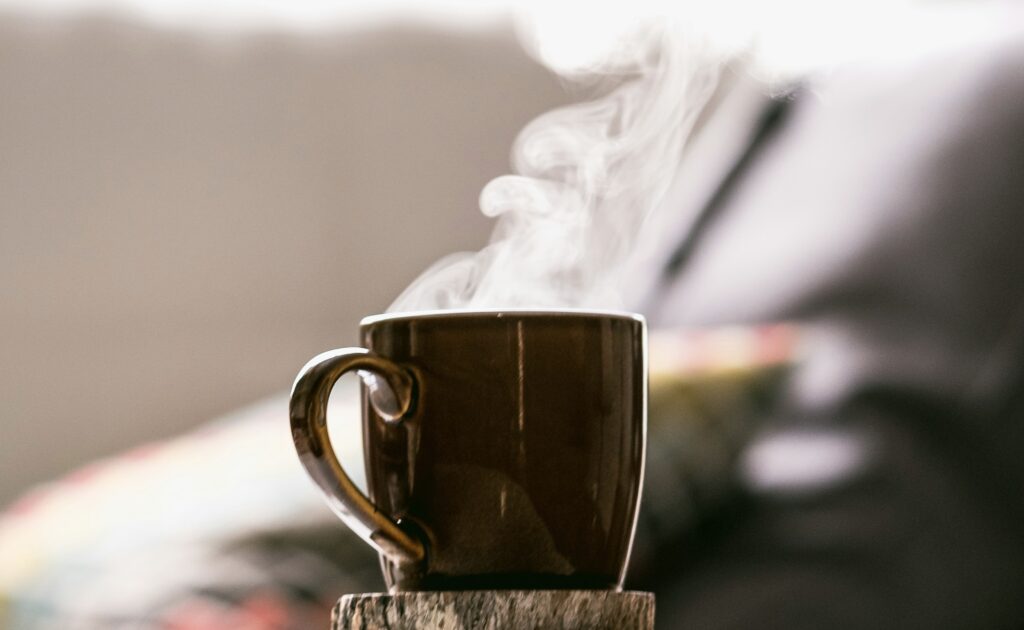
Coffee often follows this pause. Taken after hydration and settling, it tends to be better tolerated and more effective. From a Chinese medicine perspective, coffee is warming and mobilising. It supports the movement of Liver Qi, which relates to smooth circulation, responsiveness, and mental initiative.
When taken too early or on an empty, dehydrated system, that same stimulation can feel jittery or depleting. Timing, rather than avoidance, is what matters.
Breakfast, digestion, and moderation
Breakfast plays a significant role in how the rest of the day unfolds. From a physiological perspective, a meal that includes adequate protein helps stabilise blood sugar and reduces the likelihood of energy dips (and consequent desire for unhealthy snacking or further caffeination) later in the morning. From a Chinese medicine point of view, breakfast supports the Spleen and Stomach systems, which are responsible for digestion, assimilation, and the production of usable energy.
Warm, cooked foods are easier to digest. Examples include eggs, porridge, lightly cooked vegetables, fish, or meat according to preference.
Snacking choices
Sometimes we need a boost before lunch, and there is nothing inherently wrong with a small snack. Nuts and berries make for better snacking choices than processed protein bars, which may proudly claim to contain zero sugar but actually are packed with simple carbohydrates that behave exactly like sugar in our system, causing insulin spikes and potentially leading eventually to insulin resistance and diabetes if consumed habitually.
Highly processed foods are rarely if ever a good choice. A simple rule to follow is to ask yourself if this food existed a century ago. If it did not, it might be best to leave it on the shelf.
Not that the occasional indulgence isn’t okay – it is possible to be over-controlling, too – but here we are discussing daily morning routines, and processed foods should not be consumed as a matter of course. Natural, whole foods tend to be inherently packaged with fibre, complex carbohydrates, and other compounds that help the body process them more slowly, leading to steadier energy.
Quantity matters as much as content. Eating enough to feel satisfied without feeling weighed down allows digestion to proceed efficiently without diverting excessive energy and causing sluggishness.
Chew on it

How we eat also influences digestion. Chewing thoroughly, eating calmly and without distraction, and allowing time for the meal all support digestive function. These habits signal to the nervous system that there is no urgency. That signal alone can reduce digestive discomfort and support steadier energy.
In Chinese medicine, a point frequently used to support digestion and overall vitality is Zúsānlǐ “Leg Three Miles” (Stomach 36). Located on the lower leg, it has traditionally been associated with endurance, nourishment, and resilience. Its name reflects the idea that when digestion is well supported, we are better able to meet the demands of daily life. It serves as a reminder that digestion is not only about food, but about how well the body can transform what it receives.
To help with this, a short walk (preferably in a natural environment) can aid digestion, improve post-meal glucose handling, settle the nervous system, and support deeper, more restorative sleep later in the evening. Walking supports joint nutrition, venous and lymphatic return, and steady metabolic activity without provoking stress responses. Natural environments appear to amplify these effects by reducing sympathetic arousal and cognitive demand, allowing the nervous system to recover more fully.
What to delay
Alongside what we include in the morning, it is worth considering what we postpone. The early part of the day is a period when attention is relatively open and impressionable. What enters awareness at this point tends to set the emotional and cognitive tone that follows.
For many people, the news and social media introduce intensity and emotional disruption very quickly. Headlines are designed to provoke reaction. They can be unsettling, disturbing – even numbing. Feeds are structured to capture attention through comparison, novelty, and emotional charge. None of this is inherently wrong, but meeting it immediately on waking can pull attention outward before the system has had a chance to settle.
Delaying these inputs creates space for a more coherent start. Silence works well for some. Others prefer music, natural sounds, or simple background audio like an audiobook or familiar podcast. The choice matters less than the intention. The aim is to allow the body and mind to come online on their own terms before engaging with external demands.
From a Chinese medicine perspective, this protects the Shen. Early disturbance of attention is associated with agitation, restlessness, and scattered focus. Allowing the morning to unfold with fewer interruptions supports steadiness across the rest of the day.
Yin, yang, and seasonal balance

Underlying this entire sequence is the relationship between yin and yang. These terms are often misunderstood, but in practical terms they describe complementary qualities. Yin relates to rest, substance, cooling, and inward focus. Yang relates to movement, warmth, activation, and outward engagement. They are not absolutes, but rather describe how things relate to each other. Health depends on their ongoing balance and appropriate timing.
The morning is a shift from yin toward relative yang. Cold exposure, light, and movement support that transition. Hydration, food, stillness, and breath prevent it from becoming excessive or unstable. When these elements are combined thoughtfully, the result is a sense of readiness without strain. Above all, what we seek is a peaceful mind.
Seasonal context refines this further. In winter, more warmth, more rest, and gentler transitions are usually appropriate. In summer, earlier light, longer movement, and lighter meals may feel natural. Yangsheng encourages this responsiveness rather than fixed routines carried unchanged through the year.
Be kind to yourself
It is essential not to be draconian. The point is to establish routines that we eventually carry out automatically, and which we look forward to. So be gentle with yourself and introduce things gradually.
Keep an eye on feelings of resistance or fatigue. Imposing willpower rarely works in the long term. Generally, it is best to find enjoyment in small changes and build gradually and naturally. Changing too much too soon can elicit a negative response and undo any progress made.
Closing reflections
A nourishing and healthy morning routine does not require complexity. It relies on timing, proportion, flexibility, and attention to sequence. Waking gradually, restoring fluids, moving the body, settling the mind, and eating with care all support the same aim: entering the day with steadiness rather than urgency.
Modern physiology explains these effects through circadian rhythm, hydration status, nervous system regulation, and metabolic stability. Chinese medicine describes them in terms of Qi, Blood, yin and yang, and the cultivation of vitality. The language differs, but the practical conclusions align closely.
Over time, these small, ordinary choices shape how the day unfolds and how resilient we feel within it. That, in essence, is the promise of yangsheng. Not transformation through force, but health supported through rhythm, attention, and consistency.

Thanks for reading!
Visit the British Acupuncture Council's website to find a qualified, regulated acupuncturist in your area of the UK.
Further reading
Read more on our blog:
- How does the body respond to acupuncture? - what happens when we insert a needle
- Which kind of anxious are you? - thoughts on anxiety in Chinese medicine
- Health without hacks - simple wellbeing advice
- Foot health, somatic awareness, massage, and the nervous system - standing on your own two feet
- Common traditional patterns of disharmony: Liver Qi Stagnation and Spleen Qi Deficiency
- What is Qi? - an exploration of vital energy
- Why the channel system of Chinese medicine still matters today
- Chronic pain - acupuncture as a first line intervention
- Sailing the Dao - modern misuses of Daoist wisdom
- Six Divisions & TCM Pathology - a comprehensive guide to Chinese medicine
- How many needles? - contrasting styles of acupuncture
- Between freedom & form - tensions between tradition and modern individualism
- Navigating the middle ground - tensions between spiritual healing and modern biomedicine
- How diagnosis works in Chinese medicine
- The scientific mechanisms of acupuncture
- Is acupuncture really "alternative"? - how Chinese medicine stands apart from other alternative therapies
- When wisdom becomes a soundbite - how modern culture uproots classical ideas from their proper context
- Acupressure points for anxiety and migraine relief
- Acupuncture: pseudoscience or evidence-based practice?
- What is tuina? - a look at Chinese massage
- Qi is not quantum - debunking a popular acupuncture myth
- Supporting lymphatic health with acupuncture, tuina, and qigong
- Sleep is sacred: natural ways to ease insomnia
- Is dairy really bad for you? - a Chinese medicine perspective
- Qi in the Age of AI - why Chinese medicine matters more in the information age
- The Chinese body clock - parallels with our modern understanding of circadian rhythms
- Year of the Fire Horse - transitioning into 2026
- How does acupuncture work? - exploring fascia, embryology, and systems science