

“Acupuncture? So you believe in all that stuff, then?”
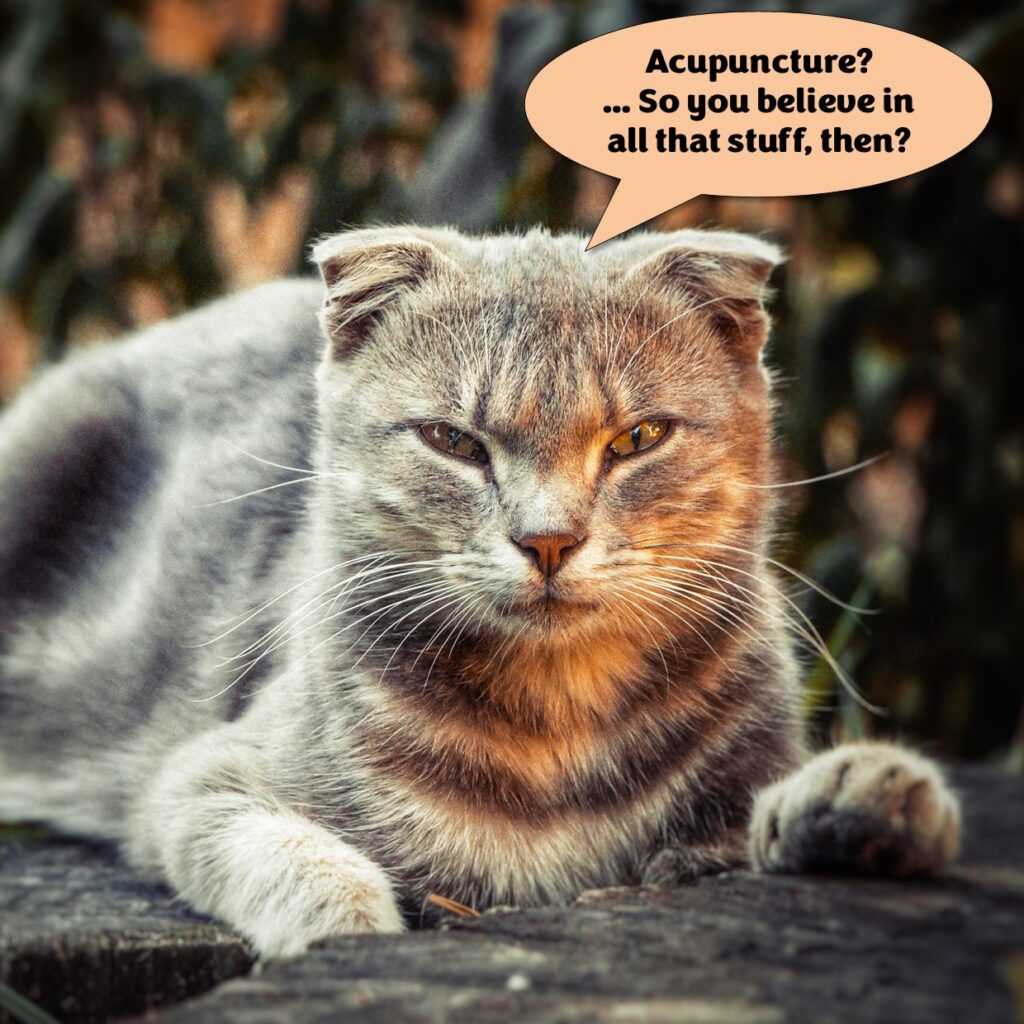
As acupuncturists, we encounter this kind of attitude fairly often. It’s rooted in a common misunderstanding — the idea that acupuncture is somehow “unscientific” or that it requires belief, like a superstition.
But the truth is, you don’t need to “believe” in anything. You just have to be curious enough to look at the evidence.
What’s telling is that those who seek to deride Chinese medicine often rely on sweeping statements, full of false assumptions and rarely backed by any evidence — let alone anything convincing.
Let’s consider a few common criticisms:
1. “It doesn’t work.”
We see excellent results in clinic every day. Many clients return regularly to manage chronic conditions, reduce pain, support their emotional health, or improve their quality of life. Acupuncture isn’t a miracle cure — but in many cases, it makes a tangible and lasting difference.
If it didn’t, our business model would collapse fairly quickly. No repeat clients, no word of mouth, no long-term bookings. The proof is in the outcomes — and not just in pain reduction or physical symptoms, but in how people feel in themselves: more rested, more resilient, and more at home in their own body.
What’s more, acupuncture is extremely safe when performed by a qualified practitioner. It’s one of the few interventions that can treat a broad range of concerns without adding to the body’s toxic or inflammatory load. In fact, it’s been shown to reduce inflammation.
Unlike many conventional treatments, acupuncture rarely produces side effects — and where it does, they’re usually very minor and short-lived. Overuse of medical services, over-prescription of medications, cumulative and impactful side effects, and iatrogenic complications, are all big problems in modern healthcare. Chinese medicine can go some way to relieving the burden.
2. “It’s all mumbo-jumbo.”
Chinese medicine has survived for more than two thousand years — and probably much longer. Human beings don’t cling to useless practices for millennia. Its longevity is a clue that it offers something valuable.
To dismiss it outright, especially without even inquiring into it at all, is a decidedly arrogant position to take. It ignores centuries of accumulated knowledge, careful observation, and clinical refinement — not to mention the lived experiences of countless people who have benefitted from it.
The fact that it developed outside of the Western scientific framework doesn’t make it “mumbo-jumbo.” It makes it a culturally distinct system of medicine with its own internal logic — one that evolved through empirical methods, not guesswork. Much of the resistance to it in the West stems from cultural bias — the assumption that if it wasn’t discovered by white coats in laboratories, it can’t be valid.
But knowledge systems evolve in context. Chinese medicine simply uses different metaphors and models — ones that prioritise interconnection, pattern recognition, and the dynamic nature of life. That’s not primitive thinking. It’s sophisticated in a different way.
3. “It’s pseudoscience.”
The evidence base for acupuncture is growing steadily — and in many areas, impressively — with an exponentially growing array of randomised double-blind controlled trials, neuroimaging studies, observational studies, qualitative research, comparative effectiveness research, pragmatic trials, systematic reviews, and meta-analyses.
High-quality clinical trials are demonstrating its effectiveness in treating a wide range of conditions, from chronic pain and tension headaches to anxiety, fertility issues, long COVID symptoms, and more. In some cases, acupuncture’s efficacy and evidence for use supersedes conventional care.
Modern imaging and biochemical studies show that acupuncture influences the nervous system, hormonal balance, metabolism, muscular tension, pain modulation, tissue healing, immune function, and inflammatory pathways. It releases a cascade of endogenous biochemical painkillers, stimulates the parasympathetic nervous system — our “rest and digest” mode — and helps move the body out of chronic stress states.
It’s not just anecdotal. It’s measurable — and increasingly, it’s being taken seriously by healthcare providers across the globe. The World Health Organisation recognises acupuncture as an effective treatment for a wide variety of issues, with strong evidence of effectiveness for 28 conditions. NICE (National Institute for Health and Care Excellence) in the UK recommends it for chronic primary pain. Many other countries have already integrated it into public healthcare systems.
Across East Asia, acupuncture is used hand in hand with modern biomedical modalities — and not just as a watered-down, protocol-driven version like “dry needling” (which is an effective treatment, but limited as it focuses only on pain relief, symptom management, and MSK issues), but also in its fullest expression of integrative healing. By removing acupuncture from its traditional and cultural framework and levering it into a narrow model of clinical evidence gathered exclusively through randomised controlled trials, we risk discarding centuries of accumulated human wisdom and experience.
However, acupuncture is often forced to fit into a research model designed for (often heavily funded) pharmaceuticals — large-scale, tightly controlled, double-blind, reductionist studies. But acupuncture is an interactive, dynamic, whole-person therapy. Its effects unfold through touch, presence, nervous system regulation, and human relational context — factors that are hard to isolate in a lab.
To strip acupuncture of its therapeutic context in the name of clinical neutrality is to miss much of what makes it work. That doesn’t mean it can’t be studied scientifically — it just means we need better tools for studying complex, embodied, and adaptive therapies.
Even so, the body of evidence continues to grow. And it increasingly supports what practitioners and patients have known for a long time: that acupuncture has a meaningful role to play in modern healthcare — not as an “alternative”, or even solely as a “complementary" treatment, but as a valid, intelligent part of a more integrative, person-centred model of medicine. For many health conditions, especially those treated by invasive, irreversible, or toxic interventions, acupuncture should be the first stop, not a last resort.
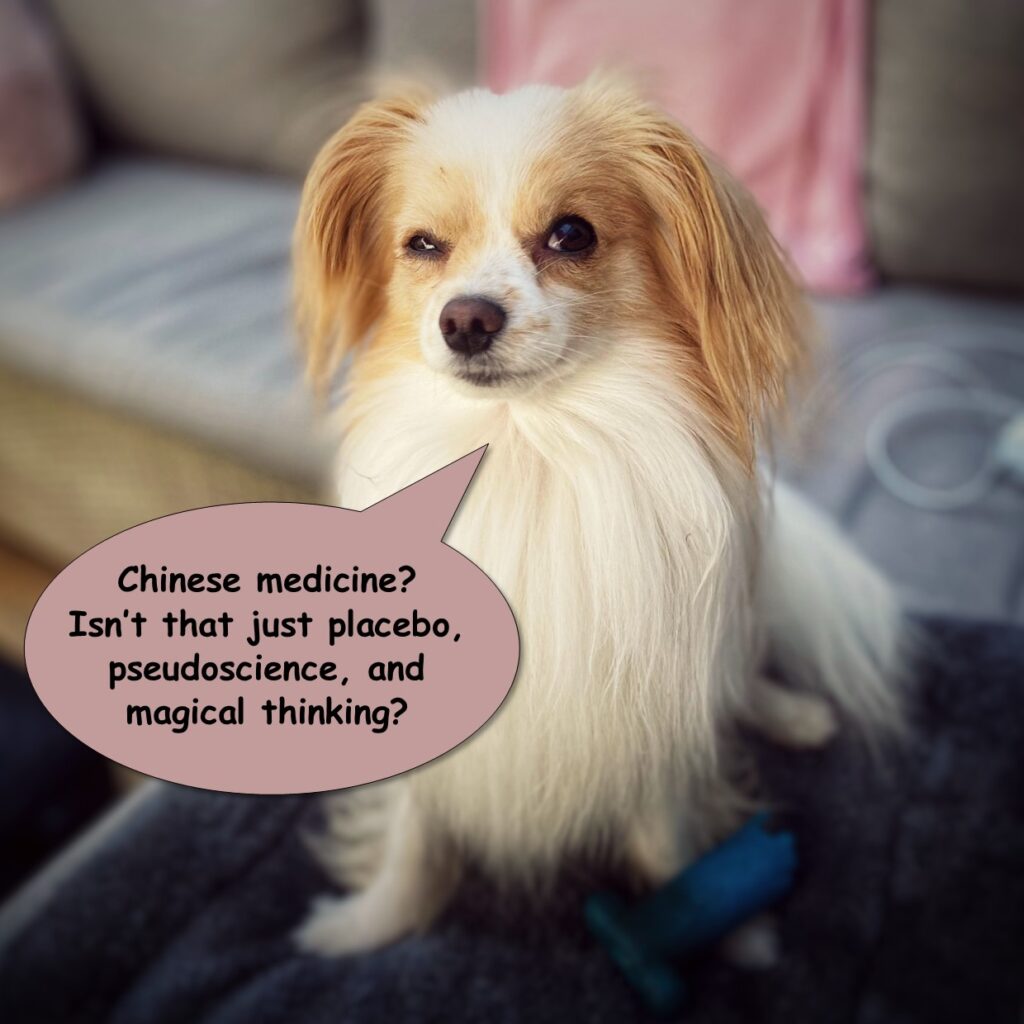
4. “It’s all just placebo.”
The placebo effect is real — and it’s present in every form of healthcare, from pills to surgery to psychotherapy. That doesn’t discredit acupuncture. If anything, it highlights how powerful our bodies are when given the right signals and support.
But acupuncture’s effects go far beyond subliminal suggestion. Studies using fMRI scans and biochemical markers have shown that it produces measurable changes in brain activity, endorphin release, cortisol levels, and more.
The biochemical release that acupuncture induces affects our neurology, digestive system, cardiovascular function, muscular tension and inflammatory response, and our experience of stress and pain. It also continues to produce consistent clinical outcomes across diverse populations, settings, and conditions.
That said, humans are complex systems. Clinical trials don’t always reflect real-life healing processes. People don’t operate in vacuum-sealed labs. They carry stress, sleep deprivation, emotional history, environmental load — all of which affect how they heal.
This is one reason why acupuncture often succeeds where linear, symptom-focused treatments fall short. It engages the whole person — not just the part that hurts. It’s common for clients to report improvements in unrelated areas: better sleep, calmer digestion, a sense of groundedness, or mental clarity they didn’t expect.
In other words, acupuncture works on the mind-body connection — not just on the tissues or symptoms. It helps reset patterns. It goes to the root of illness and corrects imbalance. It reminds the system how to self-regulate. It doesn’t override the body. It works with it, holistically.
5. “There’s no such thing as Qi.”
You don’t need to believe in mystical forces to engage with acupuncture. Some superstition does persist in the field, as it does in many areas of life — but Chinese medicine doesn’t rely on magical thinking. It's pragmatic, logical, and based on close observation.
Lacking the detailed physiological knowledge available today, early physicians used the concept of Qi (pronounced “chee”) to describe observable patterns in the body. The language was different, but the clinical observations were often remarkably consistent with what we recognise today. For instance, someone with depleted Wei Qi (which circulates at the surface of the body) would likely be prone to frequent illness or slow recovery — signs we would interpret in modern terms as a weakened immune system. Similarly, a person with deficient Zong Qi (the form of Qi that gathers in the chest) might experience breathlessness, fatigue, a weak voice, or poor circulation — all of which relate to cardiopulmonary function.
Qi has become a loaded term in the West. But in Chinese culture, it’s a versatile and practical everyday word — used to describe air, breath, energy, function, and movement, amongst other things. In medicine, it refers to the dynamic organisational intelligence that governs life processes — circulation, digestion, immunity, repair, emotional expression, somatic experience, and more. It's energy and exchange.
Western biomedicine doesn’t have an equivalent umbrella term. Energy is about the closest we can get, but this is often too vague and can lead to misinterpretation and fanciful thinking. Nowadays we talk about feedback loops, homeostasis, self-regulation — but these are fragmented concepts. Qi is an elegant, top-down way of describing how complex systems cohere and adapt — how they integrate parts into a living whole.
If that sounds abstract, consider this: no one fully understands how the body heals itself, or why one person’s inflammation or pain resolves while another’s becomes chronic, or how chronic emotional dysregulation leads to specific health conditions and diseases. Chinese medicine offers a language and logic for these patterns and processes. It doesn’t replace Western science — it enriches it, by seeing what Western science often overlooks: the interconnected, responsive, ever-changing nature of living systems.
We are emotional, complex beings, existing in relation to everything around us and within us. By reducing human function to isolated parts, we tend to lose sight of the complete picture. You don't understand this sentence by isolating and analysing every letter; you grasp its meaning through the pattern and the flow — the coherence of the whole.
6. “There’s no such thing as a meridian.”
Qi is not a supernatural force. It’s a way of understanding how things work in motion, in context, in relationship. The meridians (Jingluo) described in Traditional Chinese Medicine (TCM), along which acupuncture points are located, correspond closely with nerve pathways, motor points, and fascial planes—but they are more than mere anatomical coincidences. These channels act as dynamic lines of communication, helping to regulate and coordinate a wide range of physiological functions.
It seems reasonable to demand physical proof of these channels’ existence. But that’s missing the point. They can’t be identified through dissection because they are not fixed structures, but rather subtle spaces or pathways that only manifest their role within a living body. They are emergent lines of functional movement, and the information they convey depends on the presence of life itself. It’s worth noting that modern embryology and research into connective tissue both reveal striking similarities with meridian theory and the Six Divisions (Liu Jing) of paired channels.
Various theories on acupuncture’s mechanisms have been proposed, including the action of biochemicals and neurotransmitters, adenosine triphosphate (ATP), interstitial fluids and piezoelectricity, immunological cells and mechanoreceptors, motor points and nerve pathways, perineural sleeves and dermatomes, lymph and blood, kinetic energy and the fascial web, and embryonic germ layers. Whilst many of the arguments are compelling and much exciting and revealing research has already been carried out, our knowledge base is still in its infancy and more high-quality research is needed.
Extensive research into acupuncture's effectiveness for pain relief has identified the role played by specialised nerve fibres and the release of biochemicals such as opioid neuropeptides (including endorphins), along with numerous neurotransmitters, including serotonin, norepinephrine (noradrenaline), and dopamine. Acupuncture has been demonstrated to directly affect our autonomic nervous response, spinal reflexes and brain function, including the hypothalamus-pituitary-adrenal (HPA) axis and limbic system. It also initiates purinergic signalling, using adenosine and ATP to regulate organ systems and tissues — a system that plays a more far-reaching role than pain management alone.
Intriguingly, certain innovative medical techniques have been foreshadowed by TCM by several centuries. For example, electrical stimulation of the tibial nerve for treatment of an overactive bladder (known a PTNS) uses a point on the inner ankle long known by Chinese medicine to help with overly frequent urination. Another point on the lateral aspect of the lower leg, Guāngmíng (Bright Light), traditionally indicated for eye conditions, has been shown by magnetic resonance imaging to alter activity in the occipital lobe — a part of the brain responsible for vision.
Exactly how these specific distal effects are achieved remains a mystery, but to understand Chinese medicine you don’t have to believe in supernatural forces running through imaginary channels; you just have to accept that the body has its own innate intelligence, that it knows how to keep itself in balance, and that all this self-organisation goes on beneath the surface of what our conscious minds can perceive.
The likelihood is that Qi cannot be isolated to one substance or process, but rather is an emergent and coordinated function of all these physiological systems. The research is fascinating, but in the end traditional organ (Zangfu) and meridian theory provides an elegant and useful framework by which to practise effective acupuncture.
Closing thoughts…
Chinese medicine has its own coherent internal logic, but even that is only a working model for reality, as all scientific theories are. Sometimes we have to hold lightly our instinctive need to know, understand that reasoning is just a useful and powerful tool — not a fundamental requisite of existence — and realise that we can both be questioning and analytical, and also feel and embrace the mystery and wonder of life.
From historic sages such as Laozi and Zhuangzi to contemporary voices like Zen masters Shunryu Suzuki and Seung Sahn, this message has been repeated. Being comfortable with not knowing, being able to abide in the mystery of existence with presence and sensitivity, opens our human capacity for curiosity and awe and insight. It places us firmly in a central place of presence and direct being, not lost on the periphery in thought and analysis.
We might not understand everything about the mechanisms of acupuncture, but we know a lot more than we did only a few decades ago, and not knowing is not a reason to throw it out or dismiss it — it’s an invitation to be curious and look closer. There is much still to be learned in many fields of science, and abandoning something useful just because we don’t yet fully comprehend it makes little sense.
It’s sad that so many people are missing out on this gentle, powerful therapy — not because it doesn’t work, but because they approach it with outdated assumptions and a cultural bias that mistakes unfamiliarity for nonsense.
For too long, we’ve been told that healing comes from outside — from pills, procedures, professionals. But real healing can only come from within, and acupuncture is a therapy that works with the body and spirit, not against it. It doesn’t impose change. It prompts and facilitates it. It reminds the system how to come back into balance. It invites body, mind, and spirit to come together and heal the whole person.
Chinese medicine takes the view that the body’s systems should be working in dynamic balance, like a well-tuned and harmonious orchestra. By stimulating acupuncture points with care and intention, we can nudge the body towards balance — encourage proper order, smooth flow, and natural vitality.
Just as a garden needs the right conditions for plants to flourish, so the body needs the right conditions to create change and new growth, to find harmony, and to truly heal. Chinese medicine acknowledges that we exist in relation to our ever-changing environment. We can't be separated from it, and our medicine needs to reflect that dynamism and interconnectedness in order to treat the root of illness, and not just cover the symptoms.
Acupuncture is not a magic solution. But it is thoughtful, effective, grounded in centuries of observation, and increasingly supported by modern science. It deserves to be taken seriously — not just by scientists and policymakers, but by anyone who wants to feel better in a way that honours the whole of who they are.